




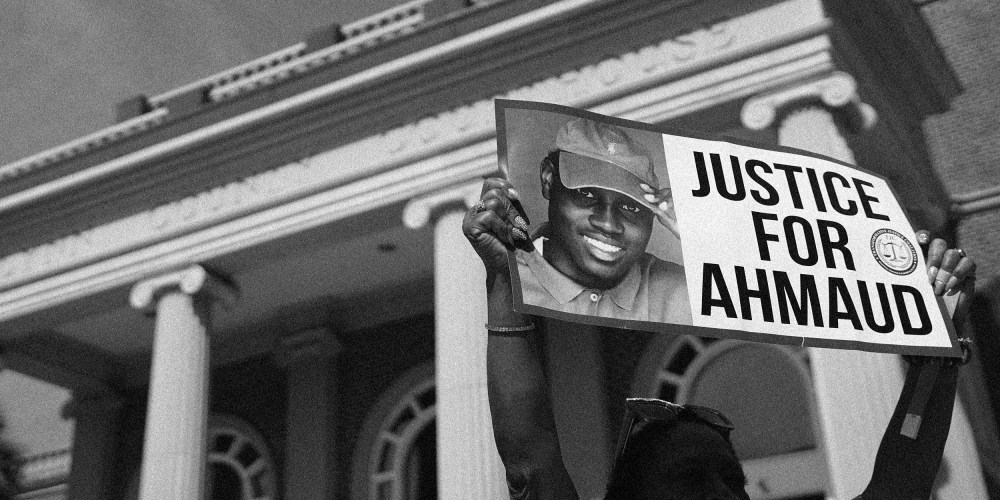
The three white men charged with chasing down and killing Ahmaud Arbery in Brunswick, Georgia, last year were found guilty Wednesday of almost all the charges against them. Arbery, a 25-year-old Black man, was jogging, and prosecutor Linda Dunikoski said during her closing arguments Monday that the three men pursued him not because he was a threat but because he “was a Black man running down the street.”
Knowing Arbery’s killers will be punished is a good feeling, but knowing Arbery is dead is a worse one.
Knowing Arbery’s killers will be punished is a good feeling, but knowing Arbery is dead is a worse one. “This is not a celebration,” Benjamin Crump, an attorney for Arbery’s family said outside the courthouse Wednesday. “It is a reflection to acknowledge that the spirit of Ahmaud defeated the Lynch mob.”
The defendants claimed, of course, that they thought Arbery was a burglar and they were trying to execute a citizen’s arrest. But on Tuesday, during her rebuttal of the defendants’ argument, Dunikoski said, “Under the Constitution of the United States, he didn’t have to do anything but walk away; in this case he ran away. And what did they do? They chased him.”
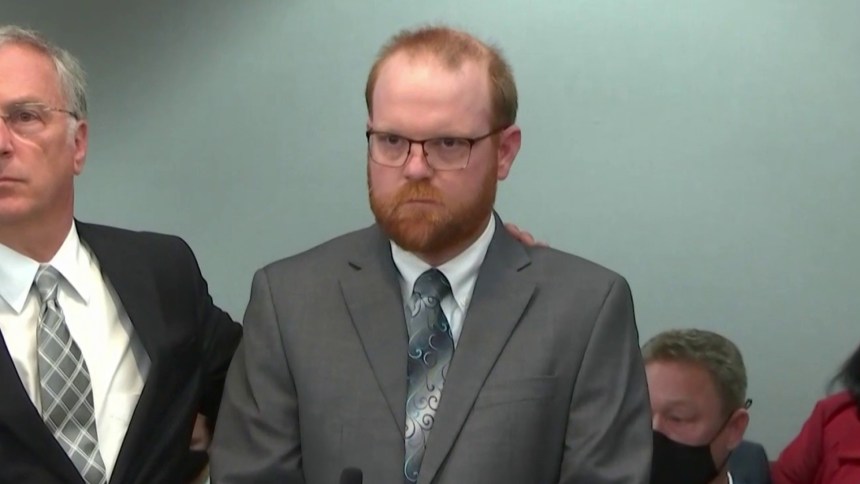
Travis McMichael, who shot Arbery with a shotgun, was convicted on all nine counts each of the three men faced: malice murder, four counts of felony murder, two counts of aggravated assault, one count of false imprisonment and one count of criminal attempt to commit a felony.
The jury did not convict his father, Gregory McMichael, of malice murder, but convicted him of the other eight counts. William “Roddie” Bryan, who recorded the chase and murder of Arbery, was convicted of three felony murder counts, an aggravated assault count, a false imprisonment count and one count of criminal attempt to commit a felony.
Today, Arbery’s family should feel some small measure of relief from what must be an ongoing nightmare. No matter the context, it’s rare that white men are ever found guilty of killing a Black man. Yes, we’ve seen it happen. However, for every guilty verdict — whether it’s for Arbery’s killers or for the police officer who killed George Floyd — where Black life is recognized as a valuable thing we have lost, there seem to be that many more acquittals that remind us we can’t have faith in the court system.
Just look at Kyle Rittenhouse.
I didn’t watch the trial that ended last week with Rittenhouse being acquitted of shooting and killing people protesting police violence in Kenosha, Wisconsin. I already knew how that trial was going to end, and watching it felt like a fool’s errand.
There were many people in my life (not to mention many on the internet) who held on to the hope that maybe Rittenhouse’s trial would be different because the two men he killed were white. But that hope could only exist for those who forgot that anti-Blackness in this country runs deep, so deep that white people who kill white people who are protesting for Black lives aren’t punished the same.
February will mark the 10-year anniversary of Trayvon Martin’s death at the hands of George Zimmerman.
For example, the white people who killed Andrew Goodman and James Schwerner in Philadelphia, Mississippi, in 1964 and Viola Liuzzo and James Reeb in Selma, Alabama, in 1965 were never convicted of murder in their respective state courts. It didn’t matter that their victims were white. What mattered was that their victims were publicly supporting Black people.
Even with Wednesday’s verdicts regarding Arbery’s killing, I’m not confident that the criminal justice system would honor my life if I were gunned down while jogging in that Georgia neighborhood. Processing the results in the Rittenhouse trial and the trial of the men convicted of killing Arbery can’t be separated from the reality that another person will be killed by the police or by somebody acting as if they’re the police some time soon.
Where do we even find hope in all of this?
February will mark the 10-year anniversary of Trayvon Martin’s death in Sanford, Florida, at the hands of George Zimmerman, who like Rittenhouse and the McMichaels and Bryan acted as if he had authority over another. That shooting, for me at least, began our current conversation about how Black life is so devalued that the police and even people who aren’t police can kill us without criminal consequences.


Martin’s death and the outrage that followed ignited huge culture wars across this country. The conversation broadened when a Ferguson, Missouri, police officer shot dead Michael Brown, and a blossoming movement that became known as Black Lives Matter sought to stop the violence Black people face in this country.
We’ve come to know the name Tamir Rice, the 12-year-old boy in Cleveland who was shot down by police while playing with a toy gun at a public park.
And the name Sandra Bland, who was ordered out of her car by a Texas state trooper during a traffic stop after she refused to put out her cigarette.
While sitting outside her funeral in Naperville, Illinois, a Chicago suburb, I heard her mother scream justice. It still hasn’t come.
Since then, we have feebly tried to count the bodies. I contributed to “The Uncounted,” a now-defunct database at The Guardian. The Washington Post won a Pulitzer Prize for its database “Fatal Force.” Some of us may have thought that collecting and presenting the data would end the epidemic.
Before the trial concluded, the Arbery family requested that no “violent” protests break out when the verdict arrived.
But in the same way that tracking the murders of transgender people in the U.S. hasn’t stopped trans people from being murdered, tracking the number of Black people killed with no consequences for their killers has only served to remind us that Black people die, a lot, and that those killings are not slowing down.
Before the trial concluded, the Arbery family requested that no “violent” protests break out when the verdict arrived. They made this request after members of the New Black Panther Party paraded around a casket with the names of dead Black people around the courthouse days ago. Their pleas call to mind a quote from Toni Morrison that my friend, poet Saeed Jones, tweeted. She was being asked about the Black rebellion in Los Angeles after the acquittal of the white police recorded beating Rodney King.
“What struck me most about the people who were burning down shops and stealing was how long they waited — the restraint, not the spontaneity, the restraint,” she said on the Charlie Rose show. “They waited — how long was it? Nine months? A year? They waited for justice, and it didn’t come.”
I think, in some weird way, that is where I am finding hope today: in the fact that we as Black people in America who know all too well from slavery to the case of Arbery’s killing that this country will do anything and everything to not stop the violence. But yet we push on. And will keep pushing on.

Zach Stafford
Zach Stafford is an award-winning journalist who recently served as editor-at-large of BuzzFeed, was the first Black editor-in-chief of The Advocate, and worked as an investigative journalist at The Guardian.