




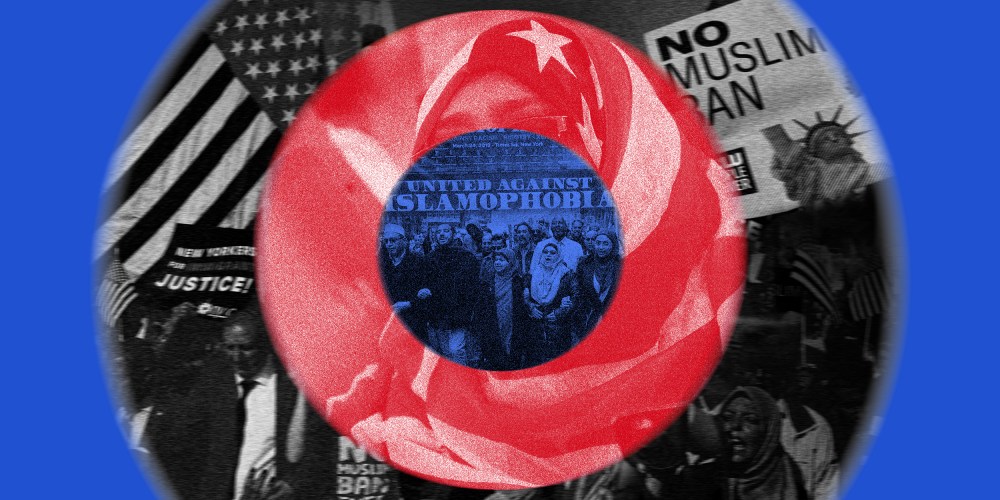
The U.S. Supreme Court handed down a unanimous decision Thursday that ruled in favor of three Muslim men who charged the FBI with placing them on the no-fly list when they refused to spy on fellow Muslims. The news stands out in an administration that has ushered in a surge in Islamophobic rhetoric and anti-Muslim policies over the past four years.
Policies predicated on anti-Muslim bigotry that wrongly target Muslim Americans had been more or less normalized well before Trump took office.
But it also reminded us that anti-Muslim government policies didn’t just happen under President Donald Trump. Regardless of the political power in charge, policies predicated on anti-Muslim bigotry that wrongly target Muslim Americans had been more or less normalized well before Trump took office.
Still, the facts of the Supreme Court case read like an over-the-top Hollywood action movie, with U.S. law enforcement interrogating a stereotyped antagonist. The events as detailed were so heavy-handed that you wouldn’t want to believe they’re real. But it was very real for the three plaintiffs, Muhammad Tanvir and Jameel Algibhah of New York and Connecticut resident Naveed Shinwari.
Between 2007 and 2012, each man was approached separately by the FBI and pressured to secretly provide the bureau with information on fellow Muslims whom the FBI said it suspected of being involved in terrorist activity. When the men declined, the FBI placed them on the national no-fly list. In order to be removed from the list, the plaintiffs charged, the men were told they would have to act as informants in their own communities.
It’s true that Trump made demonizing Muslims one of the staples of his 2016 presidential campaign, from comments like “Islam hates us” to calling for a “total and complete shutdown of Muslims entering the United States.” And true to his word, one of his first actions as president was to order the Muslim ban, barring people from several majority-Muslim countries from entering the U.S.
Being on the no-fly list had not just been an inconvenience for the three men; it legitimately ruined important events in their lives.
But while the Trump administration opposed the plaintiffs’ efforts to seek justice in this case, the violations detailed in Thursday’s Supreme Case ruling were committed under the Obama administration.
I’m not equating President Barack Obama with Trump. But it was not until late into his second term that Obama embraced the Muslim community through efforts like meeting with various Muslim leaders at the White House — I was among that group — and defending our community against bigotry.
And it was under Obama that the Countering Violent Extremism program was created in 2011, which “in practice focused almost exclusively on American-Muslim communities,” as the Council on American-Islamic Relations and other organization pointed out in their amicus brief filed with the Supreme Court. The CVE program has been cited as furthering the dangerous negative stereotype that all Muslims are inherently dangerous.

In 2013, when the plaintiffs filed their federal lawsuit, the government reversed its decision and removed them from the no-fly list, stating there was “no reason” why any of them could not fly. But by that time, being on the no-fly list had not just been an inconvenience for the three men; it legitimately ruined important events in their lives. Imagine how people who make important decisions in a person’s life — such as potential employers or people on school admissions boards — react when they learn that someone’s on that list. It marks a person as dangerous, a potential threat to themselves and to others.
Tanvir not only lost his job, but he could not visit his ailing mother in Pakistan because of being on the no-fly list. Shinwari, a legal permanent resident who had come to America at age 14 from Afghanistan, lost his job as a manufacturing contractor because he was unable to travel, a requirement of his role. The three plaintiffs also understandably asserted that their reputations had been badly damaged as a result of being on the FBI no-fly list.
After 10 years of this unconstitutional spying program by the NYPD, how many leads did it generate? Zero. The unanimous Supreme Court decision, written by conservative Justice Clarence Thomas, found that under the Religious Freedom Restoration Act, these plaintiffs could seek monetary damages against the federal government for pressuring them to violate their religious beliefs by spying on other Muslims. Muslim American organizations applauded the decision, with CAIR attorney Justin Sadowsky stating, “By holding individual officers liable for violating Americans’ civil rights, including American Muslims like the plaintiff … the government will take those rights seriously.” But it was the statement by another Muslim American civil rights group, Muslim Advocates, that summed up the bigger picture so well: “For decades now, government surveillance and anti-Muslim policies have been an unavoidable fact of life for American Muslims.” But while Trump’s anti-Muslim bent has been vile, and has ruined plenty of innocent lives in this country, even Obama’s CVE didn’t come close to the jaw-dropping, widespread Muslim surveillance initiated in one of the most liberal cities in America: New York City. From 2003 to when he left office in 2013, then-Mayor Michael Bloomberg launched a program that saw undercover NYPD officers spying on Muslims in New York City while we worked, prayed, dined, went to school and socialized. It created a vast network of informants that, as one of the plaintiffs in a lawsuit filed by the ACLU against New York City noted, sowed fear in the community that any new Muslim American you met might actually be an undercover agent sent to spy on you. After 10 years of this unconstitutional spying program by the NYPD, how many leads did it generate? Zero. But the amount of damage it did was immeasurable, from further stigmatizing the Muslim community to hindering efforts by Muslim organizations to raise funds for charitable work — because Muslims feared donating could put them on a government list. The U.S. Supreme Court made the right decision this week. But don’t think for a second that anti-Muslim policies are only a Trump thing, or that we’ve moved past them as a nation.


