





According to the most recent ABC News/Ipsos poll, nearly two-thirds of all Americans are optimistic about the direction in which the country is heading. That’s the highest rate of American confidence the media outlet has measured since late 2006. And Americans have plenty to be optimistic about.
There is a deeply underserved market in the United States for unqualified optimism.
But you’re not hearing a lot of great news out of Washington, where neither President Joe Biden’s administration nor his Republican opponents seem capable of striking a truly optimistic note. This presents the larger Republican Party with a valuable opportunity: the chance to satisfy the national mood and, importantly, short-circuit voters’ instincts to reward Biden and his party for the conditions they’re presently enjoying.
There is a deeply underserved market in the United States for unqualified optimism, and as things stand, both parties are passing on it. America’s politicians don’t seem to know they’re being hopelessly morose with their talk of deep economic hardships and endless epidemics, even as we’re emerging from both. Perhaps that’s because they only hear from their hopelessly morose activist constituencies who love it.

But the data suggests a quiet preponderance of the voting public is tired of depressing fatalism. The politician who has enough guts to be honest about America’s fortunate present and happy future will be handsomely rewarded.
The good news is there if you just look for it. In March, multinational investment bank Goldman Sachs raised its estimates for United States gross domestic product growth in 2021 to 8 percent, representing the strongest rate of domestic economic growth since the early 1950s. The investment firm further anticipated the unemployment rate would decline to roughly 4 percent by the end of the year, approaching what economists understand to be full employment.
Forecasters expect energy demand to soar this summer as Americans hit the road again as pandemic-related fears recede. By mid-April, half of all U.S. adults had received at least one dose of an approved Covid-19 vaccine. A full 40 percent of adults are fully vaccinated, and American case rates have declined precipitously along with Covid-19-related hospitalizations and deaths. A majority of Americans believe the worst of the disease’s ravages are behind us.
The data suggests a quiet preponderance of the voting public is tired of depressing fatalism.
To hear it from the Biden White House, the economy is not charging back from mid-pandemic lows at a record pace. The economy is in a state of prolonged crisis, and it will continue to fail the public absent an unprecedented redistribution of American wealth.
Ours is a woeful moment that calls for massive “investments” in the “care economy,” hundreds of billions in individual stimulus, legislation to force independent contractors into unions and a permanent extension of expanded unemployment benefits. Absent these protections, workers are at great risk. But from what? Selling their labor on a market that is increasingly starved for it and willing to go to great lengths to hire and retain it?
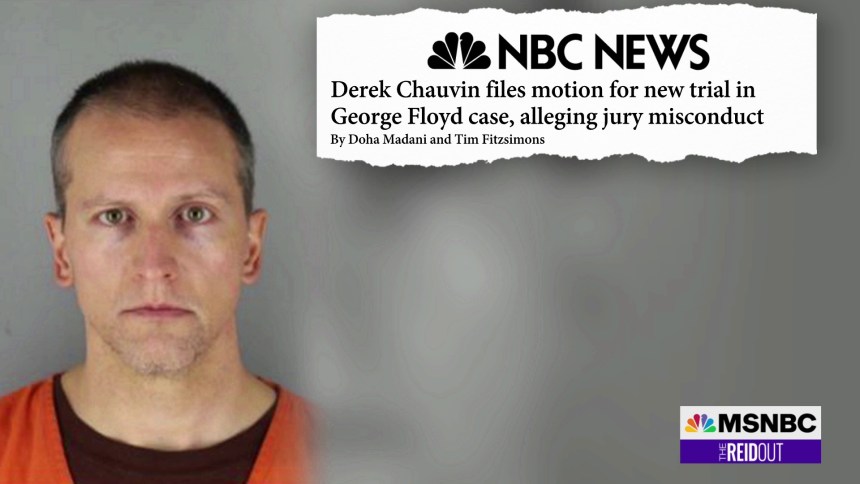
America is also in a state of permanent racial crisis, the Democratic administration insists. “America has a long history of systemic racism,” Vice President Kamala Harris said in a prime-time address to the nation following the verdict that convicted former Minneapolis police Officer Derek Chauvin of the murder of George Floyd. That murder “ripped the blinders off for the whole world to see the systemic racism,” Biden agreed. “The systemic racism that is a stain on our nation’s soul.”
That refrain — the vague idea of “systemic racism,” which renders true justice elusive — was repeated with some urgency by Democratic lawmakers following that verdict, a discordant message at a time when the system unquestionably worked. Nor is this harmless hyperbole. Lawmakers hear “systemic racism” and believe it to be a call for incremental legislative remedies, but activists hear that slogan and regard it as a call, as one Washington Post columnist put it, to “dismantle these broken systems and reconstruct something stronger” in their place.
And what of the pandemic? “I think we can confidently say the worst is behind us, barring some crazy unforeseen variant that none of us are expecting to see,” Brown University School of Public Health Dean Dr. Ashish Jha told ABC News. Many red states long ago loosened their mask mandates and removed capacity requirements on indoor establishments. Blue states are following their lead. No one is waiting for the Biden White House anymore.
In April, the administration’s contribution to post-pandemic discourse was to issue absurdly overcautious guidance for fully vaccinated Americans, advising them to safely unmask only at small outdoor gatherings or at restaurants (two places where unvaccinated people can and are going unmasked, too).
There’s a hunger abroad for happy warriors: realistic about the challenges the nation faces, but contemptuous of the notion that we cannot get there unless the right people are punished first. Republicans are blowing that opportunity.
Sure, the GOP’s more establishmentarian voices do seem to know that corrective cheerfulness is a smart posture to strike. “America’s best times are yet to come,” Republican National Committee Chair Ronna McDaniel asserted while advertising the upbeat speech by Sen. Tim Scott, R-S.C., on the future of the American experiment. “America is not a racist country,” Scott said in that speech. He offered this observation amid an indictment of what he called a left-wing effort to combat the remnants of racial discrimination in America by again teaching children that the “color of their skin defines them.”
This simple observation has riven Democrats. Biden and Harris agreed with Scott’s premise, even as they delved into society’s nuances to preserve the allegation that an ill-defined set of American institutions are thwarting individual aspirations in service to nefarious aims. But where the administration agreed with Scott, powerful House Democrats and influential activist groups did not.
Republican voters don’t want to hear what the institutional GOP is pitching. What Republican voters want is revenge.
This could be a powerful message that sows fissures within the Democratic collation, but Republican voters don’t want to hear what the institutional GOP is pitching. What Republican voters want is revenge.
Two of the party’s most prominent members, Sens. Marco Rubio, R-Fla., and Ted Cruz, R-Texas, have abandoned the rhetoric of growth and opportunity in favor of vindictiveness. In so doing, they have tacitly endorsed Democratic priorities, like increased unionization rates by governmental fiat — but only to penalize firms they don’t like.


“When the conflict is between working Americans and a company whose leadership has decided to wage culture war against working-class values, the choice is easy — I support the workers,” Rubio wrote in a USA Today op-ed, endorsing a union vote at an Alabama Amazon warehouse (a vote those very workers defeated by a staggering margin).
“America’s laws should keep our nation’s corporations firmly ordered to our national common good,” the senator later added in a New York Post op-ed. The companies that dump “woke, toxic nonsense” into the culture “will be met with the same strength that any other polluter should expect.”
Cruz appears to agree. “To America’s watch-me-woke-it-up CEOs I say: When the time comes that you need help with a tax break or a regulatory change, I hope the Democrats take your calls, because we may not,” he tweeted.
Author and aspiring U.S. Senate candidate J.D. Vance summarized this philosophy neatly when he was asked by Tucker Carlson what compelling “interest” the government has in controlling the behaviors of big firms like Google: “If I’m being honest, I just don’t care.”

Under the guise of fairness and reining in unconstrained power, these Republicans nakedly pledge to wield the power of the government to punish legal behaviors with which they disagree. In the process, they communicate to the public that the economic pie isn’t growing anymore, and the race is on to divvy up your share while you can.
Revenge isn’t the only theme Republican voters are eager to hear. There’s just as big a market on the right for crippling self-pity.
The long knives are once again out for Rep. Liz Cheney. The Republican leaders who once defended her from the verbal assaults and an energetic caucus of GOP backbenchers seem to have lost their nerve. Republicans appear prepared to oust the Wyoming Republican from her congressional leadership role; and only for the sin of saying Donald Trump lost the 2020 election fair and square, and his concerted efforts to mislead voters about that fact contributed to the Jan. 6 siege of the Capitol.
Cheney wouldn’t be the first victim of this mania. State-level Republican parties around the country have censured their members for similar offenses. The Arizona GOP condemned the wife of the late Sen. John McCain and the party’s sitting governor for failing to dutifully lie to the voters. Louisiana Sen. Bill Cassidy was similarly rebuked by his party. The moribund Illinois GOP has devoted its focus not to appealing to the suburban voters who abandoned the Trump-led GOP but to attacking one of the few members of their state’s congressional delegation who represents them, Rep. Adam Kinzinger.
Lacking any elected GOP officials of enough stature to condemn, Oregon’s Republican Party was reduced to issuing a facile resolution declaring the events of Jan. 6 “a ‘false flag’ operation designed to discredit President Trump, his supporters, and all conservative Republicans.”
All this feeds into a depressing narrative: that American institutions are hopelessly corrupt and incapable of delivering fair and just outcomes. It’s not just false but self-defeating. Even Republicans maintain that this sort of talk was sufficient to depress Republican turnout in Georgia’s 2020 special elections to the point that two Democrats now represent that traditionally red state in the Senate.
The display is doubly craven because it is both a display of fealty to a lie and because it undercuts the party’s interest in serving its voters’ interests by retaking the reins of power in Washington.
Democrats are kidding themselves if they see all this as cheery, optimistic contributions to the national mood. Because the national mood is passing Democrats by. And Republicans have a prime opportunity to capitalize on said optimism — if only they would see it.

Noah Rothman
Noah Rothman is the associate editor of Commentary Magazine.