




Health care is not a privilege; it is a human right. This is a notion that has sparked controversy for decades as our country has wrestled with ways to extend access to health care in a system where we do not all agree with this notion.
The Affordable Care Act, now over a decade old, was no panacea, but was a promising step.
The Affordable Care Act, over a decade old this year, was no panacea, but it was a promising step, albeit one that had been undermined significantly by the Republican Party and the Trump administration. But elections have consequences. And in this case, they can be great ones, such as the recent executive order to expand health care access to a potential 15 million Americans.
Maria (whose name has been changed to protect her privacy) is a 44-year-old Hispanic woman who lives in San Antonio. She has a full-time job as a manager at a local grocery store, where she supervises around 16 employees and makes about $42,000 a year. Maria loves to watch the San Antonio Spurs, enjoys a great margarita and works seven days a week.

She lives in the same neighborhood as the store where she works, and she often spends part of her paycheck on groceries for the growing number of her neighbors who have reported food insecurity. In Maria’s words, “That’s just life.”
Maria and I grew up and went to school together. In the early part of the pandemic, she would often call me and ask me what was happening and what advice I had for her to avoid getting sick. I told her that in addition to being careful at the store, wearing a mask and washing her hands, she needed to get health insurance. She is the sole provider for her two children and, like many Americans, works full time but has no health care benefits.
Texas is one of 12 states that did not expand their Medicaid programs
Texas is one of 12 states that did not expand their Medicaid programs despite the federal government initially fully subsidizing the costs of the expansion through the Affordable Care Act. Maria, like many others, found the website confusing, the choices complicated (what is the difference between a silver and gold plan, anyway?) and at the end of the process felt like there was no way she could afford the suggested premium payments.
So Maria, like millions of others, was left to try and figure out how to find low-cost health care on her own. She utilizes free clinics and tries to manage costs of medications for her son who has asthma. She ironically makes too much money for the Children’s Health Insurance Program, so her family faces one of the highest risks possible: They are just one hospitalization away from becoming homeless.
In the past year, she has buried an aunt and an uncle from Covid-19 and watched her son get sick and recover after a long course of illness. As she says, she “has the blessing of God” to keep her healthy so she can earn a paycheck.

The Trump administration slashed the budget for a federal program that helps people like Maria navigate health insurance choices by 80% from 2016 to 2018. Adding insult to injury, in 2017, the Trump administration shut down the enrollment website for “maintenance” on Sundays, a day when many people might actually have the opportunity to sit down and enroll in a health insurance plan.
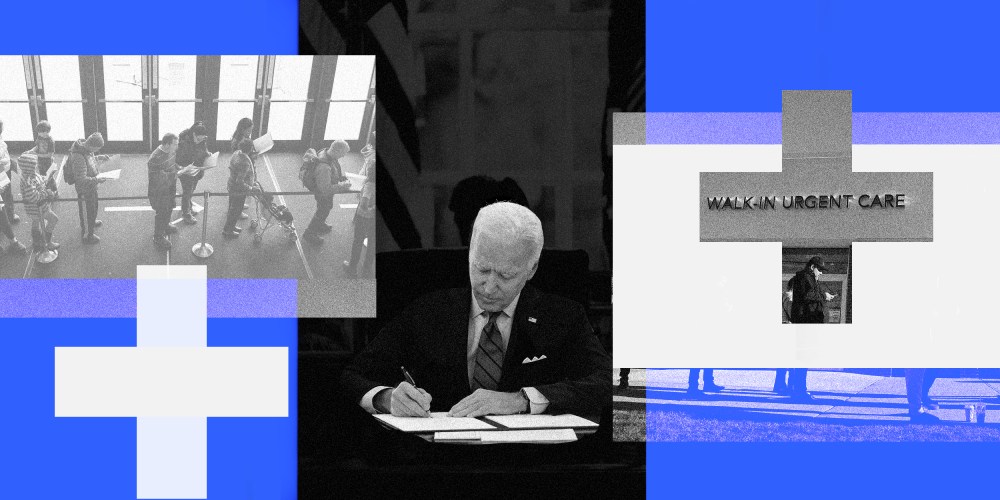
President Joe Biden recently signed several critical executive orders that might seem nominal but could have the most significant impact on so many Americans — including Maria.
First is an order to open a special enrollment period for people to purchase health care coverage from the health insurance marketplace. The enrollment period had been from Nov. 1 through Jan. 31 until it was shorted by President Donald Trump in 2017 in efforts to derail the Affordable Care Act, from Nov. 1 through Dec. 15. Due to the current public health emergency of the pandemic, there was a bit more flexibility with enrollment.


Adding insult to injury, the Trump administration actually used Sundays to shut down the enrollment website for “maintenance.”
The recent executive order will add three more months to enroll in health insurance. This will likely help approximately 15 million uninsured Americans find health care plans, likely in states that have been hit hardest by the pandemic, like Texas. Four million uninsured people would actually qualify for a free plan in the bronze category, with a $0 monthly premium payment.
It is hard to fathom that free health care is within reach and even harder to imagine that there are no gimmicks or strings attached. Opening the enrollment in and of itself is not enough, so we hope to see a restoration of the support services that used to be in place for Maria and many others to understand their options.
Health insurance navigators are incredibly effective, especially in Hispanic communities. The navigators often come from the same communities they serve and are crucial in helping bridge divides such as language, internet access and health literacy and alleviate confusion over cost and pricing.

It is only through augmenting open enrollment with actual navigation services that we can achieve any meaningful access. We know that uninsured patients often delay or avoid necessary care, even when there are assurances that their costs will be covered, such as if it is related to a Covid-19 diagnosis. But doctors don’t like to discuss cost, and people find it hard to ask questions when faced with medical issues.
Biden has made it clear that he will work to eliminate policies that prohibit access, whether they are work requirements in Medicaid (which require proof of work or attempts to find work and have not been shown to do anything other than cut access to people) or policies that actually undermine protections for people with pre-existing conditions.
The Biden administration is starting to return us to the social compact made with our forefathers when the United States of America helped to stitch together a safety net for health, housing, education and food supply.
There’s a long way to go, but the recent actions by the Biden administration are a good start. We will still need ways to make health care affordable, control skyrocketing drug prices and help actually bring care back to health. Covid-19 has laid bare the great shortcomings of our health care system, and we will have to work together to create opportunities that will bridge the divide — starting with Maria.

Dr. Kavita Patel
Dr. Kavita Patel is a teaching professor of medicine, Division of Hospital Medicine, at Stanford University and a board-certified internal medicine physician. She served in the Obama administration as director of policy for the Office of Intergovernmental Affairs and Public Engagement in the White House. Her area of expertise is around the intersection of health policy, clinical medicine and innovation. She also spends time advising venture capital and is a medical contributor for NBC News.