





The good news is a given at this point: A Covid-19 vaccine is going to be available to Americans. You will eventually get it if everything stays on its current course. The bad news is that any vaccine that gets approved won’t help you personally for at least months.
It’s probably for the best that you try to forget that a vaccine has been discovered at all. At least for a while.
I repeat: You will not benefit from the vaccine directly for a good long while, because “a vaccine is approved” isn’t the same as “the pandemic is over.”
I know it’s hard to accept. I get it. We’ve been stuck in purgatory for months, unable to plan for — or even picture — the future. The pandemic has kept us unsure about when — or whether — things will ever be normal again.
With news of an imminent vaccine, the fog is starting to clear. It’s easy to make the mental leap that since things will be much better soon, the danger has abated now. As that’s not the case, it’s probably for the best that you try to forget that a vaccine has been discovered at all. At least for a while.
I don’t mean for this to come across as yet more doom and gloom about Covid-19. On the contrary, it truly is borderline miraculous that we’ve got multiple candidates for a vaccine less than a year after the coronavirus’s existence was first reported to the World Health Organization. And there won’t be much longer to wait before the first rounds of the vaccine are distributed. The Food and Drug Administration’s advisory committee focused on vaccines is set to meet Thursday to discuss Pfizer’s request for an emergency use authorization to get its product approved for the market. It will meet again to discuss a similar request from Moderna a week later.
But there’s a bit of a supply-and-demand problem here. The demand is 330 million Americans. The supply is … not that. Not yet, anyway. Pfizer had to roll back its initial plan to pump out enough of its vaccine for 50 million people before the end of the year, The Wall Street Journal reported — instead, the company announced that it will be producing enough for 25 million people. (It still expects to produce enough vaccine for over half a billion people in 2021, though.)
Even if the vaccine were ready for every man, woman and child today, the line to get vaccinated is already lengthy.
The pharmaceutical giant blamed the setback on issues within the supply chain, a constant refrain that has made life that much harder for medical professionals. “We were late,” a person directly involved in the development of the Pfizer vaccine told The Journal. “Some early batches of the raw materials failed to meet the standards. We fixed it but ran out of time to meet this year’s projected shipments.”
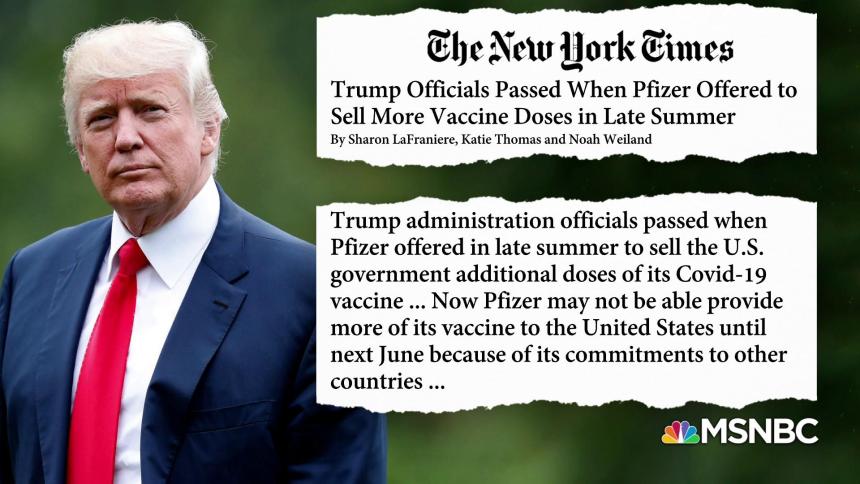
The Trump administration has put in an order for 100 million doses from Pfizer, enough for 50 million people — but The New York Times revealed Monday that the administration had passed on purchasing more of the vaccine when it was offered the chance in the summer. That means that because of the company’s commitments to other countries, it may be as late as May before the Biden administration even has the chance to buy more.
Moderna, on the other hand, predicts that it will have made 500 million to 1 billion doses of its two-shot vaccine by the end of 2021 — but it will have just enough doses for about 10 million people in December. (As The Washington Post points out, Moderna has never had a product on the market before, so there’s not exactly a guarantee it hits those goals.)
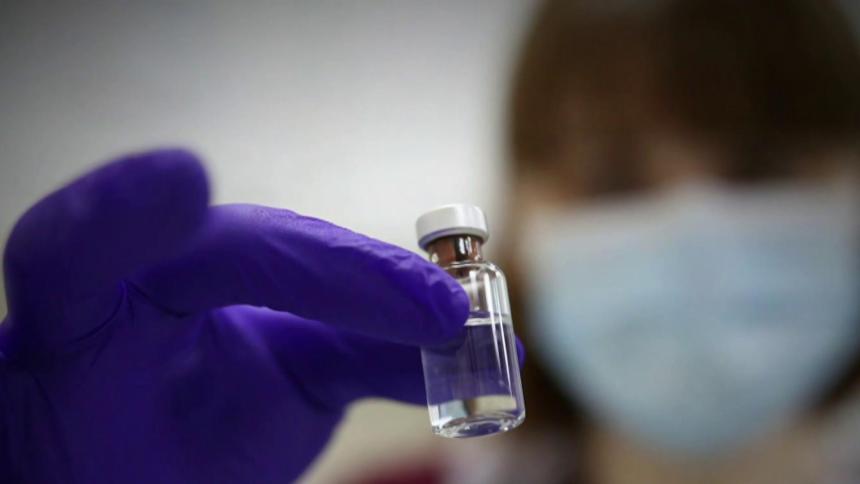
Even if the vaccine were ready for every man, woman and child today, the line to get vaccinated is already lengthy. Doctors and other health-care workers are predicted to receive the first doses because of their constant exposure to people who’ve tested positive for the coronavirus. Then will likely come nursing home residents, first responders, people with health risks associated with Covid-19, essential workers and on and on until you get to the rest of the population.
The Times published a helpful tool for people to check where in line they might fall based on where they live and other factors, such as age, vulnerability and other data. The results were definitely illuminating. (According to this projection, I should be braced to be behind about 1.5 million people here in New York City.)


Estimates now indicate that there may not be enough vaccine for the general public until May or June — and that was before the news that the government may have problems ordering more from Pfizer. That hasn’t stopped people from already asking their doctors when they can get vaccinated. New York University’s Langone Hospital had to send out a text Monday saying that, essentially, its patients’ guesses were as good as its was.
a first pic.twitter.com/WiS0gl2olo
— Matt Berman (@Mr_Berman) December 7, 2020
All of this speaks to how confusing some of the discourse around Covid-19 vaccines has been. President Donald Trump insisted repeatedly during his re-election campaign that a vaccine would be available by the Nov. 3 election, implying that it would be distributed to all Americans at the same time. The Trump administration’s political appointees are still highlighting the bright side of things, claiming that up to 24 million people will be vaccinated by mid-January.
“Within 24 hours of FDA greenlighting with authorization, we’ll ship to all of the states and territories that we work with. And within hours, they can be vaccinating,” Health and Human Services Secretary Alex Azar said on “Fox News Sunday.”
That doesn’t quite track with what health experts told The Times, which said the timeline the administration had laid out “was uncompromising and did not account for the possibility of delay during the many steps from vaccine manufacture to distribution at state and local levels, not to mention the hesitancy that many people might feel about taking a newly approved vaccine.”
The uncertainty of just when everyone will be able to get vaccinated has bumped up hard against our brains, which have already been struggling with trying to make sense of the world since it was set on pause in the spring. New Yorker staff writer Helen Rosner tweeted out an apt description for the state of play in May, calling it “an infinite present.”
Today in therapy we talked about how (for those of us currently healthy and taking isolation seriously) right now we live in an infinite present. No future plans, no anticipation of travel or shows or events or celebrations. It’s an endless today, never tomorrow.
— Helen Rosner (@hels) May 13, 2020
Wired magazine had Kate Sweeny, a professor of psychology at the University of California, Riverside, explain the anxiety the pandemic produces: “Waiting periods are marked by two existentially challenging states: We don’t know what’s coming, and we can’t do much about it. Together, those states are a recipe for anxiety and worry. People would often rather deal with the certainty of bad news than the anxiety of remaining in limbo.”
The news that a vaccine is coming helps burst that bubble. Suddenly, there’s hope on the horizon, and the present can finally turn into the past. But the truth is that the world outside your home will be no safer the day after the FDA approves whichever of the vaccines it greenlights. Dr. Anthony Fauci tried to make that clear on CNN’s “New Day,” saying there won’t be an immediate impact on the still-rising mortality rate for at least several weeks after the mass vaccination campaign really gets underway.
The Covid-19 vaccine will not show an impact on mortality rate immediately, Dr. Anthony Fauci says.
— New Day (@NewDay) December 7, 2020
“[It’s] likely you’re not going to see a measurable diminution for at least several weeks, if not longer. But it will come, I guarantee you.” pic.twitter.com/ofotpjqHyb
And all that doesn’t mean the pandemic is over. We still need to see whether, as Fauci said, people who are immune to the virus can still spread it after being vaccinated. Which means that until you and everyone you know has had both shots, it’s probably best that you take the fact that a vaccine exists at all and lock it up in the back of your head. Instead, keep acting as though it’s still dangerous to see your friends and families as we head into the Christmas season. It’s all around for the best.

Hayes Brown is a writer and editor for MS NOW. He focuses on politics and policymaking at the federal level, including Congress and the White House.