





Confession: I’m starting to worry that in the face of challenges to our democracy, some Democrats on both ends of Pennsylvania Avenue aren’t fully facing the reality of the current moment. Because from where I’m sitting, the general game plan — from infrastructure spending to protecting our very democracy — seems to be “hope our opponents realize that what they’re doing is wrong.”
That may sound like I’m being hard on them, but what else am I supposed to believe when I look at the White House and the Senate lately? Sen. Joe Manchin, D-W.Va., has been one of the biggest holdouts against ditching the filibuster, insisting against all evidence that the tactic makes for better compromises. But he was pretty dismayed Friday afternoon. Thirty-five Republicans had just managed to block the Senate from even discussing a bipartisan commission to investigate the Jan. 6 attack on the U.S. Capitol.
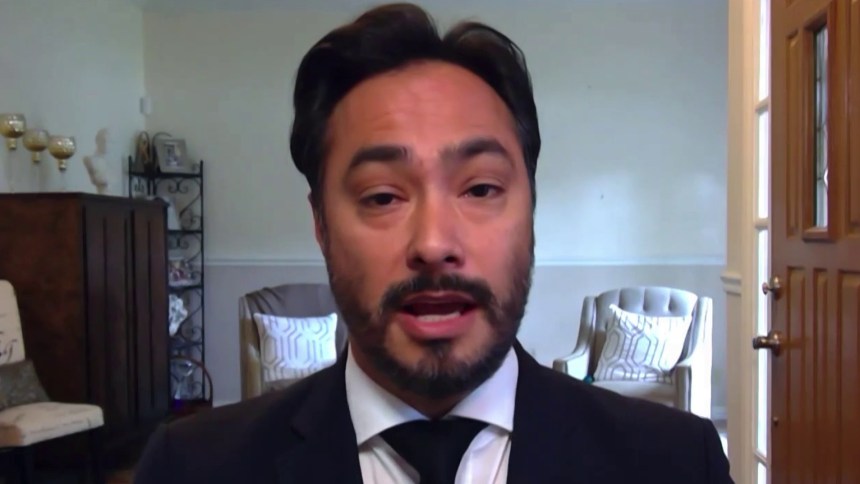
“I’m very disappointed, very frustrated that politics has trumped — literally and figuratively — the good of the country,” Manchin told reporters as the vote was coming to a close. It had to have been a personal letdown for Manchin — “I’m still praying we’ve still got 10 good, solid patriots within that conference,” he told Politico on May 21. There were only six, as it turns out.
Manchin’s disappointment that his prayers went unanswered is a perfect example of what I can only describe as governing on faith alone. It’s a condition he shares at times with President Joe Biden, one that imbues within them the idea that at some point, somehow, enough Republicans will see the light that common ground can again be found.
This thinking implies that after that promised day the issues that have divided the country will melt away, leading to an era of bipartisan cooperation not seen since the halcyon days of yore.
“The thing that will fundamentally change with Donald Trump out of the White House, not a joke, is you will see an epiphany occur among many of my Republican friends,” Biden said in May 2019 when he was campaigning for president.
This thinking implies that after that promised day the issues that have divided the country will melt away, leading to an era of bipartisan cooperation not seen since the halcyon days of yore. In the current political climate, though, counting on a series of conversions on the road to Damascus isn’t a strategy to pass laws.
It’s barely even a way to win elections. A recent meta-analysis of the 2020 election showed that Democrats spent way more money touting bipartisanship than Republicans, who, instead, funneled millions of dollars into attack ads against their “radical” opponents. This is not a party that secretly wants to seek comity.
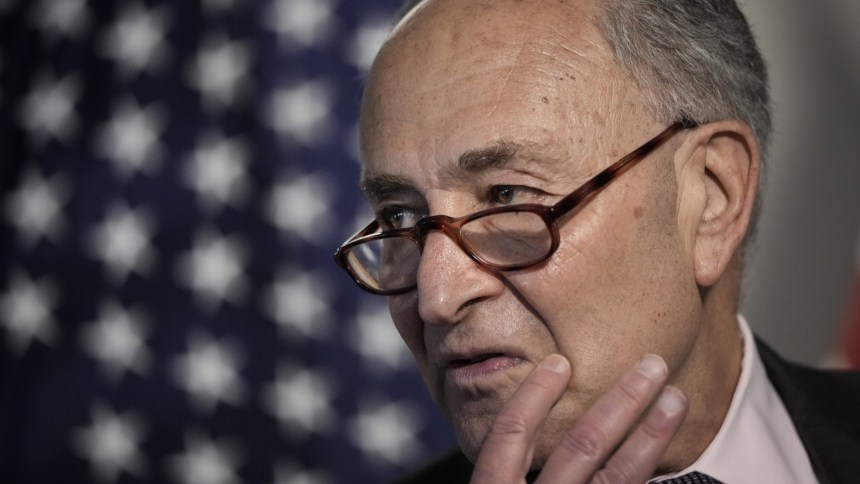
Even the few attempts by Republicans to negotiate, rather than just say “no,” have been feeble at best. Biden’s infrastructure plan originally cost $2.1 trillion; the White House recently dropped that to $1.7 trillion in the spirt of compromise. In response, the GOP nudged its counterproposal up to $928 billion — but as economics columnist Catherine Rampell points out, most of the GOP’s offer comes from money that’s already due to be spent: “That means the apples-to-apples bids on offer now are $257B vs $1.7T (not $928B vs $1.7T)”


That means the apples-to-apples bids on offer now are $257B vs $1.7T (not $928B vs $1.7T)
— Catherine Rampell (@crampell) May 28, 2021
Biden has proved to be more willing than expected to go it alone without GOP support, as we saw in the American Rescue Act’s passage. And yet, he is reported to be willing to extend negotiations for possibly another two weeks, spending more time courting votes that don’t exist rather than figuring out what it’ll take to get the best package through the Senate with only Democratic votes.
Much more troubling is the somewhat laissez faire stance that the White House is taking toward Republican efforts to rewrite voting laws around the country. Apparently, according to The Atlantic’s Ronald Brownstein, officials inside and with access to the administration think any changes could be countered through good old-fashioned campaign fieldwork:
The senior official noted that the Biden campaign repeatedly adjusted its tactics as the electoral rules changed throughout the 2020 election, and that Biden ultimately won more votes than any president in either party ever has. Looking ahead to 2022 and 2024, “I think our feeling is, show us what the rules are and we will figure out a way to educate our voters and make sure they understand how they can vote and we will get them out to vote,” the official told me. Through on-the-ground organizing, “there are work-arounds to some of these provisions,” said a senior Democrat familiar with White House thinking, who also spoke with me on the condition of anonymity to discuss internal deliberations.
Sure, that might be the case in more normal times. But then you remember what’s going on inside the GOP thanks to former President Donald Trump. “The most destructive thing that Trump did on his way out the door was he took the Republicans’ waning commitment to democracy and he weaponized it, and he made it much worse to the point where I think that a good deal of rank-and-file Republican voters simply don’t believe that Democrats can win a legitimate election,” Roosevelt University political scientist David Faris recently told Vox. “And if Democrats do win an election, it has to be fraudulent.”
As a result, we live in a world where Trump’s supporters are — with the approval of the Arizona Senate and the state GOP — conducting an “audit” of election ballots, looking for proof that Trump won the state. What happens if and when the con spreads to other states? What happens when enough Trump acolytes have won roles as secretary of state and seats on election boards that they can just discard election wins? What kind of campaign tactics can Democrats deploy to counter the losing side’s just getting to say, “No, actually, I won”? Well, again according to Brownstein, the White House seems to think the best way to prevent Republicans from stealing elections is … to win elections:
The senior White House official told me Biden aides believe that the best way to overcome Republicans’ undermining of upcoming elections is to maintain Democratic control of the House and Senate. And the best way to achieve that is for Biden to pass the agenda he ran on, which includes working to mitigate political conflict and compromising with Republicans where possible. “We have to go win elections in 2022, so we keep control of the House and Senate, which is the single most critical thing to protecting us for 2024,” the official said.
This is not encouraging stuff, folks. I’m all for politicians’ trying to find areas of agreement with their opponents — but not at the expense of common sense and what’s evident with my own two eyes. Democrats like Biden and Manchin can’t be blinded by their faith, no matter where it stems from, be it a devotion to a model of bipartisanship that has long since expired or a misguided belief that there are some lines the GOP will never cross. Whatever the reasoning, it’s a mindset that promotes a timidness in countering an opposition that will do everything in its power to reclaim power — and keep it.

Hayes Brown is a writer and editor for MS NOW. He focuses on politics and policymaking at the federal level, including Congress and the White House.