




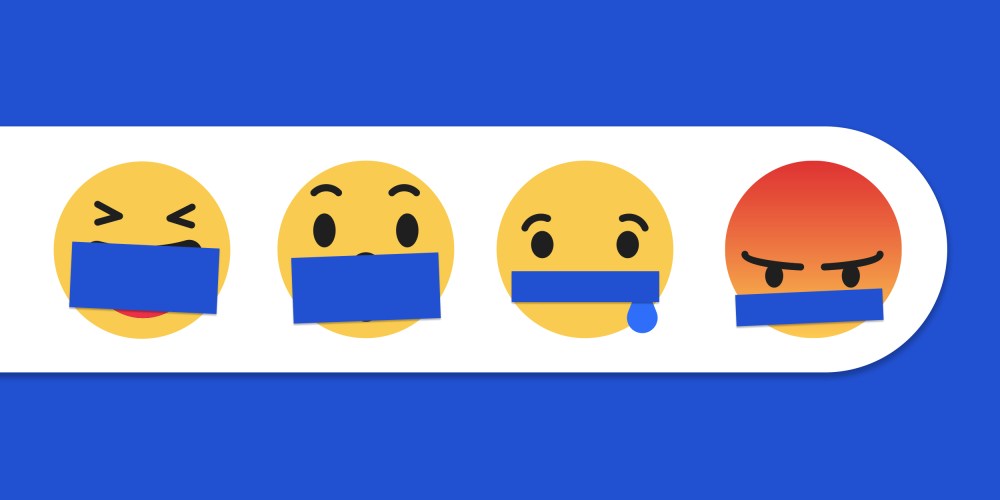
In the name of protecting freedom of speech, Facebook CEO Mark Zuckerberg has long been willing to endure criticism that his company is too permissive of hate speech, misinformation and calls to violence. But a new report from The Washington Post shows that Zuckerberg has, in fact, been willing to censor posts aggressively to ensure Facebook isn’t kicked out of a desirable market.
According to that report, Vietnam’s ruling Communist Party delivered Facebook an edict last year: Either cooperate with the government’s demand that Facebook help censor anti-government posts or get kicked off the country’s internet. Facebook decided to comply — and it was Zuckerberg’s personal decision.
One possible answer is that Zuckerberg isn’t the free speech zealot he makes himself out to be but instead takes that position when it’s best for business.
“Ahead of Vietnam’s party congress in January, Facebook significantly increased censorship of ‘anti-state’ posts, giving the government near-total control over the platform,” The Post reported. In the six months after Zuckerberg agreed to censor anti-government posts, such posts were blocked at nearly triple the rate that they had been in the previous six months.
Zuckerberg reportedly argued internally that going offline entirely would harm speech in Vietnam even more than complying with the government. (And in a statement to The Post, Facebook said censoring is justified “to ensure our services remain available for millions of people who rely on them every day.”) But Zuckerberg’s strategic concession would be more convincing if he didn’t constantly tout free speech as a cardinal principle for Facebook. He’s been willing to take fire for allowing ethnic cleansing and pandemic disinformation to accelerate through his social media platform. If being an unregulated speech diehard is your thing when millions of lives are at risk, then why would that principle vanish when one authoritarian government demands censorship?
One possible answer is that Zuckerberg isn’t the free speech zealot he makes himself out to be but instead takes that position when it’s best for business.


Facebook reportedly earns around a billion dollars in annual revenue in Vietnam. The country is the company’s largest source of revenue in Southeast Asia and a huge potential growth market. Zuckerberg’s balancing act in Vietnam may have been motivated in part by a bid to save an important market — and signal Facebook’s willingness to strike compromises with authoritarian governments around the world. Given Facebook’s angling for growth in developing countries with weak or nonexistent democratic institutions, Zuckerberg might be willing to experiment more with government censorship in those places. Regardless of where one stands on how and whether Facebook should navigate challenges from autocratic governments, the point is that the free speech principle is clearly negotiable for Zuckerberg.
Even in the U.S., Zuckerberg’s stated mission of creating a platform that’s completely neutral and free for all speech has ranged from questionable to false. The Post’s report cites documents that show that ahead of the 2020 election, Zuckerberg objected to offering Facebook’s “voting information center,” which shared information about matters like how to register to vote, over its WhatsApp messaging service in Spanish, out of concern that it wouldn’t be politically neutral. It’s bizarre to claim that offering a nonpartisan service in a language spoken widely across the U.S. would be tipping the scale — unless one takes the right-wing position that making the act of voting easier to understand is a scheme to boost Democratic voting. Zuckerberg might argue that he doesn’t actually believe that, just that he needs to avoid those optics — but that’s politicking in favor of his company; it’s not neutrality.
Despite his constant rhetoric about neutrality, Zuckerberg has a significant history of prioritizing a conservative worldview in Facebook’s ecosystem. As Angelo Carusone, the president and CEO of Media Matters for America, wrote last year for NBC Think:
Facebook in particular has a long history of caving to right-wing pressure — going back to 2016. Facebook executives have held multiple meetings with top conservatives, made Breitbart a trusted news partner and changed the Facebook algorithm to avoid cries of censorship from the right. They even went so far as to intentionally suppress news from progressive sites like Mother Jones on the Facebook news feed in order to elevate conservative sources.
Facebook’s attentiveness to right-wing publishers and users has a number of explanations. Its lobbying shop is headed by a former Republican operative, and it’s likely that some of the company’s leaders believe conservatives may be a more reliable long-term source of user engagement than liberals.
The reality is that no publisher of information can remain entirely neutral once it has enough users. There will always be questions about how algorithms prioritize information and what’s to be done about content that’s illicit. Managing those challenges require complicated strategies that have political subtexts and consequences. But Zuckerberg has made it clear at many junctures that “free speech” is not a consistent principle but one that can be sacrificed or ignored when it serves the bottom line.

Zeeshan Aleem is a writer and editor for MS NOW. He primarily writes about politics and foreign policy.