




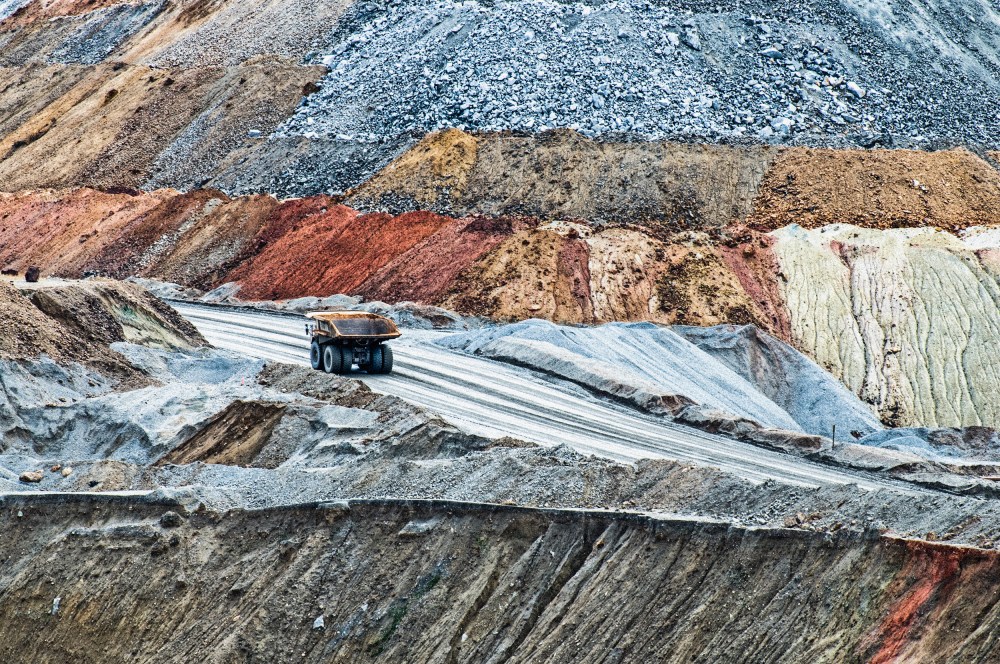
Last week the Federal Election Commission, in a case involving a Montana ballot referendum that would have imposed restrictions on hard rock mining, ruled that foreign corporations do not violate federal election law when they make political contributions to influence U.S. voters on such initiatives.
This is a dangerously wrong policy that opens up our democracy, and our national resources, to foreign domination.
This is a dangerously wrong decision that opens up our democracy, and our national resources, to foreign domination. One company that controls a subsidiary seeking to open a sulfide mine in Minnesota had such extensive dealings with Russian oligarchs that its CEO was awarded the “Presidential Medal of Friendship” by Russian President Vladimir Putin. While Minnesota does not yet have a ballot measure that would restrict such mining, if it were to come to that, the FEC has ruled that this company or any other Putin-friendly company could contribute money to oppose it.
The FEC’s bad decision means Congress must pass a statute prohibiting any foreign national or foreign-controlled corporation from spending money to influence U.S. elections, including ballot measures. This must include U.S. companies that are controlled by foreign nationals. In the meantime, individual states need to pass their own laws prohibiting foreign nationals and foreign-controlled corporations from funding political activity in state elections including ballot measures.
The FEC case involved a hard rock mining company — a Canadian subsidiary of the Australian company Sandfire Resources — operating in Montana. The company donated to the Montana Mining Association and another organization campaigning against a statewide ballot referendum that would have imposed restrictions on hard rock mining. The company successfully defeated the referendum, and the complaint filed with the FEC claimed such foreign donations to ballot measure campaigns violated federal election laws that prohibit foreign donations in American elections. The FEC, however, ruled that ballot measures are distinct from elections featuring candidates for public office and that the foreign donations are allowed.
Hard rock mining — otherwise known as sulfide mining — chops up hard rock deep underground to extract copper, nickel and other metals and releases toxic substances in the process. Because most of the rock loosened up by the mines is of no commercial value, the companies leave it in the ground, where it is much more likely to spread pollution than before.
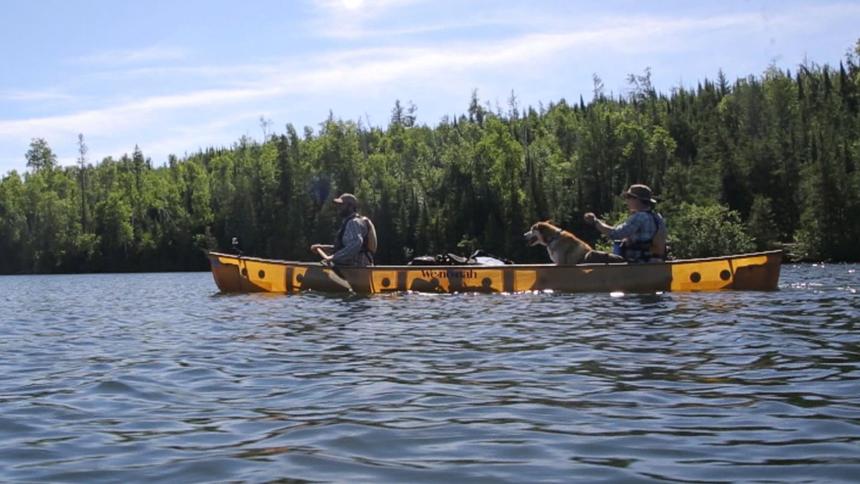
Sulfide mining turns fresh water the color of a cheap orange hair dye, reminding us of a certain former president who unabashedly supported such mining in America’s most pristine waterways. The Boundary Waters, on Minnesota’s Canadian border and one of the most beautiful parts of North America, is the latest area sulfide mining companies have targeted.
Antofagasta, a mining company owned by Chilean billionaire Andrónico Luksic, wants to build its planned Twin Metals sulfide mine right in the Boundary Waters. And Luksic’s company appears willing to pull whatever strings in U.S. politics or Minnesota politics it finds necessary.
Luksic is not just in the mining business; he’s also in the banking business. He was not in the single-family residential real estate business until after Donald Trump won the presidency. Then he bought a mansion that he leased to none other than Jared Kushner and Ivanka Trump, allowing them to live in luxury in the District of Columbia without having to buy a house of their own. Ivanka Trump, known for her support of some environmental causes, stayed silent on sulfide mining while her father’s administration approved the lease of federal land to her landlord who sought it for sulfide mining.
Sulfide mining turns fresh water the color of a cheap orange hair dye, reminding us of a certain former president who unabashedly supported such mining in America’s most pristine waterways.
PolyMet, a sulfide mine planned for the Lake Superior Watershed could also affect the Boundary Waters. Polymet, like Sandfire’s subsidiary, is also a Canadian company. PolyMet is thinly capitalized (its stock price has dropped by over 90 percent in the past decades) and is controlled by Glencore, the Swiss mining conglomerate started by Marc Rich, the tax fugitive pardoned by President Bill Clinton in 2000. Glencore has a notorious reputation for corruption worldwide and close relationships with Russian oligarchs, so close that its CEO was the one who received the “Presidential Medal of Friendship” from Putin.
These are the folks who want to open a sulfide mine in Minnesota and who are free, according to the FEC, to influence U.S. elections. Their requests have raised alarm not only with environmentalists but also in the courts. Minnesota’s Supreme Court found that the process that state pollution regulators used to grant PolyMet mining permits was woefully deficient and ordered it redone.


But why did state regulators, with the support of powerful politicians in both political parties, cave in to PolyMet so quickly? Former Minnesota GOP Gov. Arne Carlson, a Republican, explains that in one word: money. As Carlson has pointed out, mining companies and other special interests dominate the state Legislature through the enormous amounts of money flowing into the Republican and Democratic legislature caucuses.
One way to stop sulfide mining companies from destroying our clean water would be for states such as Minnesota, Wisconsin and Michigan to pass statutes or ballot measures banning sulfide mining statewide or at least in certain areas close to major waterways. Foreign-owned sulfide mining companies would devote whatever resources they could to fighting such clean water initiatives, making dubious arguments that their mines would create jobs and not cause pollution.
Minnesota voters oppose sulfide mining near the Boundary Waters, and a public campaign for a ballot imitative could persuade the Legislature to put a state constitutional amendment on the ballot.
Clean water requires clean politics, but the FEC has ruled that federal election law allows foreign billionaires to spend money in opposition to any ballot measures prohibiting sulfide mining.
Americans must make it clear that we own our elections.
Federal and state governments need to rein in political spending by domestic corporations, because it is exceeding exceedingly easy for foreign companies to route their political spending through domestic business partners. It’s the equivalent of adults buying alcohol for underage friends. If overhauling our campaign finance system requires a constitutional amendment or a change in the composition of the United States Supreme Court, which is notorious for its hostility to such reform, then so be it.
Americans must make it clear that we own our elections, that other countries and multinational corporations will not be allowed to own our government and our natural resources. In the 1770s, Patriots dumped East India Company tea into Boston Harbor and fought the American Revolution for independence from the British Crown and a Parliament under the thumb of its corporate benefactors. We must not, 250 years later, allow foreign multinationals to dominate our political system, whether to dump their toxic waste into the Boundary Waters or do anything else that threatens our land, water or livelihood.

Richard W. Painter
Richard W. Painter was the chief White House ethics lawyer from 2005 to 2007 under President George W. Bush. He is the S. Walter Richey Professor of Corporate Law at the University of Minnesota and is a graduate of Harvard College and Yale Law School.