




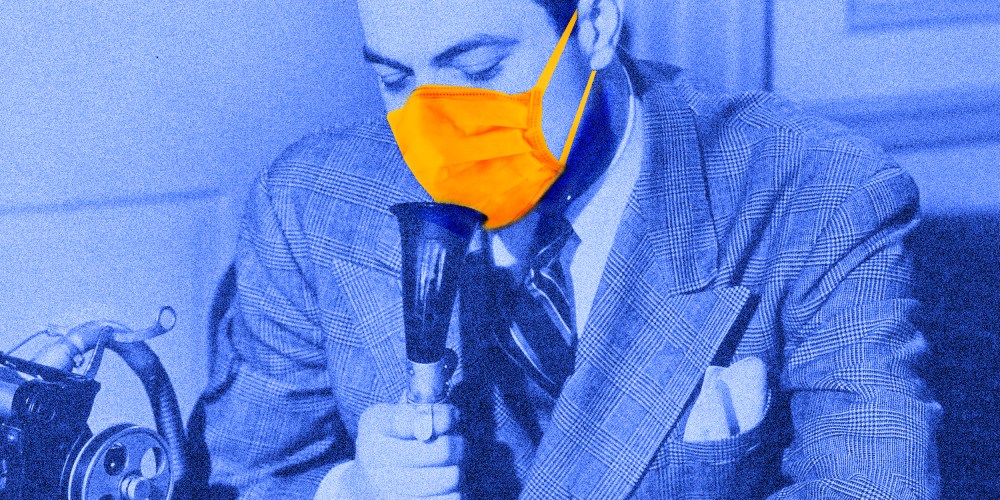
Millions died of Spanish influenza, tens of millions, during the pandemic that spanned the world beginning in 1918. It’s the only proximate historical analogue we could turn to during those uncertain, terrible days when Covid-19 first reached the United States. But despite the overwhelming size of the tragedy, there was no overarching historical narrative for us to draw from.
Pandemics go against the mold that shapes the stories we get taught in history class. What began in 1918 wasn’t like the World Wars, for which we had neat words and simplified lessons; we all knew the names of Franz Ferdinand, Hitler, FDR, the great men who husbanded these calamities. At best, the disease was a footnote to World War I, a minor curiosity, until we were once again donning surgical masks to walk out our doors. Where were the stories of that calamity? Of the ordinary people who had lived through death and crisis?

The few nonfiction books available on the era keep their focus on the men who advanced medical science during this time. There was one, precious, white-hot contemporaneous novel “Pale Horse, Pale Rider.” One 1918 letter from a nurse — a funny, terrible human letter, about death and her crushes, dresses and death, luncheons and more death — went viral in May 2020, for its simple, human depiction of an experience that mirrored our own.
Beyond that, to find out what it was like to live during that bygone era, one would have had to excavate like an archaeologist, piecing together lost time, hunting for a mirror of the daily confusion we faced. We knew we were living through history, as one always knows in trying times, but we still had to live: beans, sourdough, hand sanitizer, sirens, death counts, love.
Pandemics go against the mold that shapes the stories we get taught in history class.
There is, however, one great exception to the ready-made narratives we consume about the giants who bestride history like colossuses. The story of the Great Depression, even in the sanitized and greatly condensed histories filtered into our textbooks, is taught as a story of people. Farmers who had nothing but dust to farm, who made desperate migrations; bread lines stretched along city blocks in black-and-white photos; bankers who threw themselves from windows; boxcar-hopping hobos who scratched runes in their own invented language on houses that could make the difference between death and survival: kind lady lives here; dangerous water.
How did such a gentle, human narrative of the many faces of desperation get created and survive in a land barren of such stories? It wasn’t incidental. It was — like so much else in that singular era of governmental derring-do — a product of state aid. The Federal Writers’ Project, part of the New Deal’s Works Progress Administration, existed from 1935 to 1939. The FWP employed thousands of struggling writers and artists, including Zora Neale Hurston, Nelson Algren, Richard Wright and Studs Terkel. While its initial project was to create a region-by-region guide to America, the work grew into something sprawling, strange and marvelous, capturing history as it happened from the mouths of its participants.
The Federal Writers Project employed thousands of struggling writers and artists, including Zora Neale Hurston, Nelson Algren, Richard Wright and Studs Terkel.
During the few short years of its existence, the program created revolutionary archives of oral history: the 2,300 life stories of former slaves collected as part of its Slave Narrative Collection, which gave human dimension to the unthinkable mass cruelty of slavery. Folklore projects captured what might otherwise have been ephemera — jargon, legend, stories of factory work and immigration, regional foodways that have since succumbed to corporate homogenization. Above all, these writers created portraits of American lives caught up in the throes of great events, fractal reflections of the universal in accumulations of the particular. In the end, they captured the life stories of 10,000 everyday people — and in the process immortalized whole worlds.
Ten years after the disaster at Chernobyl, 60 years after the FWP ended and thousands of miles away, the Belorussian writer Svetlana Alexievich set about interviewing as many people as she could: The liquidators who had uprooted forests and shot radioactive animals, evacuees from the 30-kilometer Exclusion Zone, the wives of firefighters who had seen their husbands slowly melt from radiation poisoning, Communist Party commissars. These monologues of the extraordinary and the banal rolled together, the polyphonic chorus of human life in the face of the immutable atom, form one work, a roughly 250-page volume titled “Voices From Chernobyl.” For her ethnography of tragedy — filled with details about scarves, superstitions and cats fleeing as the reactor spewed its poison — she received the Nobel Prize in 2015.
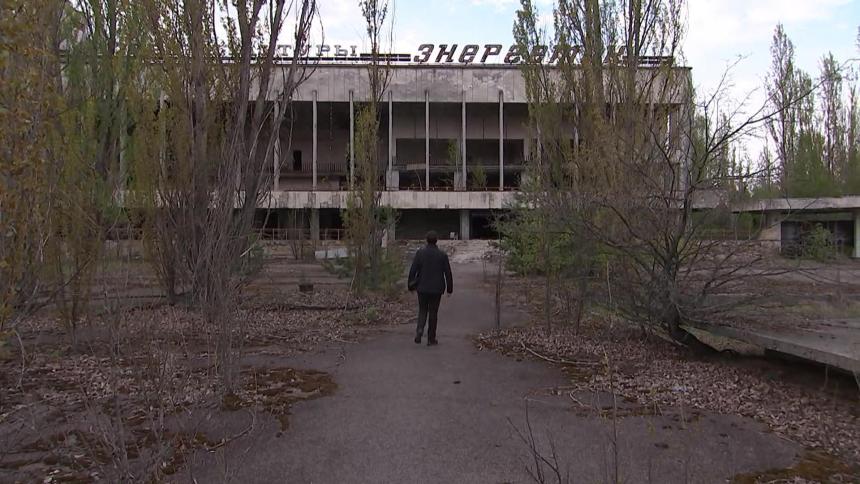
Alexievich had done this impossible and heroic work before, about other man-made cataclysms: World War II and its women and children; the collapse of the Soviet Union; the Soviet war in Afghanistan, their own bloody Vietnam. All were captured with an eye for the small and human narratives that subsume and permeate great events.
“Before my eyes the legend will come alive and turn into a human life, descend to earth,” Alexievich writes in “The Unwomanly Face of War: An Oral History of Women in World War II.” “How can I call the small small and the great great, when both are so boundless? I’ve long ceased to distinguish between them. For me one human being is so much. There is everything in him — you can get lost.”
Reading “Voices From Chernobyl” recently, in the midst of what is still a world-historical pandemic, I was struck how she captured villagers who couldn’t understand why their garlic, which they had sown with such care and which still looked white and pure, was now impossible to eat and the frustrations of the physicists who saw in the fields not food but nuclear waste products. In the vast abyss between the two groups is an echo in our own time. Germ theory is not quite as abstruse as nuclear physics, but there is a similarity in the difficulty of communicating the threat: The foe is invisible to the naked eye, the disease may leave one asymptomatic, but if it kills it does so slowly, on a time delay.


As the virus’s threat begins to recede in the U.S., we’re left with the same problem that obscured the 1918 pandemic’s legacy.
For a long time, the true mechanism of Covid-19’s spread, through aerosols, not droplets, was misunderstood, or purposely buried. We were left with hygiene theater, scrubbing our hands raw instead of improving ventilation, and amid legions who refused to believe or imputed human malice to a virus born of nature. And one new study estimates that 900,000 people have died in the United States, a figure that vastly outstrips the official death toll.
As the virus’s threat begins to recede in the U.S., we’re left with the same problem that obscured the 1918 pandemic’s legacy. There is a version of the story of Covid-19 that will go like this: a disease arises and great men and women, scientists, unearth the mysteries of mRNA, work together at lightning pace, create a vaccine, distribute it. To wit: CNN’s Sanjay Gupta recently wrote that American medical and public health groups “believe that when the story of this pandemic is finally written, it will be about the vaccines — and the science behind them — that finally rescued us.” What a loss that would be: Another history that’s just a burnished legend; an airless, jingoistic story of scientific triumph; a story without histories, without life.
But 2020 is not lost to the past yet, even if so many people have been lost. Around kitchen tables, in human hearts, there are yawning, empty spaces. There are so many lost grandmothers and grandfathers, a whole segment of a generation vanished. Those of us who lived, lived: Some fell in love or out; millions lost work and haven’t regained it; mothers raised their children; mothers died, fathers died. Some people lost their whole families; some people lost no one but lost a year of time, of human connection. Farmworkers in crowded dormitories pulled up strawberries and died. Factory workers died. The Russian word for a mass grave is “bratskaya mogila,” brothers’ grave, but our lives were too atomized to recognize one another as brothers.

In the process, we fought over an election, we fought over police violence, in the streets, in the Capitol. On a good day, hundreds were dying. Who will tell this history? There are 300 million stories in the United States of Covid-19 — more than, because so many stories live in every one of us.
Meanwhile, the pandemic has accelerated an already-extant crisis in the arts and in journalism. Musicians and performers, cinematographers and actors, local journalists and museum curators have seen their already precarious worlds crumble, bereft of audiences or at the mercy of relentless corporate consolidation. As William Deresiewicz put it this month in Harper’s Magazine, what has unfolded across the arts as free content has supplanted traditional models of income, and the pandemic crippled attempts to pivot to new revenue streams, is neither a recession nor a depression, but “a catastrophe.”
Imagine writers, photographers, playwrights and filmographers fanning out across the country, capturing the stories of meatpacking and grocery store workers who held the line against the disease at great cost, and for paltry wages.
There is also — if there is bravery enough in the Biden administration — opportunity in this catastrophe. Imagine writers, photographers, playwrights and filmographers fanning out across the country, capturing the stories of meatpacking and grocery store workers who held the line against the disease at great cost, and for paltry wages. Of health care workers who saw a new disease arise, who fought it with everything they had. Of those who fought for justice as people died around them, and of revanchism, of recalcitrance. Of conspiracy theories and desperate and noble and silent efforts to survive behind the doors of small apartments.
A Federal Writers’ Project — an Artists’ Project, really — in 2021 could take full advantage of the range of narrative opportunity, from murals to short films to painstaking oral histories, of communities and jargons and stories that would otherwise disappear. It would create a new lushness in the barren space of our common imagination, open new, free territory in a time when every aspect of our common life is subject to such bitter dispute.
In the process, we could invigorate a public artistic legacy that has too long relied on the caprice of private wealth, instead creating true wealth for ourselves: a wealth of story, of history. Having lived through it, we can finance the telling of it and unlock the doors of so many marvelous and terrible human lives, in all their smallness and boundlessness.

Talia Lavin
Talia Lavin is a freelance writer whose work has appeared in The New Yorker, The Washington Post, GQ, The Village Voice, The New Republic and many more publications. She is the author of the books "Culture Warlords: My Journey Into the Dark Web of White Supremacy" (Hachette Books, 2020) and "Wild Faith: How the Christian Right is Taking Over America" (October 2024). Her newsletter, The Sword and the Sandwich, is featured in Best American Food and Travel Writing 2024.