




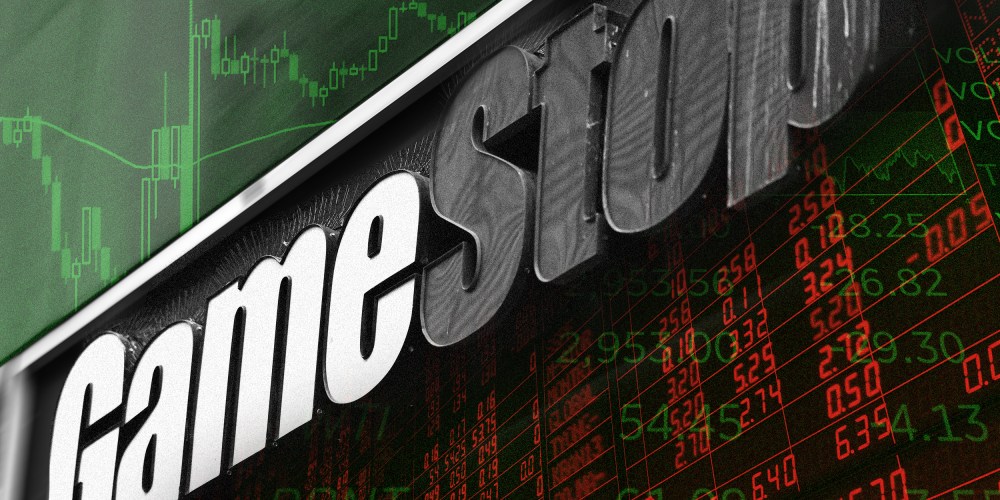
When the news broke that a random group of anonymous Reddit users with names like Roaring Kitty and SavageCyclops managed to pull off a win over big Wall Street hedge funds to the tune of billions of dollars, it sounded like the ultimate underdog tale.
This story is a reminder of the power of the internet.
While last week’s GameStop stock surge was exciting, this week, the stock plunged, and hedge funds and traditional investors have regrouped and recouped losses. But internet users are still wreaking havoc on the stock market, driving up the price of silver with a similar strategy of forcing a “short squeeze” and buying up Dogecoin (a cryptocurrency named after a meme).
This story is a reminder of the power of the internet. And it’s a reminder that any regulatory fixes — for social media platforms, for consumer trading apps and for Wall Street itself — must address the fundamental inequalities that underlie populist movements like what this GameStop run might become.
In this David-and-Goliath tale, our Davids are an unknown number of individual traders (often called retail traders), many of whom initially came from the subreddit r/wallstreetbets, a Reddit community that describes itself as something “like 4chan found a Bloomberg terminal.” (If you’re wondering why you’re seeing “stonks” everywhere, r/wallstreetbets is why.)

When one David stands alone against Goliath, the odds are as slim as they would be if one person takes on all of Wall Street. But connect that one person with a few thousand more and you get the kind of surprise we’re seeing with GameStop and Wall Street Bets.
The connective powers of the internet can spark social movements that change the world. The #MeToo movement began as a viral hashtag and led to real-world consequences, taking down powerful abusers and generating conversations that changed the world for the better. The Black Lives Matter movement uses the internet strategically, as well, exposing systemic injustices and amplifying messages of anti-racism and social reform.
The connectivity of the internet allows for a democratization of access, empowering individuals to take on powerful institutions. But the same tactics that allowed Reddit users to take on actual Wall Street can also be used for coordinated harassment, disinformation campaigns, foreign influence operations and more.
The connective powers of the internet can spark social movements that change the world.
Part of what makes this story a good one is that it is also deeply funny, full of ridiculous usernames and hashtags, fan-created mashups of pop culture scenes and people doing it “for the lulz,” acting perhaps even against their own financial interest for amusement.
In other words, it’s fun to scroll through memes of “stonks” and “tendies” and “diamond hands,” and it’s exciting to feel like part of a movement exerting power over the powerful. Humor, in-group exclusivity and a sense of power for the powerless are what have fueled the GameStop run so far — but these facets of internet culture have also fueled harmful online and offline events, including the Jan. 6 attack on the U.S. Capitol.
What started as a few posts on Reddit soon led to a global phenomenon, framed as an epic battle between Big Finance and the internet. While the organizing began on Reddit, the rally soon spread to other spaces. As GameStop’s stock kept rising, more individual traders from across the internet joined in to buy GME and push the stock price even higher.
Hedge funds like Melvin Capital “lost” billions, and some individual traders reportedly became millionaires overnight. (The retail traders weren’t the only ones likely to have profited, and keep in mind that, in the world of stocks, profits and losses can sometimes be temporary or figurative.)

At first, it seemed like the underdog was winning. But as the buying reached a fever pitch, a new villain emerged: Trading applications like Robinhood and WeBull temporarily blocked individual investors from purchasing GameStop and other targeted stocks. Robinhood was even alleged to have closed options on behalf of users without their knowledge or consent, forcing sales at a loss for users. Within hours, angry users filed the first potential class action lawsuit against Robinhood, alleging breach of contract, breach of fiduciary duty, negligence and more.


Policymakers like Josh Hawley want to solve these problems by throttling the internet and forcing platforms to censor more content. The current bogeyman is Section 230 of Communications Decency Act, which provides some immunity from liability for internet service providers (like social media platforms) for certain actions generated by users. These proposals are often framed as restricting the internet for good purposes, like fighting terrorism, sex trafficking or disinformation.
The problem is that, if we create laws to lock down the tools that extremists use to spread their messages online, we will also shut down the good parts of the internet — the humor, the creativity, the free expression and connectivity that have enriched our global society and inspired social movements around the world.
We know, intuitively and based on evidence, that the house always wins, but we hold out hope anyway.
Instead of focusing on restricting online speech, lawmakers should instead focus on addressing structural inequality and imbalance of power. There are real problems with the internet. The ad-driven data economy continues to threaten our privacy. The outsize power of platforms has problematic implications for online speech and censorship. An absence of alternatives leads to unfair market dominance by a few Big Tech giants, killing the dream of the open internet and its ability to democratize access for all.
Similarly, there are obvious problems with our financial system and the vast, growing divide between the haves and the have-nots in contemporary American society. The meme-fueled campaign to buy GameStop and drive hedge funds to billion-dollar losses exposes some hard truths about our financial system, including the potentially unfair practices of consumer trading apps.
Lawmakers from both sides of the aisle have taken notice and voiced support for individual traders, particularly after Robinhood and other consumer trading apps halted buying on their platforms.
It may seem odd to see Ted Cruz and Alexandria Ocasio-Cortez on the same side, but in a battle between Big Finance and the little guys on the internet, no one wants to (publicly) be on the side of the suits. Both the House and the Senate now plan to hold hearings on the GameStop debacle.
Consumer protection is important, both for internet trading and for internet platforms. Both Democrats and Republicans have continually proposed greater restrictions on online speech. But such restrictions often ignore the power dynamics of the internet, focusing on censoring speech instead of regulating the data ecosystem and the technology market to solve the problems of inequality and power imbalance in technology.
Everyone loves a good David-and-Goliath story. We love to bet on dark horses and root for underdogs. We know, intuitively and based on evidence, that the house always wins, but we hold out hope anyway. If lawmakers want to be on the side of the underdogs, they must address structural inequalities in finance and in technology — not take actions that would destroy the internet’s ability to empower the powerless.

Tiffany C. Li
Tiffany C. Li is a technology lawyer and legal scholar. She is an assistant professor of law at the University of New Hampshire School of Law and a fellow at Yale Law School's Information Society Project.