




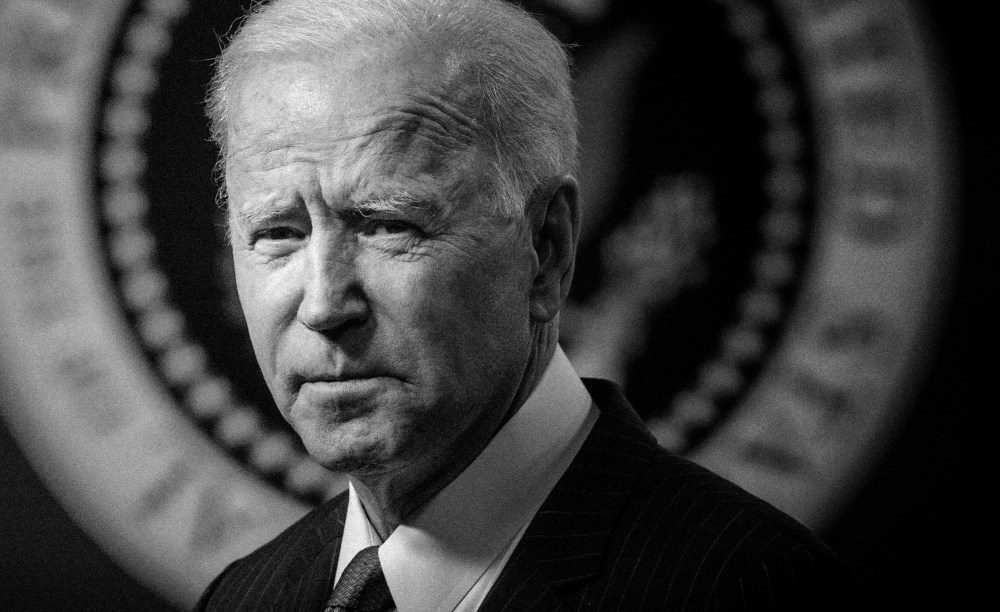
When a new election law passed in Georgia formalizing the state’s early voting system, President Joe Biden responded with uncharacteristic vehemence. The law has come under fire from critics as a means of suppressing the vote, particularly in densely populated, mostly Black counties.
If America has learned anything, it’s that we must hold our leaders to account for the information they share.
There is nothing illegitimate about expressing the fear that, for example, reducing the number of drop boxes for absentee ballots and barring pop-up voting places could dissuade some voters from participating in elections. Similarly, there is nothing untoward about proponents of the law observing that Georgia’s drop box provisions, which were first used in the state in 2020 in response to the pandemic, include the egalitarian stipulation that they serve 1 of every 100,000 registered voters, or that pop-up voting places have been used to game down-ballot elections in the past.
There are parts of the bill that can be rationally viewed as net positive and negative changes to Georgia’s voting laws inside the bill. And we could be having an informed argument about that. But we’re not; instead, we’re arguing over a deception. Specifically, the misinformation being perpetuated about time restrictions on voting hours.
“What I’m worried about is how un-American this whole initiative is,” the president said March 25 of Georgia’s “sick” restrictions on voting rights. He affirmed that the law would “end voting at five o’clock when working people are just getting off work.” On March 26, the president reiterated that the initiative “ends voting hours early so working people can’t cast their vote after their shift is over.”
While the impact of Georgia’s new voting law on future elections is a matter of important discussion, what isn’t debatable is that these specific claims about the time restrictions for voting are outright false. And if America has learned anything, it’s that we must hold our leaders to account for the information they share with the masses.
Thanks to former President Donald Trump, we all know the power a lie about American electoral institutions can have. Just months ago, we got a taste of how such a lie can radicalize and lead people to commit acts of astonishing violence.
Thanks to former President Donald Trump, we all know the power a lie about American electoral institutions can have.
In that terrible moment, Americans of good conscience resolved to never allow such an odious fiction to undermine the public’s faith in governance again. That resolve seems to have lasted all of three and a half months, with the test coming sooner than many imagined it would: Did we really mean it when we said no more disinformation, or did that only apply to disinformation that we didn’t like?

After Georgia’s voting law was passed, Glenn Kessler, editor of The Washington Post’s Fact Checker, ran a comprehensive dissection of the bill that disproves the false claims about timing. The law does not cut off voting on Election Day at 5 p.m. but merely codifies “normal business hours” as 9 a.m. to 5 p.m. The new law allows counties the option to extend voting from 7 a.m. to 7 p.m., and it expands the number of mandatory days in which counties must offer early voting while giving counties the option of allowing early voting on Sundays.
But that did not seem to matter. Biden had called the bill “Jim Crow in the 21st Century.” Again, the law provides for more days of early voting options than even supposedly forward-thinking states like New York, which does not allow for the kind of no-excuse absentee voting Georgia now allows. It mandates requests for early absentee balloting two weeks prior to Election Day to ensure that the turnaround time is broad enough so that all cast ballots are counted and fewer arrive after Election Day.
The law ensures transparency by requiring local election officials to post the total number of ballots cast in person, via absentee, or provisionally by 10 p.m. on the night of the election. And for populous districts with more than 2,000 voters per polling place and wait times longer than one hour, the bill mandates the hiring of more poll workers.
But, for some, all these particulars were beside the point. Media figures lobbied the sports and entertainment industries to divest from the state of Georgia. Multibillion-dollar firms, including Coca-Cola and Delta Air Lines, condemned the law which, in the words of Delta’s CEO Ed Bastian, “could make it harder for many Georgians, particularly those in our Black and brown communities, to exercise their right to vote.”

Local giants like the actor and entertainment mogul Tyler Perry demanded the Justice Department intervene against this “unconstitutional voter suppression law that harkens to the Jim Crow era.” His statements were reprinted without comment by local media institutions like the Atlanta Journal-Constitution. Only well after the fact did the publication append a correction, noting that “if you’re in line by 7 p.m., you’re allowed to cast your ballot. Nothing in the new law changes those rules.”


Biden might have insisted that restrictions against distributing water to prospective voters are punitive and belies the GOP’s darkest intentions, just as Republicans are free to respond that a prohibition on outside groups distributing anything within 150 feet of a polling place or 25 feet of a standing line is not out of place with other state-level laws, and polling places can make self-service water receptacles available if they so choose.
That’s a debate around valid though competing interpretations of a set of mutually understood facts. We are not having that debate, and Biden is very much engaged in ensuring that we do not.
In an interview with ESPN on March 31, the president was asked how he would feel if Major League Baseball moved the All-Star Game out of Atlanta to protest the state’s election law. “I would strongly support them doing that,” Biden said, reiterating his belief that the law is “Jim Crow on steroids.”
Georgia Democrats — from former House Speaker Stacey Abrams to Sens. Raphael Warnock and Jon Ossoff — objected to this, an American president demanding the economic boycott of the state they represented. But what was the MLB to do? The president of the United States said what he wanted, and baseball capitulated to his demands.

When Trump, for example, would call for the petty boycotts of Goodyear Tires, Harley-Davison motorcycles, or Oreo Cookies, no one seriously believed that the threat posed to these companies’ bottom lines would be measurable. By contrast, Biden’s endorsement of a Georgia boycott has produced immediate results.
The organizing force behind this self-serving mendacity has a compelling power all its own. Grounded, defensible, qualified arguments don’t have the same galvanizing force as sweeping assertions like the idea that Georgia is resurrecting racial apartheid in pursuit of Republican electoral hegemony.
Just as Trump was more inclined to argue the fiction that votes were “deleted” than that Pennsylvania’s arcane mid-2020 election reforms might have confused or dissuaded some voters, the more defensible claim is just not as sexy as the lie. So, the lie endures.
We all know how doggedly partisans will cling to a harmful mistruth to justify their persecution complex. Trump’s unfounded claims served as the predicate his voters used to dismiss any election result they disfavored. Likewise, we can’t allow Biden’s supporters to cite his words to invalidate the legitimacy of any election result in Georgia that fails to produce Democratic victories.

Noah Rothman
Noah Rothman is the associate editor of Commentary Magazine.