





Two weeks into the widening conflict between the United States and Israel and Iran, it’s become harder to ignore one tragic reality: The countries paying some of the steepest prices are not the ones that started the war. Rather, they tried to prevent it.
Fourteen countries have been impacted by this war, seeming to indicate that the U.S. and Israel failed to anticipate — or perhaps even ignored — Iranian threats to retaliate if attacked.
What makes this moment particularly bitter for Gulf leaders is that many spent years trying to prevent precisely this scenario.
Those threats have turned into active strikes in the Gulf countries, where people have reported missile strikes in residential and commercial areas and where residents are frequently receiving mobile emergency alert notifications warning them to seek shelter in nearby garages. Gulf leaders in turn are trying to absorb the shock of a war they did not start.
Their choice is difficult: press Washington and Tel Aviv to end the war they began, as it spirals out of control? Or confront Tehran forcefully for targeting their countries in retaliation?
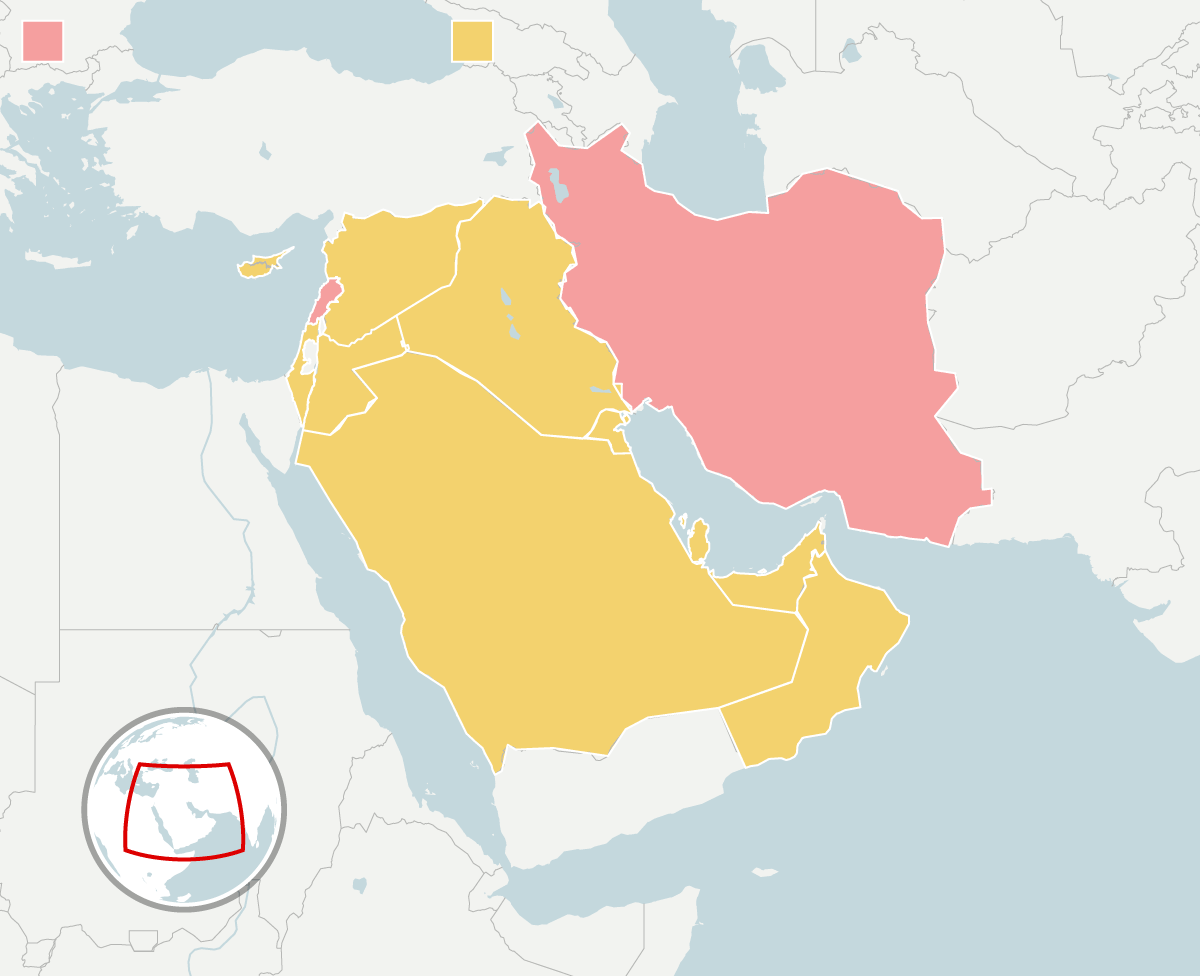
Attacked by U.S./Israel
Attacked by Iran
syria
cyprus
lebanon
Iraq
Iran
israel
jordan
Bahrain
qatar
Saudi Arabia
uae
oman
Carson Elm-Picard / MS NOW; Data: Institute for the Study of War
Since the start of the war, the United Arab Emirates has been targeted with approximately 283 ballistic and cruise missiles and more than 1,500 drones leading to 6 fatalities and 120 injuries from 25 different nationalities. The UAE’s Permanent Representative to the U.N. said at a recent news conference that Iran is indiscriminately and deliberately attacking civilian targets.
Missile and drone attacks have hit transport networks, airports, commercial ports and energy infrastructure throughout the region, according to reporting from The Guardian.
Qatar, Bahrain, Kuwait and Saudi Arabia too have all been targeted by hundreds of missiles and more than a thousand drones.
On Wednesday, the international community spoke clearly with a significant vote at the U.N. Security Council. In a legally binding resolution, the council adopted a resolution condemning Iran’s aggression on its Arab neighbors as unlawful and demanding it stop attacks immediately. Both Russia and China, two countries allied with the regime in Tehran, did not use their veto to block the resolution that critically isolated Iran. The resolution was co-sponsored by a staggering 135 countries, demonstrating a rare sign of global unity and outrage over Iran’s attacks on its Arab neighbors.
For now, Gulf officials I’ve spoken to are trying to walk both paths — condemning Iran’s attacks while urging de-escalation across the region despite calls from some American officials trying to drag Gulf Arab countries into this war.
Meanwhile, Iran continues to relentlessly target its neighbors.


For decades, the six countries that make up the Gulf Cooperation Council built their prosperity on predictability. They transformed desert coastlines into global hubs of finance, energy, aviation and tourism. Cities like Dubai, Doha and Abu Dhabi became symbols of a “different Middle East” — one defined less by conflict and more by commerce and connectivity.
What makes this moment particularly bitter for Gulf leaders is that many spent years trying to prevent precisely this scenario.
Saudi Arabia, the UAE, Qatar and Oman all pursued cautious diplomacy with Iran while maintaining security partnerships with Washington. The goal was simple: keep the region open for commerce and movement while out of another catastrophic war.
But geography has its own logic and so too, apparently, do President Donald Trump and Israeli Prime Minister Benjamin Netanyahu, who dragged some of the closest U.S. allies into a war they did not seek nor approve.
As the gulf is becoming a battlefield by proximity, ordinary civilians are now paying the ultimate price.
None of those killed in related strikes were soldiers. None of them had anything to do with the war unfolding hundreds of miles away.
The Gulf states are wealthy. Their militaries are sophisticated. Their skylines symbolize one of the most remarkable economic transformations of the last half century. Their cities are known for financial districts, airports and shopping malls. They are home to millions of expatriate workers and international visitors. They are places that spent decades convincing the world that stability in the Middle East was not only possible — it was profitable
The gulf’s prosperity was built on openness: open skies, open shipping lanes and open markets.
Iran’s response to America and Israel’s miscalculated war has now nearly closed all three.
Airspace disruptions have forced airlines to cancel or reroute thousands of flights across the region. Ports and shipping routes have been attacked. And the region’s most important economic artery — the Strait of Hormuz, through which roughly one-fifth of the world’s oil passes — has become one of the most dangerous waterways on the planet, according to reporting from The Guardian.
As resilient as it may be, the result is a devastating double blow to the gulf’s economic foundation.
Oil exports — the region’s traditional engine of wealth — are under pressure as infrastructure and shipping routes come under regular attack.
At the same time, tourism and aviation — the pillars of the gulf’s economic future — are faltering under the weight of war.
Hotels are seeing mass cancellations. Conferences and major events are being postponed. Airlines that once carried millions of passengers across continents are rerouting or grounding flights.
Wars have a way of collapsing diplomatic ambiguity.
If the missiles keep flying and the skies over the Gulf remain contested, it will become much harder to remain neutral.
And the countries that spent decades building prosperity on stability may soon find themselves forced to choose how to stop a war they never wanted.
Because the question now facing the gulf is not simply how this conflict ends — but for how long they and other countries of the region can live under its shadows.

Ayman Mohyeldin is a host of "‘The Weekend: Primetime" and an MS NOW political analyst.