




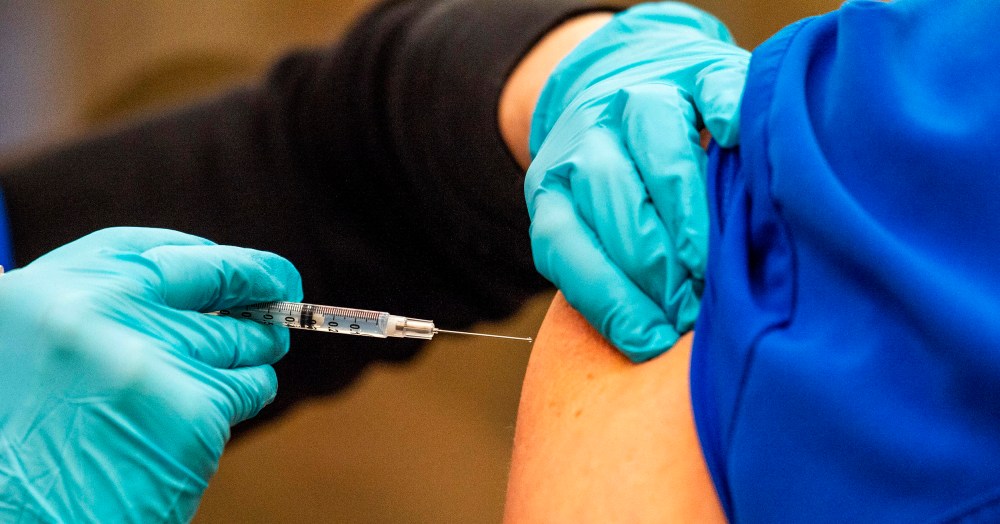
In America and in the rest of the world, nonessential, lower-risk people and the public wait for their turn to receive a Covid-19 vaccine. At the same time, news of possible mishandling of vaccine distribution, as recently reported in New York City urgent care centers, shows how important it is to be vigilant and press lawmakers and public health officials to be transparent in their distribution strategies and to hold them accountable for their decisions.
The lack of any federal strategy has left every state, county and tribal territory to their own devices.
Since the approval and rollout of the vaccine, America has watched the painfully paradoxical images of boxes of vaccines being unloaded from distribution trucks alongside FEMA-operated refrigerated morgue trailers parked at hospitals. In the same building, health care workers have literally been receiving a shot in the arm that could save their lives within hours of pronouncing a patient dead.
Still, the lack of any federal strategy has left every state, county and tribal territory to their own devices, to identify strategies and submit plans for their respective distribution process.
The Advisory Committee on Immunization Practices (ACIP), an independent agency, has made recommendations that identify the high priority groups: 1A encompasses health care personnel and long-term care residents; and 1B adults over the age of 75 and front-line essential workers (such as first responders, police, educators, U.S. Postal Service workers, corrections officers and others).

But a review of the various states’ vaccination plans reveals that many states are not following the ACIP recommendations and that there is a degree of variability that could have significant impact and create more confusion than comprehension. For example, Arkansas has long-term care facilities in their second phase, after health care workers and other essential workers, despite over 100,000 long-term care residents and staff who have died from Covid-19.
Maryland has teachers and day care operators in the second phase, behind other essential personnel, potentially extending school closures and creating tension between parents who must work and the teachers and day care providers who want to be safe while caring for students. The state of Texas has also deviated from the ACIP recommendations and prioritized people over the age of 65 as well as those over the age of 16 with certain chronic conditions.
The rationale behind these variations can appear sound and reasonable; for example, trying to prioritize people with chronic conditions seems compelling, since rates of death from Covid-19 were 12 times higher in people with chronic conditions compared to those without diabetes, heart disease or cancer. But it is also highly likely that people with such conditions are able to take precautions and avoid high-risk situations.


Ethnic minorities comprise a significant number of essential workers, which only exacerbates the ongoing health disparities uncovered by Covid-19.
Essential workers, particularly front-line workers such as public transit operators, postal carriers, teachers and food supply workers, are critical to the prospects of preserving essential services and are at incredibly high risk, often without any high quality personal protective equipment or an ability to practice social distancing. Further, ethnic minorities comprise a significant number of essential workers, which only exacerbates the ongoing health disparities uncovered by Covid-19.
The goal of any vaccine distribution strategy is to balance societal need, and ethics and science and allow for flexibility to make decisions like the ones Texas, Maryland and Arkansas have had to make. But when a pandemic of this nature has gripped the world, wielding death and destruction without limits, ushering many of us into the quiet corners of our homes in isolation and fear, the demand for a vaccine is inextricably linked with a sense of fairness and equity.

Even as a physician who works in a clinic setting, I have no problem waiting my turn after my higher-risk colleagues in the hospitals receive their vaccines. Images of members of Congress who downplayed the impact of the virus now receiving the vaccine feel like a slap in the face. Continuity of government seems meaningless when that same government delays a stimulus package and promotes protests against stay-at-home orders and mask mandates.
Continuity of government seems meaningless when that same government delays a stimulus package and promotes protests against stay-at-home orders and mask mandates.
Fast forward 30 days from now when simply crossing state lines can make the difference in whether you receive the vaccine or not. As thousands of people continue to die each day and millions more Americans contract Covid-19, even a one-week delay can feel like an eternity. In the beginning, demand will far outstrip supply, and there will no doubt be an underground market of sorts to try to access the vaccine early.
While we are still trying to navigate the uncharted waters of the pandemic, we have unfortunately become accustomed to expecting the worst and witnessing inequities often wielded by a callous president and his inner circle. But we do have new hope in the form of a vaccine. Let us not squander this hope by repeating our mistakes.

Dr. Kavita Patel
Dr. Kavita Patel is a teaching professor of medicine, Division of Hospital Medicine, at Stanford University and a board-certified internal medicine physician. She served in the Obama administration as director of policy for the Office of Intergovernmental Affairs and Public Engagement in the White House. Her area of expertise is around the intersection of health policy, clinical medicine and innovation. She also spends time advising venture capital and is a medical contributor for NBC News.