




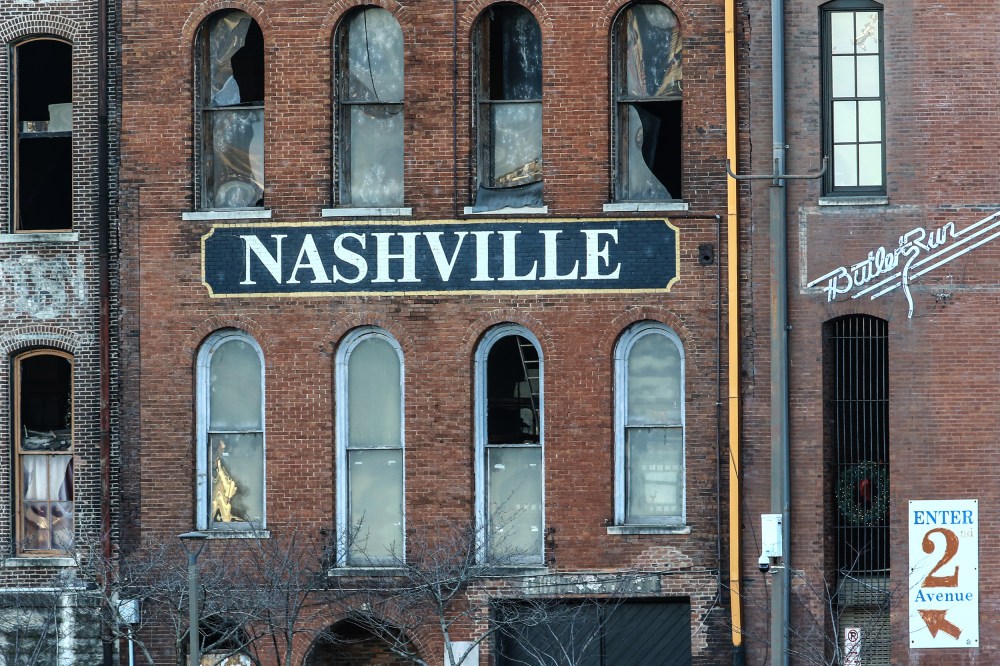
Imagine if a Muslim man filled his RV with explosives and drove to downtown Nashville, Tennessee, with the express purpose of setting off a weapon of mass destruction. Imagine if he then parked his explosives-laden vehicle outside of the AT&T building and then proceeded to carry out a suicide bombing that damaged more than 40 buildings and injured at least eight people, including police officers. Do you have any doubt that this bomber would be called a terrorist?
We see terms like “recluse,” and a “loner” who led a “quiet life.” What we don’t see is him being called a “terrorist.”
And I mean by everyone, from the media to President Donald Trump to co-workers and friends. But look carefully at how 63-year-old Anthony Quinn Warner, identified as the bomber who set off a weapon of mass destruction on Christmas Day in Nashville, has been described.
We see terms like “recluse,” and a “loner” who led a “quiet life.” What we don’t see is him being called a “terrorist,” with the exception of some social media posts from myself and mostly my fellow Muslims who are feeling the familiar sting of the double standard.
I took the liberty of editing the New York Times headline: pic.twitter.com/X7iJ4jtYuJ
— Ayman Mohyeldin (@AymanM) December 28, 2020
Let’s go through the double standards we see in our country when it comes to an act of terror committed by a Muslim versus one committed by a non-Muslim.
Here’s a simple question to start with: What’s the religion of the Nashville bomber? I bet you don’t know. I don’t either. I can’t find it in any articles. But what I’ve learned is that when the media doesn’t mention the suspect’s faith, it’s safe to assume he’s not Muslim.
If the Nashville bomber “was Muslim, it would be everywhere,” says @DeanObeidallah. “When you can’t find the religion of the [terrorist] actor in an article, you know he’s not Muslim.” It’s a function of a societal prejudice that he adds is “making us less safe.” pic.twitter.com/I1yBS4Wi33
— The Mehdi Hasan Show (@MehdiHasanShow) December 29, 2020
Since Warner is apparently not Muslim, the media is still scrambling to find a motive for his bombing, which would help determine whether this was an act of domestic terrorism under federal law and FBI regulations. (Both definitions include a motive that is ideologically motivated to further political, social or other goals.)
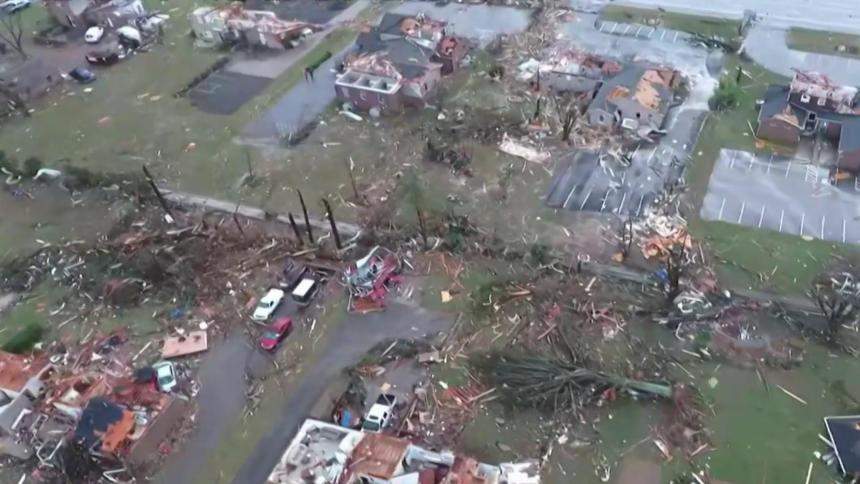
Of course, if Warner were Muslim, there’s no way there would be a nuanced analysis of his motivation like the one we’ve seen in headlines. Nope, it would be assumed by most that since he’s Muslim, he had to have a political agenda. (Apparently every act by a Muslim is cold and calculated — we can’t be legally insane or mentally ill.)
What I’ve learned is that when the media doesn’t mention the suspect’s faith, it’s safe to assume he’s not Muslim.
And if Warner had been Muslim, next would come the litany of the usual questions such as:
1. Where does he go to pray? 2. Has his cleric spewed radical views? 3. Who radicalized him? 4. Why didn’t other Muslims turn him in before he carried out his plot?
This last one is a point Trump brought up during the 2016 campaign when he claimed Muslims actually know who the terrorists are, but we refuse to turn them in. None of those key questions, however, are being discussed in regards to Warner.


There’s another inequity that may surprise some: If Warner were Muslim, the incident would attract far more media coverage than if he were any other faith, as a 2019 study from Georgia State University documented. As this study noted, out of 136 terror attacks in the U.S. over a span of 10 years, “Muslims committed on average 12.5 percent of the attacks, yet received more than half of the news coverage.”
That translates into acts of terror committed by Muslims “receiving on average 357 percent more media coverage” than similar actions carried out by non-Muslims.
Another double standard is what comes after an incident like this. If Warner had been Muslim, we would see Muslim American leaders publicly denouncing his actions, making it clear that they are not justified by our faith. Yet there is no such burden placed on people who share Warner’s background.
Trump has called for zero policy changes to ferret out people like Warner before they act.
Finally, there’s the political fallout. If Warner had been Muslim, we could expect right-wing politicians to use this event to gin up fears of Muslims. One of the worst at this is, of course, our outgoing president. Just look at how he reacted in December 2017 to a Muslim immigrant detonating a crudely made pipe bomb in New York City’s Port Authority (which, thankfully, resulted in only minor injuries to three bystanders). In response, Trump called for a massive overhaul of U.S. immigration laws to end the practice of allowing immigrants who are in the country legally to sponsor other family members to immigrate to the United States, called “chain migration.”
In contrast, after Warner’s bombing, which injured more people and damaged vastly more property than that 2017 attack, Trump has called for zero policy changes to ferret out people like Warner before they act.
In reality, Trump should be calling for the FBI to focus more on domestic radicals, considering that in 2019, of the 42 people killed by extremist on U.S. soil, 38 were slain by white supremacist or far right-wing actors.
I’m not suggesting Warner was either. But the point is the deadliest threats in recent years have not been from Islamic State-group inspired actors but from right-wing killers, like the anti-immigrant terrorist who in August 2019 killed 22 people in a Walmart in El Paso, Texas. That’s why these double standards matter. They can cause people to overlook red flags when it comes to people who look like Warner. And that makes us less safe as a nation.
