




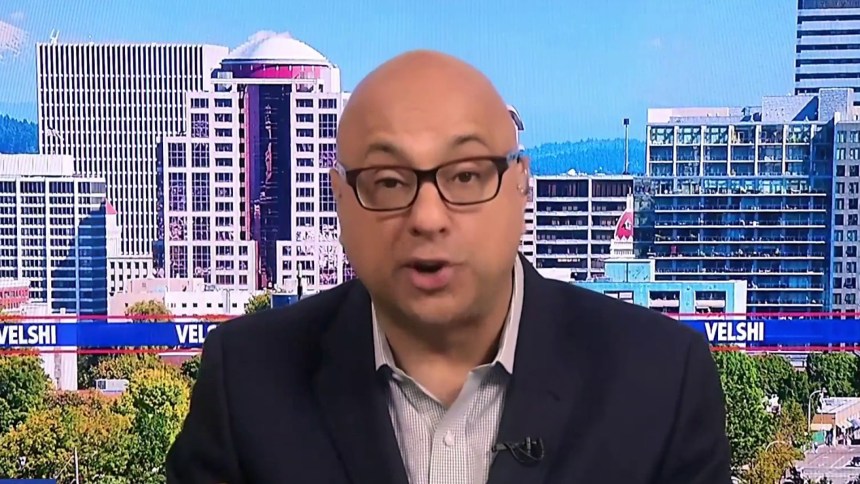
On Feb 6, 2018, at 3:45 p.m., the world tuned in to watch the landing of the SpaceX Falcon Heavy rocket after it took off from Kennedy Space Center in Merritt Island, Florida.
At the time, I hosted a daily MSNBC show, and that day my team and I decided to do something different: We turned our attention away from the daily buffet of political negativity and lies and instead helped our viewers bear witness to a historical triumph of science and ingenuity by covering the landing. The response from you, the viewers, was overwhelmingly positive. Back in 2018, watching a rocket launch still held a certain magic.
It was obvious that the launch and the landing were a milestone, especially in a world that on some days looked like it was moving backward. The engineering and inventiveness that went into it would power our strides in a space race in which both China and Russia were actively engaged — but which the U.S. had, in large part, abdicated to wealthy private adventurers.
Everyone knew when that rocket launched and landed that it was the brainchild and commercial business of Elon Musk. Throughout history, adventurers with resources have been at the forefront of breakthroughs from which all of society ultimately benefits.
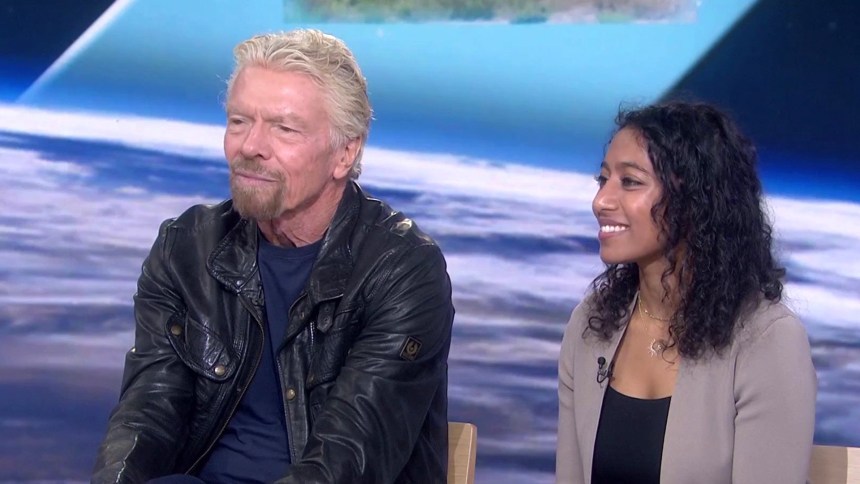
Rocket forward 3½ years to July 11 and the launch of Virgin Galactic Unity 22, which carried, among others, Richard Branson as one of its passengers. It, too, was a milestone, and it, too, was pushed by the dreams and aspirations of a really, really rich guy. Lots of you watched it and enjoyed it.
But I also saw some stinky tweets — from some of you and from some of my colleagues. There were too many to list here, but they all bore some version of the same message: “This isn’t exploration. It’s tourism, the sort of which only the uber wealthy will ever enjoy. No benefit from this will ever accrue to society as a whole. And, by the way, we have a climate crisis, a gun crisis and a democracy at risk of crumbling. So why are you fawning over a contest between out-of-touch billionaires?”
Maybe just going up there for a few minutes will make life down here better.
Some of that is true; some of it isn’t. It’s a bit like asking the cops who pull you over for a parking ticket why they aren’t out catching murderers, instead. In the news business, we can, and do, cover the climate crisis, the attacks on democracy, gun control, infrastructure, health care, wages, social justice — and space.
Where the critics go wrong is in thinking the Virgin Galactic launch and Tuesday’s Blue Origin launch aren’t important and meaningful advances. They are hard to do. They take years of study and innovation from which we all benefit. They are risky. In 2014, a test pilot died while trying out a highly advanced mechanism on a predecessor vehicle to SpaceShipTwo used in the Virgin Galactic launch. Test pilots have died the same way testing the commercial aircraft that were once only the domain of the very wealthy but which are now a critical part of our infrastructure that benefits all of humanity.
And, while the world is indeed burning, we can and should solve for that along with all the other matters that need solving. (Just about an hour before the Virgin Galactic launch, I wondered aloud on TV what the Earth would be like if we made solving the climate crisis a race like getting to space.) We don’t turn our attention away from climate to discuss the attacks on democracy or from guns to deal with wages. The human mind can embrace, study and solve for it all, and we should celebrate successes wherever they are.
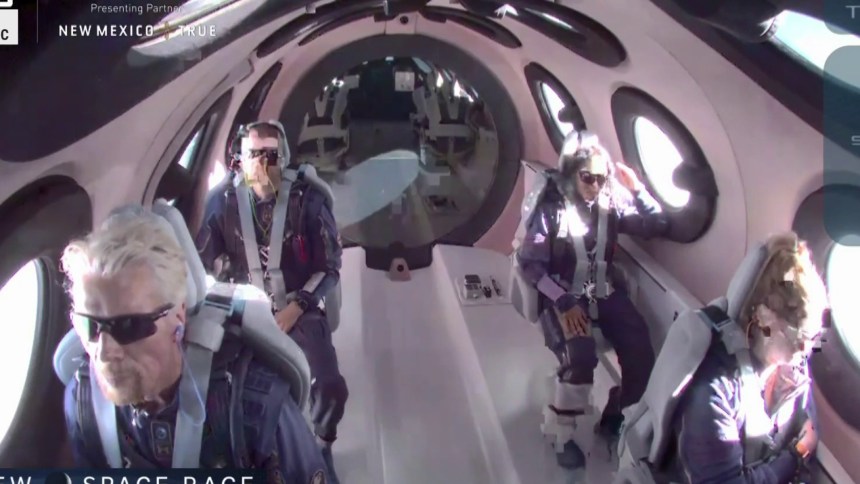
The trips themselves aren’t the innovation. They’re merely the symbol of the science and engineering and the people behind the news who constantly strive to make our world better. Astronauts tell me that one trip to the edge of space, one look back from up there to the big blue marble that is Earth, shifts your perspective on our planet and its fragility, on people and on our shared humanity. Maybe a short trip to space is a way to make people understand the urgency of the climate crisis or a reminder that we all live on this amazing yet delicate planet together and need to preserve and share its resources. Maybe just going up there for a few minutes will make life down here better.


There are valid questions about whether superrich people who run businesses that could benefit from government contracts as they relate to space should be able to do so while employing legal but creative and unseemly ways to avoid paying taxes — which most regular folks can’t do. And those people should be held to account.
But let’s separate your valid criticisms of Jeff Bezos, Branson and Musk from the remarkable achievements we are witnessing. Because we seem to have decided as a country — incorrectly, in my opinion — that space exploration shouldn’t be a public priority. That’s a serious issue, because America’s adversaries see space advances as a way to gain dominance in technology, communications, transportation and access to resources. Forget space tourism, which is way down the line of priorities. Without these commercial space vehicles, American astronauts would need to hitch rides with the Russians just to get to and from the International Space Station, where they conduct experiments that have direct impacts on our lives, our health and our longevity.
When I was a kid, space was a place of wonder and possibility. It still is.
And yes, space exploration is expensive. Which is why, until lately, it has largely been done exclusively by governments. And America is at risk of losing dominance in the international space race in part because many Americans don’t care.
This is also in part because we don’t have a lot of rocket launches or shared goals about space or inspirational stories to tell about it. You know I share your sense of urgency about social justice and democracy and climate change and public education and poverty eradication and higher wages. I also know we can fix all that and still marvel at a space launch and dream about traveling to space or being the engineers and scientists and pilots who get us there.
When I was a kid, space was a place of wonder and possibility. It still is.Let’s not get so jaded that we don’t celebrate real human, scientific and engineering achievement or that we are uninspired by the truly inspiring.
Today’s commercial space industry was launched in 1994 with the $10 million Ansari X Prize. The winner of that original competition to create a reusable commercial spacecraft evolved into SpaceShipTwo, which took Branson to the edge of space. The X Prize Foundation has used private money to launch incentivized competitions to tackle adult literacy, improve early detection of Alzheimer’s, capture carbon from the air, remove spilled oil from the oceans and help with countless other races for radical breakthroughs.
Progress, innovation and solving for some of our biggest problems are the goals. A trip to space is just a fringe benefit.

Ali Velshi is the host of “Velshi,” which airs Saturdays and Sundays on MSNBC. He has been awarded the National Headliner Award for Business & Consumer Reporting for “How the Wheels Came Off,” a special on the near collapse of the American auto industry. His work on disabled workers and Chicago’s red-light camera scandal in 2016 earned him two News and Documentary Emmy Award nominations, adding to a nomination in 2010 for his terrorism coverage.