





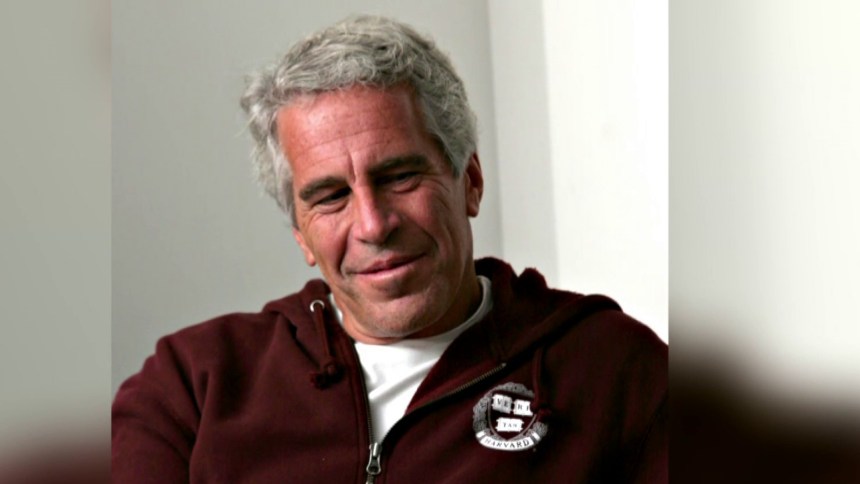
New York Times columnist Michelle Goldberg paid tribute this month to Julie K. Brown, the Miami Herald reporter who exposed the corrupt lenient plea bargain prosecutors gave billionaire Jeffrey Epstein after he trafficked and molested at least 80 teenage girls.
Goldberg noted that Brown often had to pay her own expenses while reporting on Epstein and that, despite having broken one of the most important stories of the past decade, she has no retirement fund at age 59, because of the dismal financial state of the journalism industry.
Brown told Goldberg that she began her career at a newspaper in Philadelphia when the industry was still lucrative and thriving. “We had so many news organizations and papers, and it was so competitive,” Brown said. There were people covering “every single city council, planning board, zoning board” meeting. Reporters then were “used to uncovering all this corruption. We’re used to finding injustices pretty easily and writing these stories pretty easily. And now we just don’t have the staff to do that anymore.”
After her interview with Brown, Goldberg reflected, “I kept thinking of all the malfeasance likely to go unexposed as many once-formidable newspapers outside of New York and Washington either shrink or disappear altogether.”
Goldberg’s column makes a critically important point about the disappearance of local news and its impact on democracy. There’s a parallel universe in which local newspapers like The Tampa Tribune and the New Orleans Times-Picayune still exist and even prosper and have the resources to pay a reporter to sit in the courthouse every day or dig for months into some crime that the justice system ignored — and infinitely more heinous scandals like the Epstein one that we’re not aware of are brought to light.
Instead, the U.S. has lost nearly 2,000 local and regional newspapers since 2004, including the two I just mentioned, leaving vast and growing news deserts across swaths of the country.
Other newspapers, like The Washington Post, continue to thrive thanks to billionaire benefactors (Amazon founder and space cowboy Jeff Bezos, in WaPo’s case), but that doesn’t help the rest of the industry. Lately, it’s more often the case that a wealthy and predatory hedge fund buys a struggling newspaper, sells off the physical newsroom and replaces well-paid veteran reporters with young aggregators or contractors who are willing to work for much less money. In addition to tanking the quality of the reporting at those places, the system sets up a dynamic in which only independently wealthy young people are able to survive in journalism, and the industry loses the vitally important perspectives and values generated by socioeconomic diversity.


And it’s not just local newspapers. I lost my job in a mass layoff at HuffPost in 2019, roughly the same day that BuzzFeed and Vice shed dozens of reporters, as well. As Goldberg noted in her piece, journalists like me in the middle of their careers — ages 35 to 54 — have been hit the hardest, because we were making livable salaries that news publishers cannot or would prefer not to pay anymore. In the wake of my own layoff, I co-founded the Save Journalism Project, a nonprofit organization dedicated to sounding the alarm about the financial demise of news publishers and raising public awareness of the root causes of the problem.
It’s easy to say newspapers simply failed to adapt in the age of the internet, when sites like Craigslist replaced classified ads and readers became accustomed to getting their news free online instead of having to subscribe to a periodical. News publishers should be able to compete in the lucrative online ad market, from which tech giants like Google and Facebook make billions of dollars every year. Instead, those tech companies have dominated and manipulated that market and bullied publishers out of it while profiting from hosting their news content for free. Last year, Google and Facebook alone accounted for 54 percent of all digital advertising revenue in the U.S.
Without a thriving free press, the Jeffrey Epsteins of the world will simply always get away with their crimes.
As a recent Reuters article on the subject explains: “Google runs one of the largest online advertising exchanges for digital ads that are bought and sold automatically via software programs. Since Google competes as both the biggest buyer and seller on that exchange, it can steer business to itself.” Google was reported to have run a secret program called Project Bernanke — now the subject of an antitrust lawsuit in Texas — which allowed it to manipulate the ad exchange behind the scenes without telling publishers.
Google and Facebook face multiple antitrust lawsuits that will hopefully force them to operate fairly in the digital ad marketplace and share revenue with newspapers. And President Joe Biden tapped Lina Khan, a formidable antitrust scholar, to chair the Federal Trade Commission, which suggests this administration is serious about reining in Big Tech. These are positive developments.
But, especially after four years of a president who routinely attacked and undermined the free press, there also needs to be a massive cultural shift in how this nation values journalism. Without a thriving free press, the Jeffrey Epsteins of the world will simply always get away with their crimes. Communities will go uninformed about local elections and voting laws and Covid-19 and Covid vaccine information. We don’t want a system in which independently wealthy 22-year-olds are the only people who can afford to write for news websites while the Julie K. Browns of the industry are forced to retire without a safety net. A thriving free press is vital to a functioning democracy, and it’s about time we treat it as such.

Laura Bassett
Laura Bassett is an award-winning journalist who writes about gender, culture and politics. Her bylines have appeared in GQ, Elle, The Washington Post, New York Magazine and elsewhere, and she consulted on Netflix's Emmy-nominated docuseries "The Keepers." Previously, she was a senior politics reporter at HuffPost for nearly a decade.