




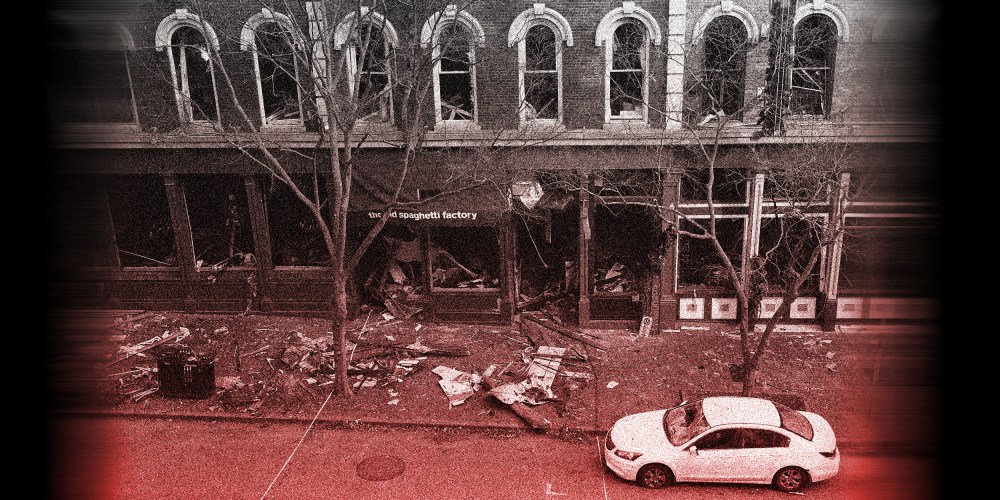
We have more questions than answers about the Christmas Day bombing in Nashville, Tennessee — and now the biggest question of all may be whether the incident, which knocked out regional telecommunications, could have been prevented.
It’s time to consider enhancing police departments’ capacity to protect us.
Despite a public statement by a Tennessee state law enforcement director that suicide bomber Anthony Quinn Warner was “not on our radar,” we’ve subsequently discovered that he should have been.
Nashville police department’s prior knowledge of Warner’s interest in bombs raises issues about what that department specifically did to address those concerns. More broadly, the facts indicate it’s time to consider enhancing police departments’ capacity to protect us — because even when you see a threat on your radar, you may not be able to address it.
What’s needed is an expansion of the “red flag” or “extreme risk” law concept, already in place in many states to address concerns of potential gun violence, to include reports of bomb-making and possession of bomb components. At first, proposed “red flag” ordinances were understandably controversial because of the potential infringement upon the Second Amendment right to bear arms. But so far, implementation of these laws has proved to save lives, and to reduce suicides, while not unduly depriving constitutional rights.
More than one year before the Christmas bombing, Warner’s girlfriend told police of her concern that Warner frequently talked about bomb-making. Police officers met with the girlfriend at her home on Aug. 21, 2019. Police then went to Warner’s house, knocked on his door, but there was no response.
According to reports, the officers saw a recreational vehicle on the property and wires connected to an alarm sign on the front door. They also observed “several security cameras.” Yet, as a police spokesman said in a statement, the police “saw no evidence of a crime and had no authority to enter his home or fenced property.”
The girlfriend’s lawyer also represented Warner, and he told officers later that he would “not allow his client to permit a visual inspection of the RV.” The officers wrote a report, submitted it and requested that the FBI trace Warner’s name. Neither the FBI nor the Department of Defense found any reference to Warner in their data bases. And that was the end of that.
Neither the FBI nor the Department of Defense found any reference to Warner in their data bases. And that was the end of that.
It wasn’t solely Warner’s girlfriend who reported concerns about bomb-making. Warner’s own lawyer, who, again, also represented the girlfriend, shared his own concerns with the police. The attorney told officers that Warner “frequently talks about the military and bomb making,” and that Warner “knows what he is doing and is capable of making a bomb.”
After the tragedy of the 9/11 terror attacks, threat resolution became a rigorous discipline in federal law enforcement, the intelligence community, and a handful of major city police departments — including the NYPD, LAPD and the New Jersey State Police. In those agencies and departments, threat inquiries don’t stop simply because no one answers a knock on a door, or because a lawyer says you can’t look at a vehicle.
In those agencies, like the FBI, threat investigation reports must reach the desk of a ranking supervisor, who then takes personal responsibility for signing off on whether a threat is or is not resolved. In those agencies, it’s not likely that a credible threat concern reported by two people — one of whom is the lawyer for the person of interest — would be deemed “resolved” after merely knocking on a door and looking around the property.

In fact, in those departments, an entire threat response structure exists, separate from the routine duties of daily patrol work. Intelligence analysts trace social media postings, assess evidence of recent purchases and gun permits, and detectives talk to neighbors, family and co-workers. Training, organizational structure and protocol all play a role in getting it right when it comes to threat resolution.
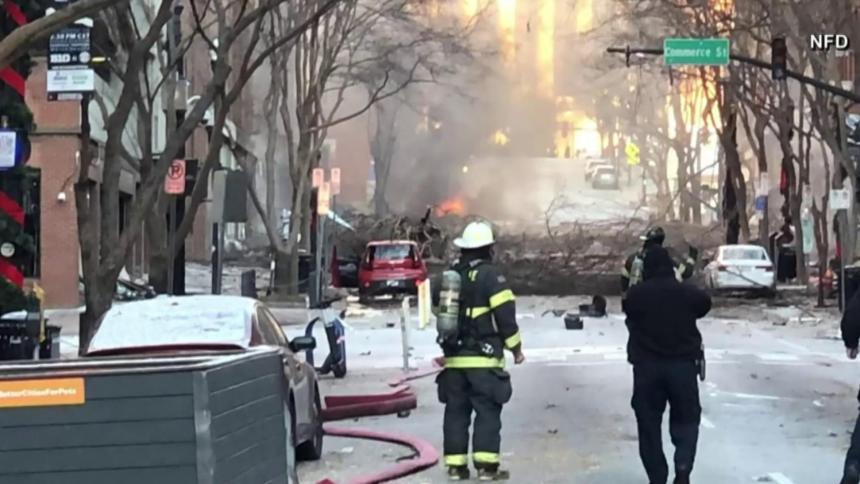
However, criticizing the performance of one department, in one event, isn’t particularly helpful if we want to move forward on ensuring that our police have no alibi for not thoroughly running to ground an articulated threat. In fact, six Nashville police officers acted heroically on Christmas morning when they took seriously the threat of the parked RV, the audio recording of an evacuation warning and began evacuating the area.


The real question here is what would have happened a year ago, if the police had additional options available to them? Such options exist right now in the form of “red flag” laws in at least 19 states and the District of Columbia — but only for concerns related to potential gun violence.
In those states, laws authorize courts to issue a special type of protection order, allowing the police to temporarily confiscate firearms from people who are deemed by a judge to be a danger to themselves or others.
In 2019, the Tennessee Legislature declined to take up a proposed “red flag” law for gun violence concerns.
Often, the request for the order will come from relatives or friends concerned about a loved one who owns one or more guns and has expressed suicidal thoughts or discussed shooting people. The authorities may also request an order. How long the guns are taken away under these “extreme risk protection orders” depends on the circumstances, and can usually be extended only after another court hearing. The orders also bar the person they cover from purchasing guns.
It’s time for such laws to be passed in every state, and to expand their scope to cover legitimate concerns beyond potential gun violence — like talk of bomb-making and acquisition of bomb components. Just as mere possession of guns may not be a chargeable offense or justify their seizure, the same is true for possession of small amounts of potentially explosive material, related designs or components. That’s why, when a credible concern arises, the police need to be empowered to seek a court order to permit temporary seizure of such items, in an effort to disrupt a disaster.
Following the tragic mass shooting at Stoneman Douglas High School in Parkland, Florida, in 2018, Broward County Sheriff’s Department reports revealed dozens of visits by the police to the shooter’s home in response to repeated concerns that the young man was going to act out violently. The police knew the student possessed weapons, their reports reflected deep concerns about the threat, but when police asked him if he planned to shoot anyone, the troubled youth was lucid enough to say the right thing.
In response to his subsequent shooting rampage, “red flag” laws were instituted in multiple states and counties. These “extreme risk” laws allow the police to assess the legitimacy of threat concerns, question the subject of the concerns, and temporarily confiscate weapons while conducting further investigation pending a due process hearing. Those laws are successfully working in every state where they exist. Further, the majority of Americans, on both sides of the political aisle, support such laws.
In 2019, the Tennessee Legislature declined to take up a proposed “red flag” law for gun violence concerns. They should immediately reconsider that proposal and broaden it to include valid police or public concerns about potential use of other threat materials such as bomb components. If the Nashville police had such an option to search for and temporarily seize bomb-making materials, designs and even bomb delivery systems, like an RV — if justified by the legitimate reports of Warner’s girlfriend and his lawyer — they could have gained precious time to reasonably resolve the threat concerns.
In the case of explosives, designs and delivery systems, there is no constitutional right to bear bombs. Let’s give the police what they need to protect us, while still preserving our lawful rights as Americans.
