




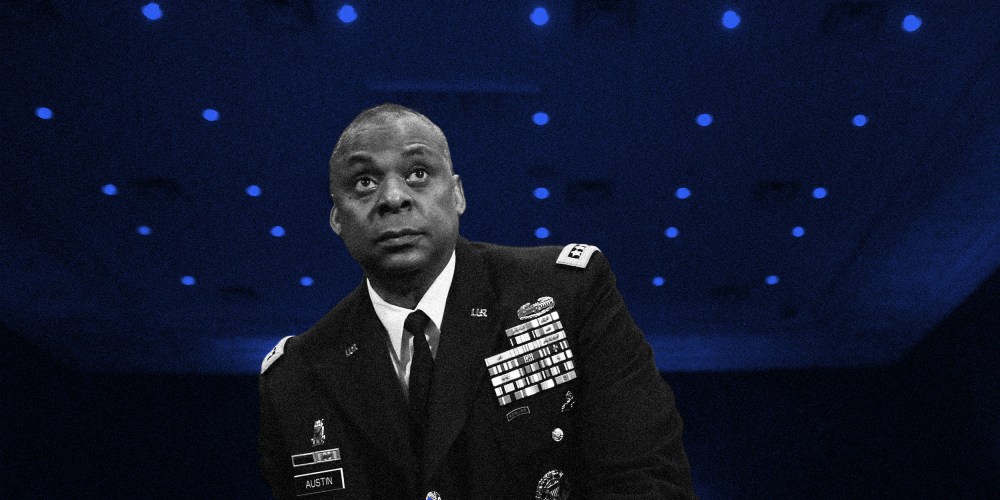
President-elect Joe Biden is set to tap retired Army Gen. Lloyd Austin as his defense secretary. Austin would be a historic choice, but given the significant side-eye that his reported selection engendered — including, admittedly, from me — I can’t be 100 percent sure that he’ll actually be nominated once Biden is in office, let alone confirmed.
It’s honestly hard to game out how Austin does in the Senate at this early stage.
It’s not that Austin hasn’t had an impressive career to date. According to his official Defense Department biography, he graduated from West Point back in 1975 and served almost 41 years in the military. He eventually became the first Black general to command an Army division in combat, and the first Black general to command a full theater of operations as the head of U.S. Forces-Iraq in 2010 during the American withdrawal. In his most recent role, he was the head of U.S. Central Command, overseeing all military operations in the Middle East, before retiring from service in 2016.

Biden specifically cited Austin’s time as head of U.S. Forces-Iraq in an op-ed published in The Atlantic on Tuesday that officially announced his intent to nominate the former general. “General Austin got the job done,” Biden wrote of the U.S. withdrawal. “It required Austin to practice diplomacy, building relationships with our Iraqi counterparts and with our partners in the region. He served as a statesman, representing our country with honor and dignity and always, above all, looking out for his people.”
No Black person has ever led the Department of Defense. The Pentagon hasn’t even had a Black deputy secretary of defense in all of its years — the first Black military service chief wasn’t sworn in until August 2020. And while Biden has yet to name his pick for attorney general, the scuttlebutt is that he’s eyeing Alabama Senator Doug Jones for the gig. That would mean that if Biden had chosen a white defense chief, all four of the top Cabinet secretaries — including Tony Blinken and Janet Yellen, who’ve been tapped for the State Department and Treasury respectively — would be white.
Austin comes with a lot of problems that will make his nomination a difficult one once it reaches the Senate. Part of that is that, technically speaking, his appointment would be against the law.
The Congressional Black Caucus had been urging Biden to keep that from happening, Politico reported on Nov. 30. That nudged Austin and former Secretary of Homeland Security Jeh Johnson further into the mix. Rep. Karen Bass, who chairs the CBC, threw her weight behind Austin and Johnson when appearing on CNN on Sunday. By that evening, Austin had been offered the job and accepted.
Austin is by all accounts a fine choice to lead the Pentagon. But he comes with a lot of problems that will make his nomination a difficult one once it reaches the Senate. Part of that is that, technically speaking, his appointment would be against the law.
According to the Congressional Research Service, Congress was leery when setting up the new Department of Defense in the aftermath of World War II. Most concerning was the department’s leader potentially coming straight out of the military, which at the time was more popular than most other institutions in the country. Their solution was installing a gap of time — presently seven years — between leaving active-duty service and filling the civilian role of Defense Secretary.
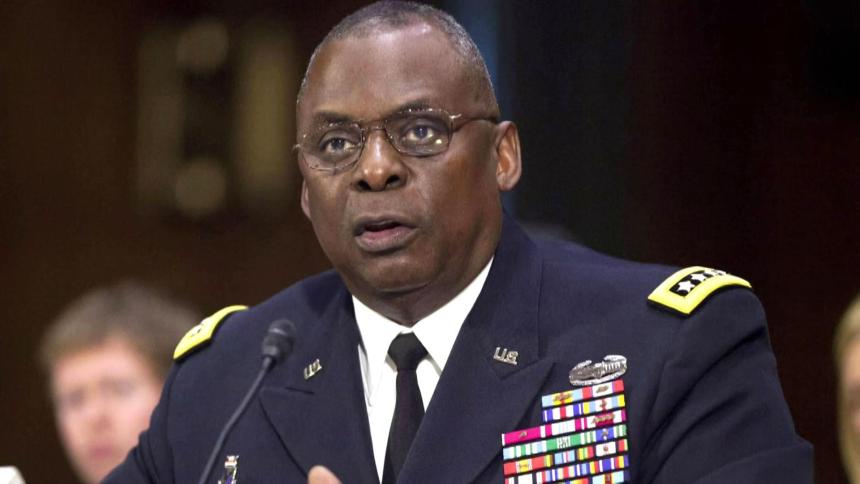
Congress has only twice opted to issue a waiver for this law. Former Marine Corps general James Mattis in 2017 was the first recipient since George C. Marshall — of Marshall Plan fame — in 1950. Both Marshall and Mattis’ nominations provided Congress solid reasons for granting their waivers despite some lawmakers’ concerns. President Harry Truman had asked Marshall to serve as a proven and trusted organizer at the onset of the Korean War; Mattis was considered a potential check on President Donald Trump’s worst instincts.
Austin, on the other hand, doesn’t have either of those excuses and has only been out of uniform for four years. That sparked an outpouring of concern from national security experts, especially those who deal with civil-military relations. Rosa Brooks, a professor at Georgetown Law who served in the Obama-era Defense Department, tweeted that she “had been delighted by Biden’s cabinet picks… until now.” She continued, “I think Biden has been very badly advised. I am just gobsmacked that his inner circle does not see what a terrible message it sends to nominate the second recently retired general in four years.”
Lloyd Austin is an impressive man with an impressive record. But Biden should have waited until Austin had been retired for 7 years, as the law requires, before considering him for Sec Def. Democrats should respect law and norms of civil-military relations. We’re not Trump. https://t.co/Od5d40Iako
— Rosa Brooks (@brooks_rosa) December 8, 2020
Slate columnist Fred Kaplan wrote that “Austin is no Marshall or Mattis — and, besides, Mattis turned out to be an undistinguished defense secretary, in part because he relied too much on a coterie of fellow Marine officers, a fulfillment of the fear that prompted Congress to pass the restriction all those decades ago. The waiver was meant to be used for truly extraordinary figures. Austin doesn’t seem to measure up to the standard.”
And Jim Golby, a former adviser to both Biden and Vice President Mike Pence, argued that even Marshall’s appointment was a mistake for civilian control of the armed services, noting how he stood by as the relationship between Truman and Gen. Douglas MacArthur deteriorated during the Korean War. “General Austin is a fine public servant, and he may well continue his service to the nation out of uniform,” Golby wrote in the New York Times. “But the Pentagon would be the wrong place for him to do it.”
When Mattis was nominated, several prominent Democrats in the Senate basically held their noses and agreed to support the requested waiver — just this once. “Waiving the law should happen no more than once in a generation,” Senate Armed Services Committee ranking member Jack Reed said in 2017. “Therefore I will not support a waiver for future nominees. Nor will I support any effort to water down or repeal the statute in the future.”


Reed seemed to soften that position when asked on Tuesday — but not by much.
Sen. Jack Reed, who previously said no waivers after Mattis:
— Andrew Desiderio (@AndrewDesiderio) December 8, 2020
“The burden of proof is on the administration. It also comes down ultimately to the quality of the nominee…I think is the decisive factor. But I think the preference would be for someone who’s not recently retired.”
It’s honestly hard to game out how Austin does in the Senate at this early stage but I’m not exactly seeing this going smoothly for Biden’s team. Sen. Bernie Sanders says he’s likely to support a waiver; Sen. Elizabeth Warren says that she’d be a no. Meanwhile Republican chair of the Armed Services Committee Jim Inhofe says he’d back a waiver for the former general “in a heartbeat.”
But the waiver process also means that unlike most Cabinet nominations, the House has to weigh in, too. Mattis’s waiver passed the House with a vote of 268-151 — not exactly a landslide. Speaker of the House Nancy Pelosi would then have to wrangle her caucus into line to avoid a potentially embarrassing situation where some members of her party vote against approving Austin’s bid and Republicans spitefully refuse to offer up enough support to get it over the line. Complicating things, Rep. Adam Smith, who chairs the House’s armed services committee, was reportedly not consulted all that deeply before the announcement and has been opposed to granting waivers.
Also at play is the fact that Austin was picked instead of Michèle Flournoy, who’d been widely considered to be the frontrunner for weeks. Flournoy’s bid to become the first woman to head the DOD was hamstrung by concerns that she was too chummy with players in the defense industry. But Austin has connections to defense contractors, too. In particular, he sits on the board of Raytheon, which earns billions in contracts from the Pentagon each year. The New York Times also reported that Austin serves — along with Flournoy and Blinken — as an adviser to Pine Island Capital, a firm that has raised millions of dollars to “finance investments in military and aerospace companies.” Antiwar activist group CodePink had lobbied against Flournoy because of her defense industry ties and initially celebrated her seeming defeat — before quickly deleting their tweet.
Now deleted, but good lord. pic.twitter.com/UHfR0py3Ex
— Mike (@forbesmm) December 8, 2020
This all puts Democrats in an awkward place should Biden officially nominate Austin once in office. What’s more important? Resetting the norms that Trump has broken while in office and restoring civilian control over the military? Or do you back the Black candidate who would be the first person to lead the largest department in the federal government?
Biden acknowledged that hurdle in his op-ed on Tuesday, saying that he hopes that Congress will grant Austin’s waiver and argued that “given the immense and urgent threats and challenges our nation faces, he should be confirmed swiftly.” Among those challenges, Biden noted, would be the Herculean effort that distributing Covid-19 vaccines will require.
But will that be enough to convince Congress? It feels worth noting that no president-elect since Ronald Reagan has managed to have all of his first announced picks for the Cabinet actually make it through to the confirmation process. Fast food executive Andrew Puzder had to withdraw his name from consideration as Labor Secretary under Trump. President Barack Obama wanted to name Tom Daschle as his secretary of health and human services — Daschle withdrew his consideration over tax issues.
Austin could still very well wind up as Biden’s one who got away. Biden reportedly thinks that Austin would be a “good soldier” who would follow orders at the Pentagon, and I can see a world where the president-elect doubles down in support of the former general. But in the face of all the criticism that’s come up, it’s not exactly a stunning vote of confidence that the nicest thing you can say about a nominee is that he’d make history as the first Black person to hold the post. If Austin is nominated and confirmed, I wish him well. But would I put money on that happening? No, not at the moment.

Hayes Brown is a writer and editor for MS NOW. He focuses on politics and policymaking at the federal level, including Congress and the White House.