




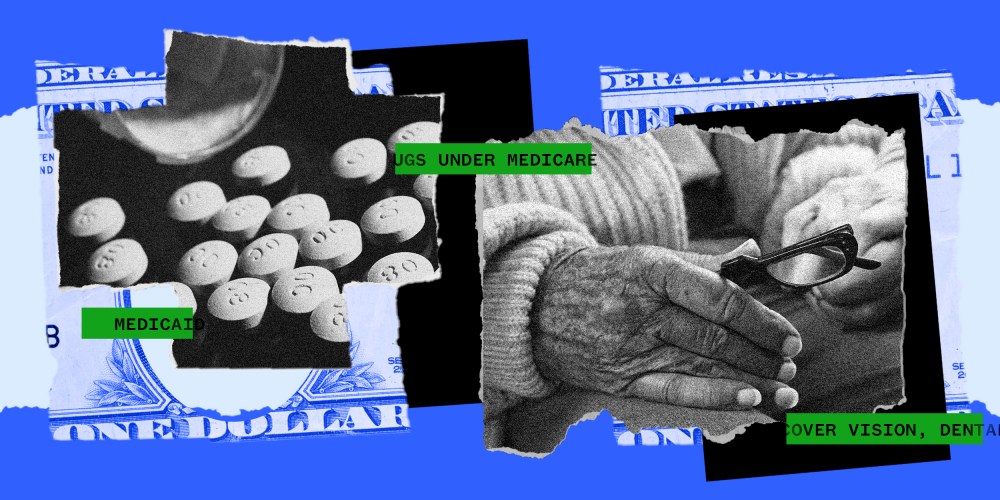
Of the many issues Democrats are trying to fix with the Build Back Better Act, none is as likely to give them post-traumatic stress flashbacks as health care. As the size of the bill shrinks under centrist cost-cutting demands, the number of new policies that can be delivered plummet, too, forcing a choice over which constituencies to prioritize.
The Problem
The United States spends more on health care per capita than any other country in the developed world. Attempts to fix that run up against headwinds from the health care industry and its lobbyists, as well as united Republican opposition. Conservative governors have also spent years refusing to expand Medicaid as the Affordable Care Act allows, thus depriving millions of Americans of cheaper coverage. And though Medicare Part D finances more than a third of all prescription drug sales in the U.S., the federal government is legally blocked from negotiating with drug companies for lower prices.
The Promise
For years, Democrats have promised to end price gouging and negotiate lower costs for elderly Americans on Medicare. In August, President Joe Biden said that “prices have put the squeeze on too many families and stripped them of their dignity” and urged Congress to act. Meanwhile, his American Families Plan calls for extending the reduced subsidies for Obamacare participants included in this year’s Covid stimulus bill.

The Policy
There are four main health care-related policies that are in play as Democrats negotiate the multitrillion-dollar budget reconciliation bill’s details. Here’s how things stand in the bill that the House Energy and Commerce Committee passed last month.
Extending Obamacare Subsidies
The temporary tax credits for insurance premiums passed this year, which caused a surge in Obamacare enrollment, would be extended through the next 10 years. “Households making up to 150 percent of the federal poverty level would receive fully covered insurance on the health law’s exchanges,” Roll Call explains. “The legislation would permanently eliminate a cap on subsidy assistance to households making more than 400 percent of the poverty level. Premiums would also be limited to 8.5 percent of a household’s income, making the insurance more affordable for people across the income spectrum.”
Closing the Medicaid Gap
The Build Back Better Act would offer a two-step plan to close the coverage gap that has 2 million people making too much money to enroll in Medicaid but not enough to benefit from Obamacare subsidies. Here’s how Judith Solomon of the Center on Budget and Policy Priorities explains it:
For the first three years, people would be eligible for premium tax credits that would pay for coverage in plans offered in the ACA marketplaces, which would be enhanced to better suit the needs of people with low incomes. Providing coverage in the marketplace would give the Secretary of Health and Human Services (HHS) time to establish a federal Medicaid program that would align with Medicaid rules that apply to state expansions and would be available to people in states that haven’t expanded beginning in 2025.
Lowering Prescription Drug Costs
The ban on negotiating with drug manufacturers for lower prices would be lifted, establishing a “fair price negotiation program” that would set a maximum fair price for Medicare beneficiaries. Reduced federal spending from the savings would then be used as a way to pay for other portions of the plan. The bill would also tax companies that don’t comply with the new rules and cap the maximum annual out-of-pocket payments a Medicare Part D enrollee would have to pay for drugs at $2,000.
Adding Vision, Hearing and Dental to Medicare
While many Americans with insurance from their employers can opt into such coverage, seniors on Medicare don’t have that option. The bill that passed Energy and Commerce would fix that at a cost of $350 billion over 10 years. Enrollees would be covered for “routine eye exams, glasses, and contact lenses” on Oct. 1, 2022, and for “of hearing aids for individuals with severe or profound hearing loss” a year later. Coverage of dental work and dentures would begin in 2028.


The Politics
There are two major fissure points within the Democratic caucus over these policies. The first is over whether to jettison one of the most expensive but transformative parts of the bill: expanding Medicare to cover vision, hearing and dental.
Congressional Progressive Caucus Chair Pramila Jayapal, D-Wash., argues that it would be a mistake to not follow through on a policy that would boost favor with seniors, a prized demographic on Election Day. The change isn’t as expansive as “Medicare for All,” but it’s become a major rallying point for progressives who insist that there’s no evidence expansion would bankrupt Medicare, as some more conservative members of the caucus have warned.
Let’s be clear: America’s health care system sucks.
But the House Democratic leadership would rather focus on the Obamacare subsidies and closing the Medicaid gap. These policies, they say, would lock in a feature that has benefited middle-class voters and, over the objections of GOP governors, provide health care access to voters in potential swing states such as Florida, North Carolina, Wisconsin and Georgia. (Progressives are also up against the American Dental Association, which has come out swinging against the proposed new dental benefit for seniors.)

Meanwhile, a small contingent of moderate House Democrats nearly tanked the prescription drug reforms in committee and seems no more ready to accept them in a final bill. No big surprise that the Democrats in question — and Sen. Kyrsten Sinema, D-Ariz., who is also wary of the shift — have hauled in major campaign cash from the pharmaceutical industry. If there are no federal savings from cheaper drug prices, that would make it harder to pay for the bill overall. It would also mean deleting one of the most popular parts of the Democrats’ policy platform, a truly baffling political choice.
The P.O.V.
Let’s be clear: America’s health care system sucks. The changes that are on the table won’t completely fix that, not so long as the health care industry continues to drive up costs for patients in search of profits. But the options on the table do represent a real chance to make things easier for millions of Americans.
For the Southerners whose states have blocked them for years and the seniors who live with massive tooth pain because they can’t afford dental work, this bill would make a world of difference. Democrats will be excoriated in attack ads for spending too much no matter how big the final bill is. There’s no good reason not to provide the most help possible.

Hayes Brown is a writer and editor for MS NOW. He focuses on politics and policymaking at the federal level, including Congress and the White House.