




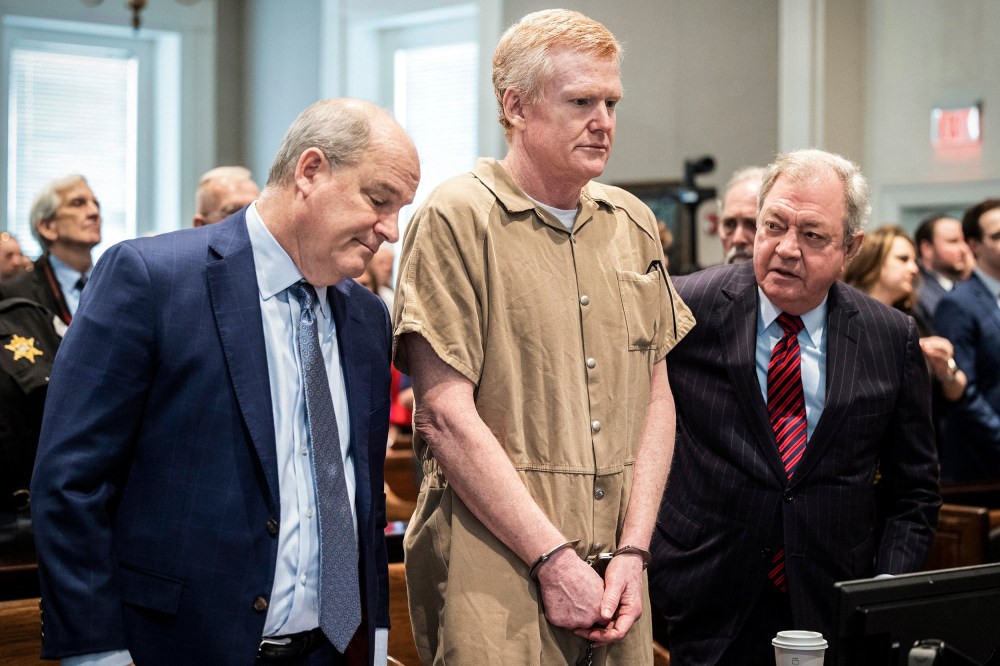
Attorneys for disgraced South Carolina attorney and convicted murderer Alex Murdaugh have moved for a new trial, because, they argue, Colleton County Clerk of Court Rebecca Hill tampered with the jury in a way that affected the outcome. Hill co-wrote a book about the trial called “Behind the Doors of Justice: The Murdaugh Murders”; according to that book, she accompanied some of the jurors on a media tour they embarked upon after they rendered their verdict, and defense attorneys Richard “Dick” Harpootlian and Jim Griffin say she attempted to pressure a film crew to promote her book.
The allegations do not look good for the Colleton County clerk of court — a person who, by definition, should not be a major player in a criminal trial.
While we cannot yet verify Team Murdaugh’s tampering claims, the allegations add a new and wild chapter to a case that has spawned multiple hit documentaries and embodied America’s true crime infotainment obsession.
The allegations do not look good for the Colleton County clerk of court — a person who, by definition, should not be a major player in a criminal trial. Hill told Court TV Tuesday that the allegations from Murdaugh’s lawyers are “untrue.” Neil R Gordon, who co-wrote the book with Hill and says he met her weeks after the trial was over, told Court TV Tuesday that his conversations with Hill made it “very clear to me that there was a line there” between her and the jury that she wouldn’t cross. He described Hill to Court TV as having “such integrity and character.”
In March, a jury found 55-year-old Alex Murdaugh guilty in the June 2021 double murder of his wife, 52-year-old Margaret Murdaugh, and their younger son, 22-year-old Paul Murdaugh, as well as two counts of possession of a weapon during a violent crime. The next day, state Circuit Judge Clifton Newman sentenced him to life in prison. Like any other defendant alleging newly discovered evidence, Murdaugh has a heavy burden to convince a judge he deserves a new trial. In South Carolina, granting a such a motion based upon newly discovered evidence is “not favored.”
Ordinarily, a defendant must show that newly discovered evidence (1) will probably change the result if a new trial is granted, (2) has been discovered since the trial, (3) could not have been discovered before the trial by the exercise of due diligence, (4) is material to the issue and (5) is not merely cumulative or tending to challenge a witness’ credibility.
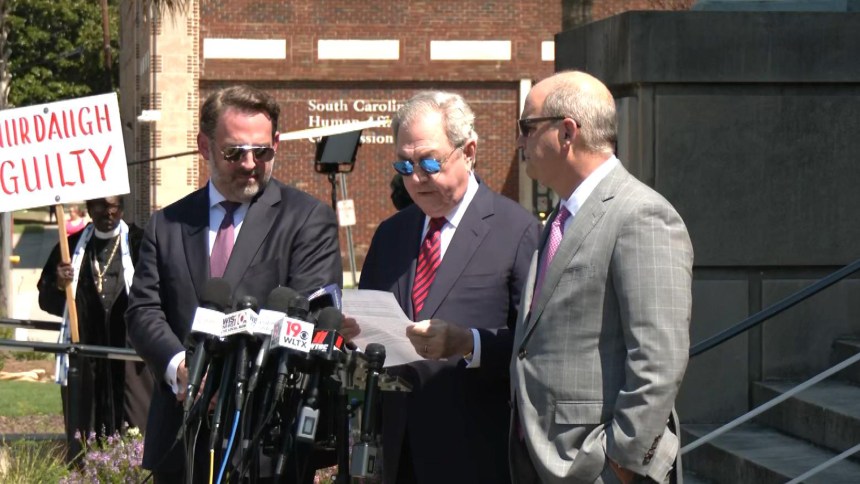
Harpootlian said at a news conference Tuesday that the defense team has sworn testimony from two jurors who say Hill had “improper, private communications.” Speaking of the clerk, Harpootlian said: “They’re not someone who should ever talk about the case. I’ve never heard it happen, and I’ve been doing this a very long time.”
In their motion, the defense attorneys argue that Hill “tampered with the jury by advising them not to believe Murdaugh’s testimony and other evidence presented by the defense, pressuring them to reach a quick guilty verdict, and even misrepresenting critical and material information to the trial judge in her campaign to remove a juror she believed to be favorable to the defense.”
A judge will decide whether Murdaugh has met this exacting legal burden to get a new trial. But the public will make a separate determination about whether this clerk’s judgment was clouded by the pursuit of fame. On that nonlegal issue, the defense’s motion includes three solid pieces of evidence that suggest Hill, at minimum, made some bad choices.
First, there is no disputing that she co-wrote a book about the trial that was published in July. That by itself says a lot about her personality. She was not the judge in this high-profile case. She was not a victim. She was not a witness. She was not a member of the jury. She was the clerk of court. In South Carolina, a county clerk of court maintains court records; handles court fees, fines and costs; and is responsible for drawing jurors for civil and criminal court and for the grand jury.


Why did Hill think the world needed a book about the Murdaugh trial written by someone who manages the docket at the courthouse?
Why did Hill think the world needed a book about the Murdaugh trial written by someone who manages the docket at the courthouse? The only possible answer is that she has an inflated sense of her role in the trial.
Second, Murdaugh’s attorneys say an exhibit they attached to their motion for a new trial shows that Hill used her official position to attempt to pressure a film crew to promote her book. The motion alleges that she added an “addendum” to a contract for the film crew to use courthouse bailiffs for security that included “a fee of $1,000 per day for use of courthouse facilities. … Then she bizarrely added a handwritten demand.” That handwritten note, included in the defense exhibit, says that “in exchange for the use of the likeness of Rebecca Hill in an interview,” the film crew would have to show the cover of her book and she would have to be introduced as “Clerk of Court for Colleton County and author of the book.”
At minimum, the exhibit appears to show Hill negotiating using “Colleton County Clerk of Court” stationery and using her office to negotiate promotions for her book — on the same page.
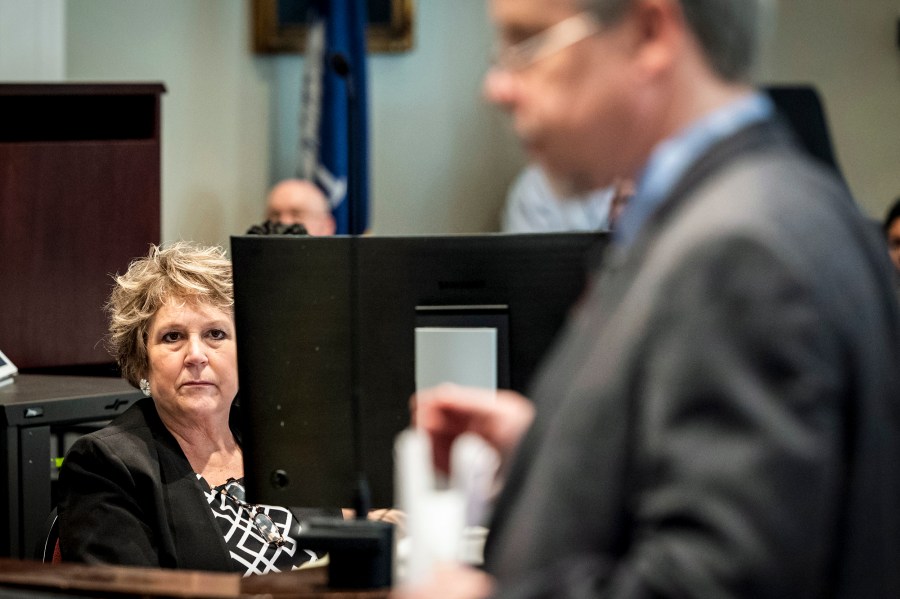
Third, Hill appears to admit in the book that she traveled with jurors on their media tour after the trial. According to an excerpt of her book that Murdaugh’s attorneys provided as an exhibit, she writes: “Sunday night after Alex was sentenced, I accompanied three jurors from the trial to New York City. … Craig Melvin and Savannah Guthrie of The Today Show interviewed the three jurors during a seven-minute, high-energy segment.” Hill writes about meeting a country music celebrity in the green room.
The clerk’s role ends when the judge excuses the jurors. The fact that she was in New York with jurors comes off as a desperate effort to step into some of their limelight.
We do not know whether the arguments Murdaugh’s attorneys will make to the judge will meet the burden to secure their client a new trial. But they have probably more than met their burden to establish that the behavior by the clerk of court was flat-out cringeworthy. Netflix documentary producers must be salivating. Season 2 of the hit “Murdaugh Murders: A Southern Scandal” documentary series premieres Sept. 20.
