




Covid-19’s average daily death toll in the U.S. — some 2,200 people — is about the equivalent of 10 Boeing 737 jets crashing each day, but the American public seems numb to the magnitude of the loss, the strain on hospitals and the grief that those deaths are causing the people left behind.
One after another, states are lifting the mask mandates they put in place during the pandemic, leaving some Americans confused, indignant and unsure of what to do and to whom they should listen regarding Covid.
It was mostly Republican governors standing opposed to mitigation measures such as masks, but now we see Democrats doing the same.
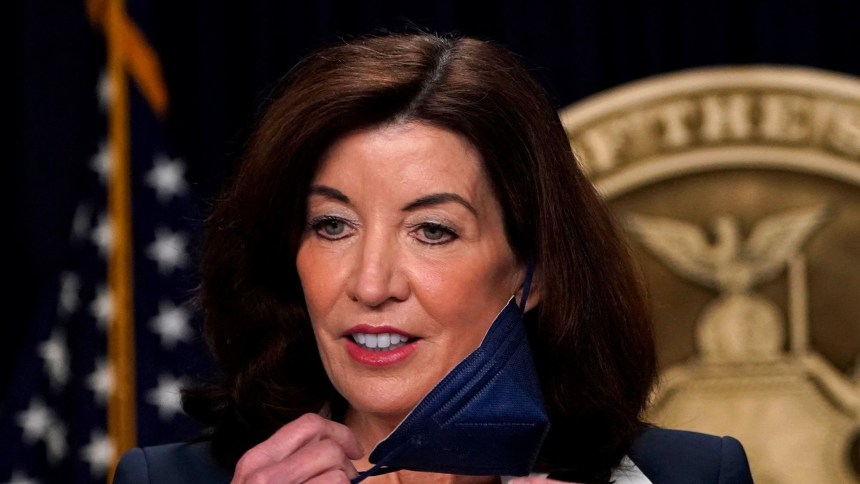
Earlier in the pandemic, it was mostly Republican governors standing opposed to mitigation measures such as masks, but now we see Democrats doing the same. For example, New York Gov. Kathy Hochul cited the dramatic decline in cases as her basis for lifting restrictions without acknowledging that even in highly vaccinated New York City, most boroughs still were reporting a high transmission rate of Covid cases each day. In fact, the entire country, including every single state that has announced some loosening of restrictions, is still in a category of high transmission according to the Centers for Disease Control and Prevention. Cases and hospitalizations are declining by double digits each day, but daily cases and deaths still exceed some of the worst surges prior to omicron. The CDC continues to recommend indoor masking including in schools, a recommendation that is supported by the American Academy of Pediatrics.
So why the rush to lift mandates? In short, people are tired of Covid, including politicians who are reminded daily of their constituents’ fatigue and frustrations. There is no question that we all, to borrow Fannie Lou Hamer’s phrase, are sick and tired of being sick and tired but the all-or-none approach hasn’t worked. So far, getting rid of restrictions in response to declining numbers has only led us to the next surge. And the restrictions are reinstated only after cases escalate and hospitals again reach critical capacity.
During every phase of the pandemic, our response has been reactive, and along with those reactive responses has come a gradual acceptance of preventable loss of life and livelihood. Simply put, we are more willing to take our chances rather than exhibit caution because the cost of such caution is untenable. This particular time might be different due to the sheer numbers of Americans likely infected. Some combination of infection-related immunity and vaccine-induced immunity could provide enough of a wall of defense to fend off the worst of any future surge. Unfortunately, our ability to predict the future of a novel virus in a once-in-a-lifetime pandemic is still limited even with sophisticated surveillance efforts such as wastewater monitoring.


Millions of Americans are in a state of confusion as the policies adopted by traditionally cautious states such as California and New York diverge from the recommendations made by the CDC. The divergence may give the impression that the Biden administration and its top public health officials are out of touch with the sentiment of Americans. Why is the CDC doubling down on masks in the face of precipitous declines and rising animosity? Is the CDC overly cautious, or are all these states throwing caution to the wind?
The CDC is overly cautious, but, by design, it must be because it must make recommendations that accommodate a variety of situations and populations, including people with compromised immune systems. The agency has also learned from its mistakes; when it abruptly recommended removing indoor masks for vaccinated individuals in May, many public health experts criticized that policy change as too sudden and shortsighted.
The CDC is overly cautious, but it must be because it must make recommendations that accommodate a variety of populations.
The states don’t seem to have learned from the CDC’s mistakes, though; they have been quick to announce the end of mask mandates while providing little detail about how and when measures might need to be reinstituted.
Americans need a sensible way to navigate the peaks and valleys of the pandemic, including a way to objectively assess when certain mitigation measures need to be reinstated. This should include public health officials collecting and displaying data that matters, including reinfections, the number of prescriptions issued for oral antivirals and guidance for navigating long Covid. Given what we have gone through and the politicization of every aspect of this pandemic, the country would also benefit from a metric that assesses the public’s fatigue level. Because the public is no less tired than the politicians are. Just like politics is driving how politicians respond to the crisis, our psychology is likely to have more to do with how we respond to the threat of Covid than any recommendation from public health officials.
At the same time, it’s important that the American people remain vigilant because they may have to impose upon themselves sensible restrictions that government officials can’t or won’t.

Dr. Kavita Patel
Dr. Kavita Patel is a teaching professor of medicine, Division of Hospital Medicine, at Stanford University and a board-certified internal medicine physician. She served in the Obama administration as director of policy for the Office of Intergovernmental Affairs and Public Engagement in the White House. Her area of expertise is around the intersection of health policy, clinical medicine and innovation. She also spends time advising venture capital and is a medical contributor for NBC News.