





With her new album, “The Age of Pleasure,” we find Janelle Monáe — who defined herself as a queer, pansexual Black woman before later identifying as a nonbinary person who uses she/her or they/them pronouns— stepping fully into herself without a single qualm or need to please anyone other than herself. “The Age of Pleasure” is one of the sexiest records Monáe has released since her 2010 debut, “The ArchAndroid.” The album is full of songs about the beauty of intimacy, sexual and otherwise.
With her new album, “The Age of Pleasure,” we find Janelle Monáe stepping fully into herself without a single qualm or need to please anyone other than herself.
Brace yourself for the complaints. When artists, especially Black women and nonbinary artists, begin publicly embracing their sexuality through their clothing (or lack of clothing) and their music, they’re often chided and accused of cheapening their art. Beyoncé, for example, was criticized decidedly after the release of 2013’s “Beyoncé” because of her provocative lyrics and the revealing costumes she wore when performing. At the beginning of Monáe’s career, she was often held up as the pinnacle of a “respectable” Black woman artist. Her music deserved the serious attention it got because of the way she chose to dress. She mostly covered her body in tuxedos.
Monáe realized that she was being pitted against fellow Black women artists as the epitome of what an artist should be: only focused on the art, not revealing her body and selling music, not sex. “I felt like, for a while, people were using my image to denounce and defame and demean other women,” she told “The Breakfast Club” in 2018. “Because I was wearing a tuxedo and, you know, you hadn’t seen, you know, my skin … some people, who had their own agendas and are respectability politicians, may have been misled into believing that I was covering up to … be an example of how to be proper. … I didn’t like that. I never took that as a compliment, you know. I never took it as a compliment because I thought it was very divisive.”
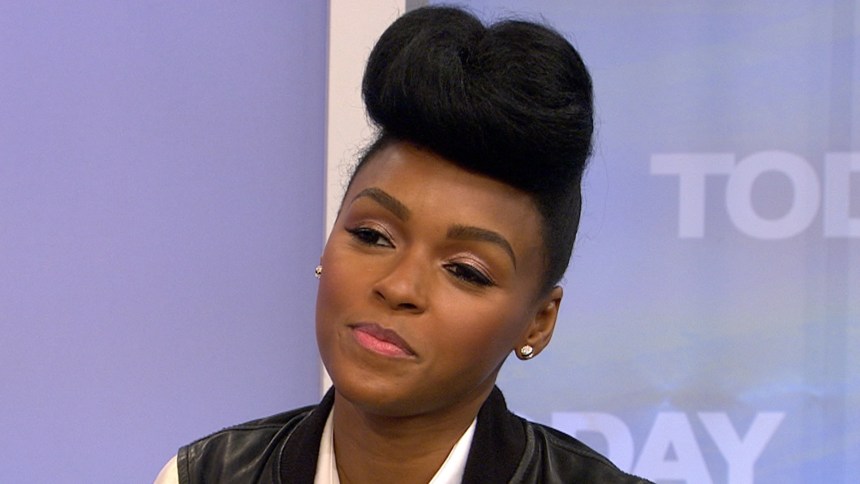
As journalist and author Joan Morgan noted in a 2015 paper titled, “Why We Get Off: Moving Towards a Black Feminist Politics of Pleasure,” Black women’s pleasure is an “integral part of fully realized humanity,” and people, especially those who identify as feminists, deserve “sexual autonomy and erotic agency” that doesn’t come at the expense of their ability to be taken seriously.
What will the “respectability politicians” say now, as Monáe, who appears topless in the video for “Lipstick Lover” and has been seen flashing her breasts during public performances, showcases a queerness that’s incredibly sexual, incredibly open and incredibly free? She has an answer for that: “You cannot project onto artists,” she told Rolling Stone. “You have to understand that experiences will be had and people will change and evolve, and not be the person you look up to. As much as you love and care about me, I’m on my own journey.” She said she has previously “put pressure on myself to live up to expectations of what I feel a majority of people would want me to do. But that time isn’t now.”
It’s a bold choice to forefront pleasure in a world that so often tells queer people, in particular, that their sexual exploits are shameful and should never be spoken of.


It’s a bold choice to forefront pleasure in a world that so often tells queer people that their sexual exploits are shameful and should never be spoken of.
Similarly, embracing pleasure, as Monáe does so beautifully in “The Age of Pleasure,” should be seen as a strength, a realization that she knows exactly who she is and how she wishes to express herself. The trailer for the album is footage of queer people simply enjoying their life as they wait for the music to usher in the summer. The video for “Lipstick Lover” welcomes viewers to a queer pool party paradise where there are no limits on expressing your sexuality. There are shots of masturbation, femme people kissing and Monáe, who sings “I like lipstick on my neck” being kissed right there.
Although the visuals have gotten a lot of attention, it’s important to say that “The Age of Pleasure” finds Monáe at her sonic best. There are electronic piano sounds, bass that reverberates across multiple tracks, reggae- and Afrobeats-infused slivers that sound especially good in the summertime. And, throughout it all, she’s returning us time and time again to the idea that pleasure is our birthright, not something to be shunned or treated as shameful.
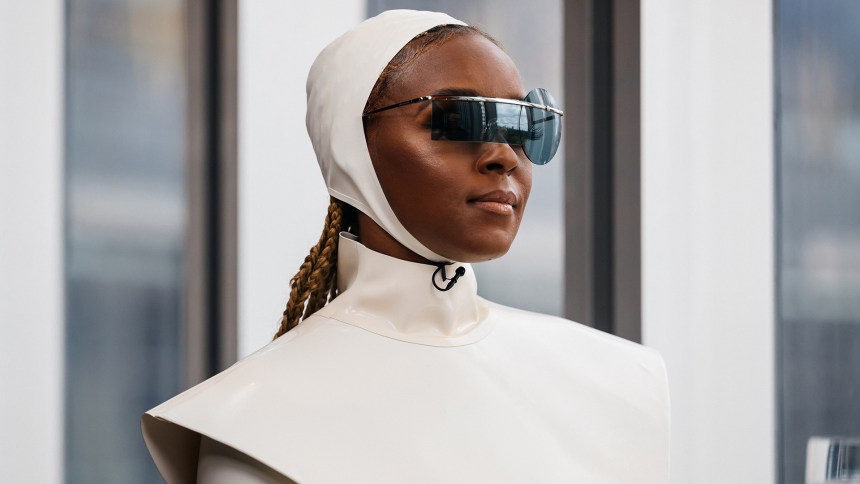
Before 2018, whenever Monáe was asked about her sexuality, she’d deflect. There was some mystique around her sexuality and gender identity, as she mostly presented herself as a shape-shifting alien in black-and-white androgynous clothing. “The lesbian community has tried to claim me,” she told Rolling Stone in 2010. “But I only date androids.” If she was ever unsure of herself, her sexuality and her need for pleasure, any traces of that hesitance is gone on this record. It’s the “Age of Pleasure” indeed, and we’re all invited to participate.
Most importantly, Monáe isn’t toying around with queerness to bait fans into reading more into her sexuality and gender identity than she’s willing to share with the public. “The Age of Pleasure” is an album by an actual queer artist in a time when queerness is being increasingly viewed as monstrous. Despite the slew of conservative bills targeting LGBTQ Americans and, more specifically, transgender Americans, being queer, as Monáe and I both are, is an experience full of joy. For those who are willing, embracing queerness can be an opportunity to reconsider everything they’ve been taught about sexuality and gender identity, such as romantic relationships should exist solely between cisgender, heterosexual men and cisgender, heterosexual women and that there are only two genders.
Queerness encourages us to question the ways we structure and prioritize relationships and can imbue us with a freedom to simply exist, as we are, without explanation or guilt. In that way, “The Age of Pleasure” is a needed reminder to queer people, during Pride Month no less, that our experience is full of obstacles but it’s also steeped in joy — and that we can, and must, fight to preserve that joy and to preserve our protections, no matter the cost. To be, as Monáe says she is, “a free-ass m—–f—–.”
