





The original Barbie fantasy involved no Malibu mansions or impossibly arched feet or any of the famous doll’s more recent multi-hyphenate ambitions of being an astronaut, an anthropologist and a entrepreneur — or any female fantasy at all.
The first Barbie, released in the U.S. in 1959, was modeled on a German sex doll named Lilli, a shapely plastic figurine who had blond hair, heavily made-up eyes, skimpy attire and a perpetual pout. Lilli was so popular among men in post-World War II Germany that she quickly evolved from a gold-digging cartoon “floozy” to a three-dimensional fixture found dangling from rearview mirrors and on the shelves of tobacco shops, though never in children’s stores. One modern journalist described Lilli as “an Aryan fantasy.”
What exactly are we doing championing our most vivid cultural symbol of thin, straight, white womanhood?
This origin story, along with so-common-they’re-clichéd criticisms of Barbie as perpetuating unattainable beauty standards, is why our collective saturation in what has felt like a monthslong bright pink release party for feminist filmmaker Greta Gerwig’s forthcoming “Barbie” film should give us pause. In a moment when teen girls’ mental health crises are at a disturbing high, Roe v. Wade has been overturned, the gender wage gap has barely budged since “Working Woman” Barbie hit the shelves back in 1999, and Black, queer, fat and disabled women — everything the original Barbie, and the one marketed in this summer’s blockbuster, is not — are still more likely to face discrimination of all kinds, what exactly are we doing championing our most vivid cultural symbol of thin, straight, white womanhood?
I know, you might be thinking: Relax, you feminist killjoy, and kick back with one of the many Barbie-branded pink drinks on offer this summer. While Barbie has indeed offered the diet advice of “don’t eat!” reminded millions of little girls that “math is tough” and cannot physically wear shoes other than high heels, her legacy absolutely encompasses far more than instruction in female inferiority. The big question as the general population heads to the box office is whether or not the nuanced commentary about Barbie’s role in evolving feminism will be overwhelmed in the blinding pink haze of Mattel marketing that, at its core, celebrates a very familiar (and not always progressive) type of femininity.
When entrepreneur Ruth Handler first spotted Lilli on a 1955 European vacation, she keenly saw potential in an American toy market dominated by baby dolls that constrained girls’ imaginations to futures as mothers. Mattel released “Barbie,” who closely resembled Lilli, in 1959, marking a first step in a trajectory that undeniably expanded the range of futures imaginable to the millions of girls who would play with the iconic doll.
Baby dolls might have trained girls as mothers, but before Barbie, toys rarely encouraged them to imagine themselves as women. As unrealistically perky as Barbie’s breasts were (are), their very presence ushered in a new era in doll, and women’s, history.
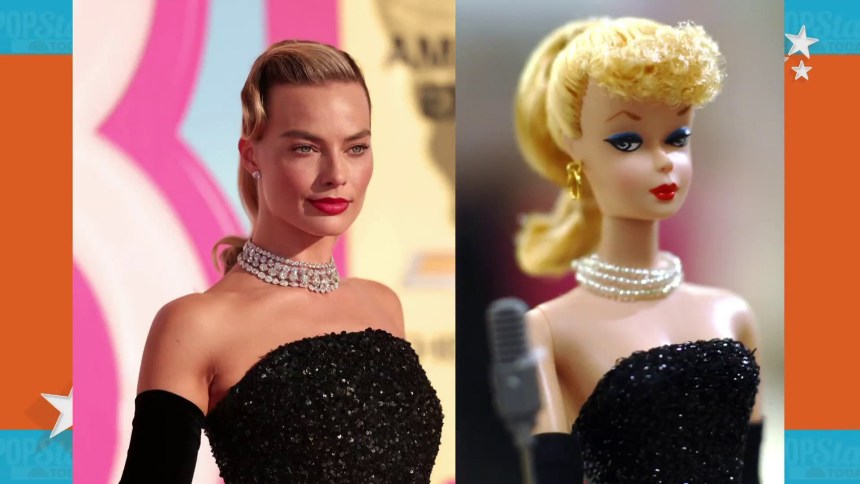
Significantly, Barbie’s fictional achievements often predated historical turning points we rightly link with women’s liberation: “Sex and the Single Girl” came out five years after Barbie was born, championing the life of a fashionable, sexually active career woman at a time when apartment buildings for young working women still had chaperones. Women were unable to get credit cards and bank loans without men to vouch for them until the 1970s. Meanwhile, Barbie owned her Dreamhouse — which had no kitchen — as of 1962, she had a college degree and careers as a nurse and an executive, and she was neither married nor a mother. Today, Barbies of every race exist, as well as renditions that honor pioneers such as Madam C.J. Walker, Billie Jean King and Jane Goodall. Any Barbie critique that ignores this pathbreaking past for one-dimensional caricature is incomplete and unfair.
This tension in what Barbie really represents is what I think makes Gerwig’s movie more than an extremely expensive infomercial, and it is what she is wisely emphasizing in interviews: “I am both doing the thing and subverting the thing.” That’s the kind of nuance we can expect from Gerwig, and it is the interesting ambiguity energizing the legions writing Barbie think pieces (including me) who do not usually spill much ink on branded movies from toy aisle bestsellers.
For all the hand-wringing about whether Barbie is feminist or not, it is striking how little overt resistance there has been to this famous doll’s being shoved in our faces more aggressively than ever. After all, Gloria Steinem described 1970s feminists as defining themselves in contrast to Barbie: “She was everything we didn’t want to be but were told to be,” she said. Just 10 years ago, Berlin feminists burned the dolls and protested a promotional Dreamhouse as “sexist propaganda.” Today’s Dreamhouse is a massive Malibu installation that dwarfs the one protesters stormed a decade ago, but it has inspired no such backlash.
As much as we might need a feel-good summer movie, we should not ignore that bilious misogyny is unfortunately the backdrop against which the Barbie World of eternally young, hot plastic dolls exists.
If anything, the critique is of a newly unapologetic commercialism contaminating the film world. Indeed, “Barbie’s” marketing rollout is so ubiquitous that it feels like a rare monoculture event: In addition to the sneakers and seltzers and pool toys and Xbox accessories, even Googling the lead actors yields an explosion of animated pink sparkles. While such considerable investment by Mattel raises questions about Gerwig’s creative freedom, as the writers’ strike grinds on and exposes Hollywood’s sexism, among other injustices, the most undeniably feminist thing about this film might be that a principled woman — for being which Gerwig absolutely has the bona fides — inked a huge deal for a summer blockbuster about girls’ consumer culture. You go, girl!
But as ironic and interesting as I trust Gerwig’s rendering of Barbie to be — even under Mattel’s oversight, since the company clearly understands that edginess moves merch more effectively than bland endorsement — I am not sure that immersion in Barbie World is what our world needs right now. Gerwig has remarked that she was struck by the fact that if Barbie were a real woman, her breasts would be so heavy that she would be forced to crawl on all fours. I was also struck when I learned this back in middle school and remember feeling disgust and relief as I interpreted it as a sign that Barbie stood for an antifeminism that was receding in my lifetime. So Barbie’s starring as this summer’s main character does not exactly strike an inspiring note at a time when real, live men give interviews about choosing to marry sex robots because they cannot talk back or reject sex so violent that their limbs and heads detach. More commonly, real, live women travel abroad in unprecedented numbers for plastic surgery that kills or disfigures them in order to achieve a “perfect body,” while most of us do not even realize we, too, are chasing the more mundane human impossibility of a poreless face every time we swipe on a smoothing Instagram filter. As I write, the question of whether Margot Robbie is hot or just “mid” has ignited the misogynistic “manosphere,” leading at least one actual media outlet to legitimize this sexist stupidity as actual news. These audiences, it seems, are not game for the subtle feminism of the Barbie film but are always up for objectifying a hot blonde. All the fawning over Barbie reminds me of a question New York Times editor Jessica Bennett posed last year of the “feminist reclaiming” of another buxom, blond 20th-century icon, Pamela Anderson (who was often compared to Barbie and had her own doll made in 1991). Is it not possible that our current appetite for “redemption” films about figures such as Anderson, Britney Spears and yes, Barbie, is an excuse to objectify these women yet again, albeit now with a self-righteous gloss of feminist virtue? It can be hard to unravel exactly what is going on, especially as “bimbo feminists” — self-described “leftists with their tits out” — celebrate plastic surgery and condemn academic elitism, a stance that can be hard to distinguish from a retrograde endorsement of busty airheads. High femininity and hard-core feminism are hardly incompatible, but the danger in such formulations has always been confusing the crop tops and lip injections for liberation itself, when a patriarchal society is often far more comfortable embracing the sexy trappings while leaving underlying power structures intact. Barbie has often symbolized such hollow emancipation: In 2016, journalist Peggy Orenstein found that college women celebrated casual sex as empowering but were deeply insecure about “genital self-image.” The ideal? A “Barbie vagina,” achievable by cosmetic surgery that made the outer labia appear fused together, just like the plastic doll. Sex of any sort does not seem to play much in the PG-13 film — a smart move to maximize audience — as the previews imply that Barbie is basically chaste. The Barbie movie might be not a feminist magnum opus but just a pretty pink summer flick, which is fine. But as much as we might need a feel-good summer movie, we should not ignore that bilious misogyny is unfortunately the backdrop against which the Barbie World of eternally young, hot plastic dolls, not to mention the beach full of sidelined Kens, exists. Tradwife influencers become TikTok famous by recommending wifely submission, while “female Andrew Tate” Pearl Davis tells her millions of followers that the 19th Amendment should be repealed and divorce should be outlawed (Tate, an icon to millions of young men, remains on house arrest for rape and human trafficking charges in Romania). I’ll definitely be watching for the feminist artistry and fizzy pink fun, but embracing Barbie too enthusiastically feels a little like what the Andrew Tates and Jordan Petersons of the world would love women to do. The recent reversals to women’s progress have been so fast and furious that we should really reflect before being too readily swept up in an intoxicating swirl of Barbie pink. The shallowest version of Barbie has always been her most famous and damaging form, and is not the feminist icon we need.
Natalia Mehlman Petrzela
Natalia Mehlman Petrzela is Professor of History at The New School in New York City. She is the author of two books, most recently "Fit Nation: The Gains and Pains of America's Exercise Obsession," and is currently a Carnegie Fellow, working on a new book about education and political polarization. 


