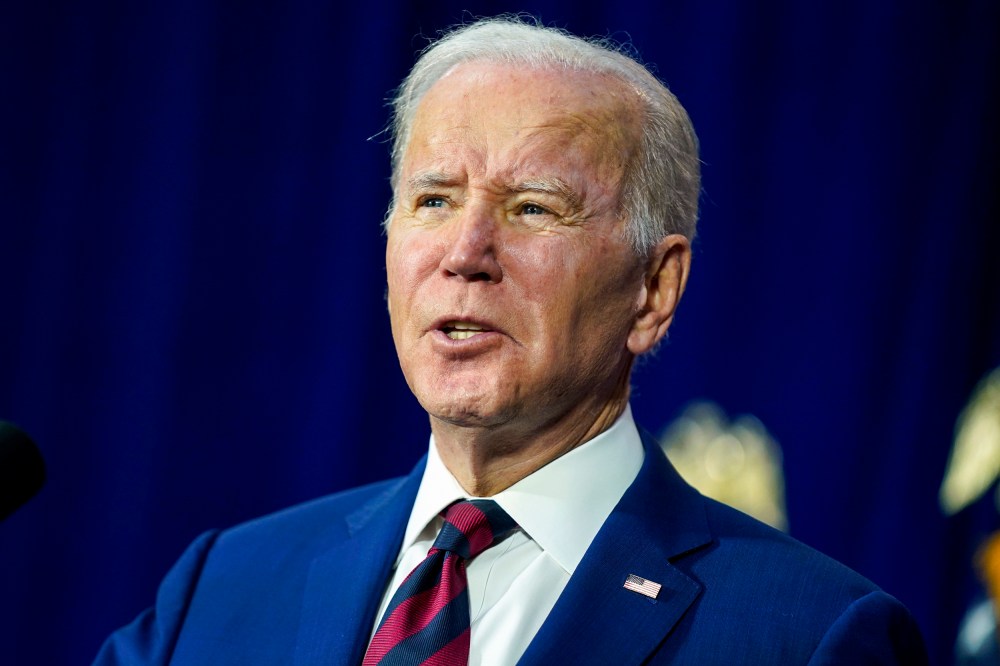
On Tuesday, President Joe Biden went to Monterey Park — the site of a deadly mass shooting in January — not only to console the still grieving California community, but also to announce his executive actions aimed at trying to contain the epidemic of gun violence. The president’s pronouncements were his latest attempt to demonstrate leadership in the face of entrenched Republican recalcitrance to passing meaningful gun control legislation. “Enough. Do something,” he said, quoting Americans mourning those lost in mass shootings.
The president’s pronouncements were his latest attempt to demonstrate leadership in the face of entrenched Republican recalcitrance to passing meaningful gun control legislation.
While many of the measures he offered reflected the reality of playing defense in the fight against lawmakers who are backed by the National Rifle Association, at least one of his strategies presents a chance to take the gloves off, a chance he should take. He directed “…members of his Cabinet to encourage effective use of extreme risk protection orders, including by “partnering with law enforcement, health care providers, educators, and other community leaders.”
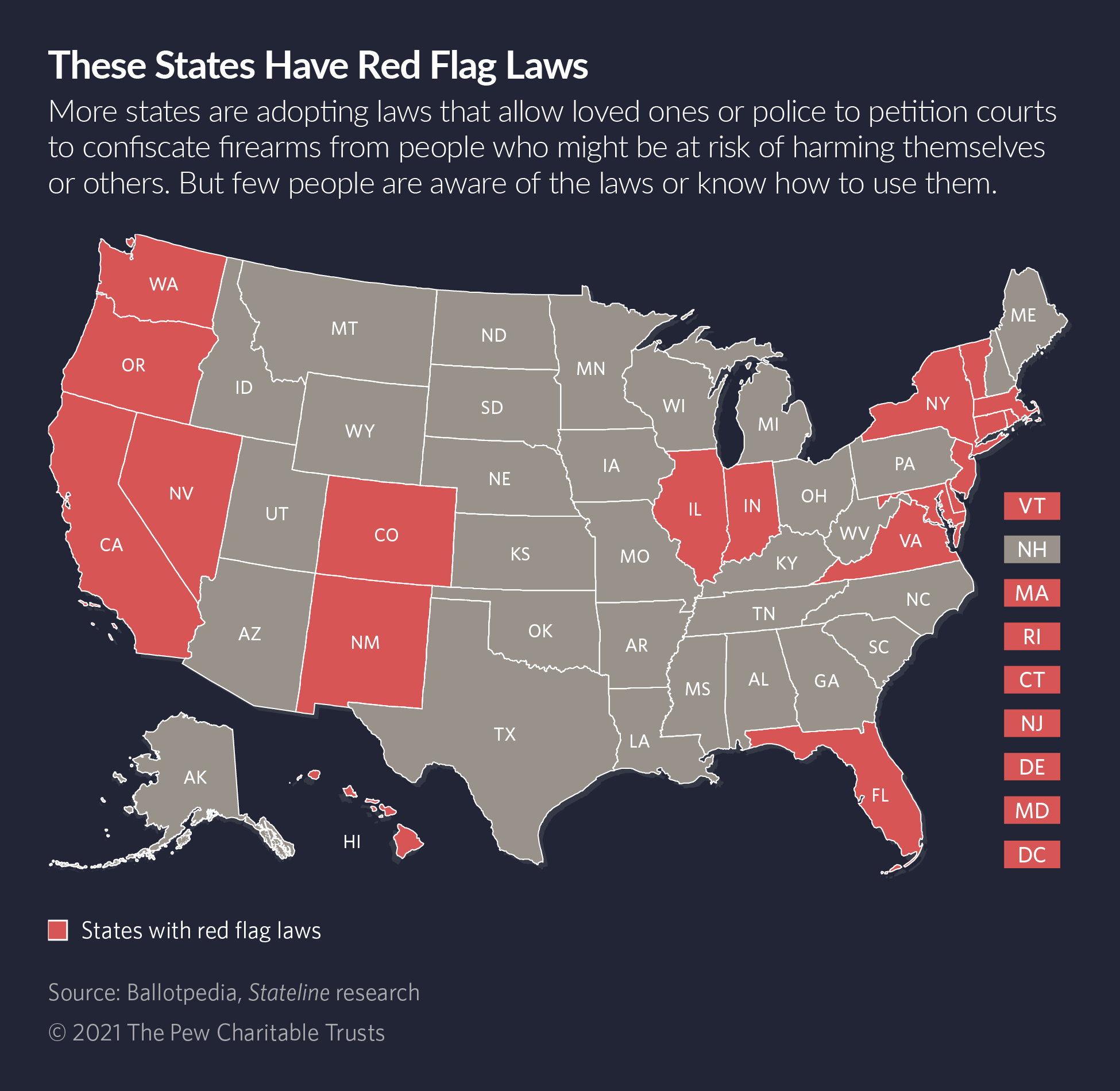
Encouraging the use of these so-called red flag laws through partnership with law enforcement is great. (As many as 19 states and the District of Columbia have enacted red flag laws, which allow residents to petition a court to determine whether an individual is dangerous, and then to temporarily remove that individual’s access to firearms until the nature of the threat is determined.) But we also need penalties for law enforcement leaders who refuse to partner with the federal government and decline to do their jobs. Because remarkably, there are local law enforcement leaders who refuse to use their authority to seize firearms while they investigate the threat as reported by residents, and are on record as refusing to do this — even when their states permit it.
We need the Justice Department to use its power of the purse and offer incentives for local, county and state agencies to abide by their state’s red flag laws and, just as importantly, disincentives when they don’t.
Following last year’s mass shooting at Club Q, the LGBTQ nightclub in Colorado Springs, Colorado, some state lawmakers raised questions about law enforcement leaders who were unsupportive of the state’s red flag provisions. After Colorado passed its red flag law in 2019, Michael Allen, the district attorney in nearby El Paso County, derided it as “unconstitutional,” tweeting that it was nothing “more than a way to justify seizing people’s firearms under the color of law.” He described the law as “a poor excuse to take people’s guns” and said it’s “not designed in any way to address real concrete mental health concerns.”

We’ve heard similar arguments from the sheriff in El Paso County and the sheriff in Lea County, New Mexico; and even a sheriff’s association in Minnesota.
But their opposition is unwarranted. Red flag laws save lives. Take it from Douglas County, Colorado, Sheriff Tony Spurlock, who, according to Pew Reports, has taken “political heat from gun rights advocates who question the law’s due process protections.” But Spurlock, whom Pew describes as “an avid Second Amendment supporter” finds it significant that each of the four people who were subject of red flag petitions in his jurisdiction is still alive. “It’s our responsibility to protect our citizens from harm,” he said. “We have a tool that is very valuable and will make a difference in the community.”
The Justice Department offers millions of dollars in grants each year to law enforcement agencies. To increase compliance with red flag laws, it should prioritize grant awards to those departments that comply with their state’s red flag laws and put those that don’t at the bottom of its pile.


The Justice Department should prioritize grant awards to those departments that comply with their state’s red flag laws and put those that don’t at the bottom of its pile.
The Justice Department should also direct the FBI to reject applications to attend the prestigious FBI National Academy from law enforcement executives who don’t demonstrate support for utilizing their state’s red flag provisions. There are also other leadership training opportunities beyond the National Academy, that the Justice Department and the FBI could deny to department leaders who refuse to take this commonsense approach to make their communities safer.
The gold standard of professionalism for law enforcement agencies is an accreditation from the independent Commission on Accreditation for Law Enforcement Agencies known as CALEA. CALEA accreditation impacts not only a department’s reputation and its ability to recruit, but it also impacts its stature when requesting federal funding, and it factors into the cost of professional liability insurance for the municipalities and counties it serves. The Justice Department should urge CALEA to consider making compliance with red flag laws a factor when it is evaluating police departments and sheriff’s departments for accreditation.
These are drastic measures, yes, but if certain law enforcement leaders won’t take steps to protect us, then our Justice Department should implement tough measures to bring those chiefs and sheriffs into 21st century policing. The Justice Department should also reward those departments that have already arrived. The people Biden quoted are right. We have to “do something.” And in order to do something, now — more than ever — we need the thin blue line to uphold red flag laws that were designed to preserve public safety.