




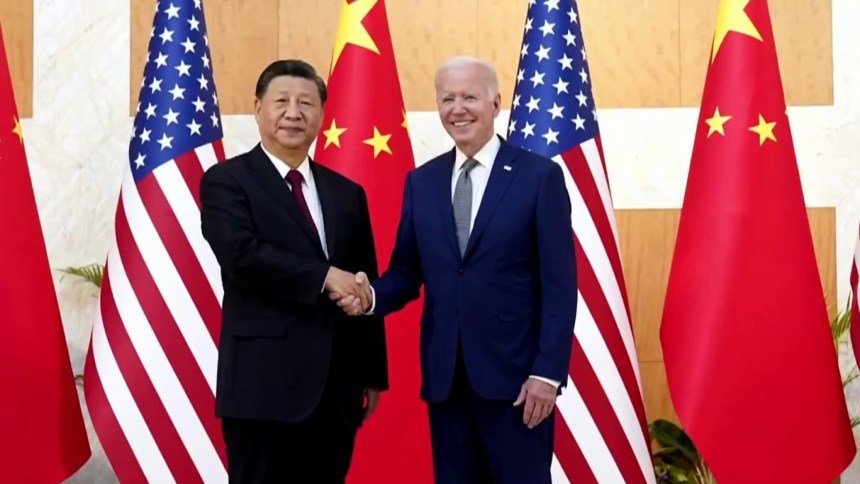
UPDATE (Nov. 16, 2023 10:50 a.m. ET): Chinese President Xi Jinping signaled the resumption of the China-U.S. panda loan program following his meeting with President Joe Biden. San Diego is rumored to be the city most likely to host the next furry “envoys.”
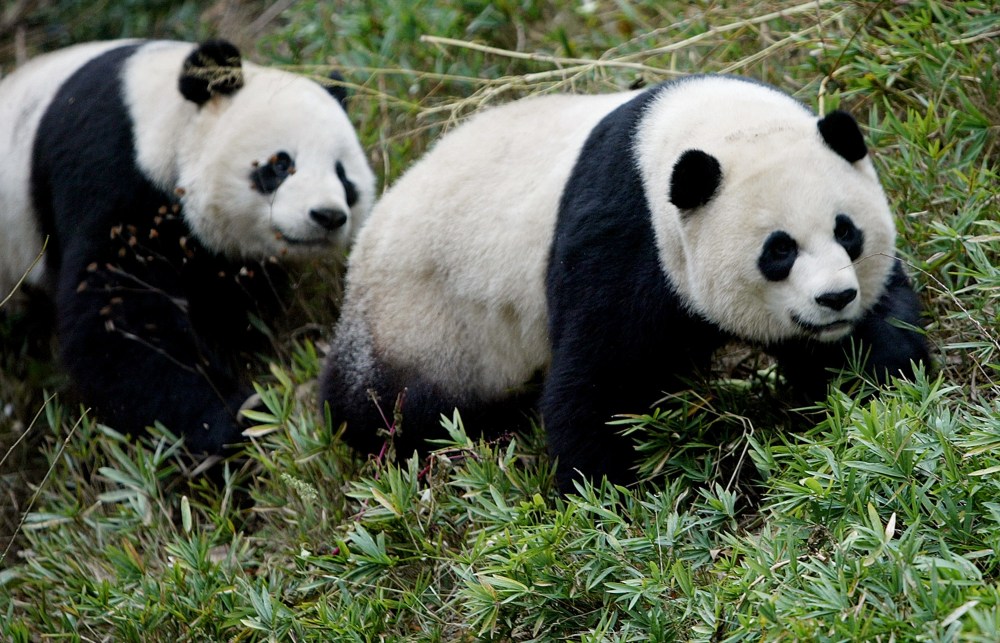
On Wednesday, Mei Xiang and Tian Tian, two giant panda bears who lived in the National Zoo in Washington, D.C., for more than two decades, returned to China, together with their cub, a 3-year-old named Xiao Qi Ji “little miracle”). In the last four years, the San Diego Zoo and the Memphis Zoo have also had to say goodbye to their pandas when their agreements with China expired. Zoo Atlanta is the last home to pandas in America, and its four bears will leave for their home country in one year unless the leases are extended.
The departure of the pandas is sad for their many fans, but not surprising.
The departure of the pandas is sad for their many fans, but not surprising. It seems that the American era of China’s “panda diplomacy” may be coming to an end. But that may actually be better for pandas in the long term. China’s push to use the bears as political pawns has downsides. Maybe it’s time for alternative charm offensives that don’t hinge on controversial captive breeding programs.
I visited the National Zoo in the summer of 1988 to see Xing Xing and Ling Ling, the two pandas gifted to the U.S. by China in 1972. Outside the panda enclosure were displayed many letters written to the bears by American children. They were some of the sweetest “love” letters I have ever read. While Americans’ love of the pandas has remained unchanged, what has changed is U.S.-China relations. After the untimely death of Le Le, a panda on loan to the Memphis Zoo, anti-American insults filled China’s cyberspace, accusing the zoo of being negligent, unresponsive and insensitive to the feelings of the Chinese people. A Chinese editorial wondered if pandas in the U.S. could become victims of “hysterical neo-McCarthyism.”
The Chinese public has a legitimate reason to question the well-being of the pandas on loan to foreign zoos. But their anger was misdirected.

In 1941, Madame Chiang Kai-shek, China’s first lady, presented two pandas to the U.S. to thank the American people for their support of China during World War II. American officials used the cuddly gifts to craft a specific narrative portraying the Chinese as peaceful and nonaggressive people, in contrast to the Japanese, a military rival. This wartime attitude did not last long. Following a change of government in China and its alliance with the Soviet Union, pandas lost their attractiveness, becoming another victim of the “red scare” and McCarthyism. Pandas were even included in the embargo on trade with China.
Admittedly, animal gift-giving is not confined to China. However, the nation’s panda diplomacy remains culturally and politically potent. Besides the U.S., many other countries have received pandas as gifts or loaned exhibits. China’s snuggly strategy toward the U.S. and Japan coincided with a three-decade cooperative relationship with both countries. Chinese leaders used the panda gifts to reward both countries for engaging in China-friendly relations. (Notably, China sent two pandas to Russia in 2019.)


In a few days, President Xi Jinping of China is coming to the United States for the annual APEC meeting. It is possible a good summit between Xi and President Joe Biden could result in pandas returning to the National Zoo.
But there is a darker, more complicated side to this panda program. Pandas on loan to foreign zoos are all captive-bred. Maintained, funded by the state and operated ostensibly in the name of conservation, captive breeding centers in China produce panda cubs that are adorable, but destined to live their entire lives in captivity. Reintroduction into the wild, when it is the goal, is incredibly hard.
The International Union for Conservation of Nature (IUCN) has changed the status of pandas from endangered to vulnerable. This is a commendable accomplishment. There are now several hundred more pandas living in the wild than there were in the 1980s. However, as the WWF (World Wildlife Fund) warns, wild pandas still face many risks. Wild pandas are segregated into dozens of small isolated groups with little or no connection. Around 24 of these groups face survival difficulties. Human farming, animal herding and mineral extraction have led to the destruction and fragmentation of panda’s natural habitats. Efforts have accelerated to build panda “corridors” to connect pandas trapped in isolated islands and to improve vegetation, particularly the bamboo forests.
Which brings me to my unpopular opinion: Conservation efforts should focus on habitat restoration and protection. And captive breeding programs should have no other mission than to replenish the wild population of pandas.
No matter how cute the pandas are, they should no longer be used as tools of the state. It is time for China to demonstrate that it truly cares about conservation — an evergreen strategy for cultivating global goodwill. The nation’s hugely popular shutdown of its domestic ivory trade in 2017 was a great example. And China could do much more.

Peter Li
Peter Li is an associate professor at the University of Houston-Downtown, specializing in animal policy and law in China. He is also a China Policy Specialist for the Humane Society International.