




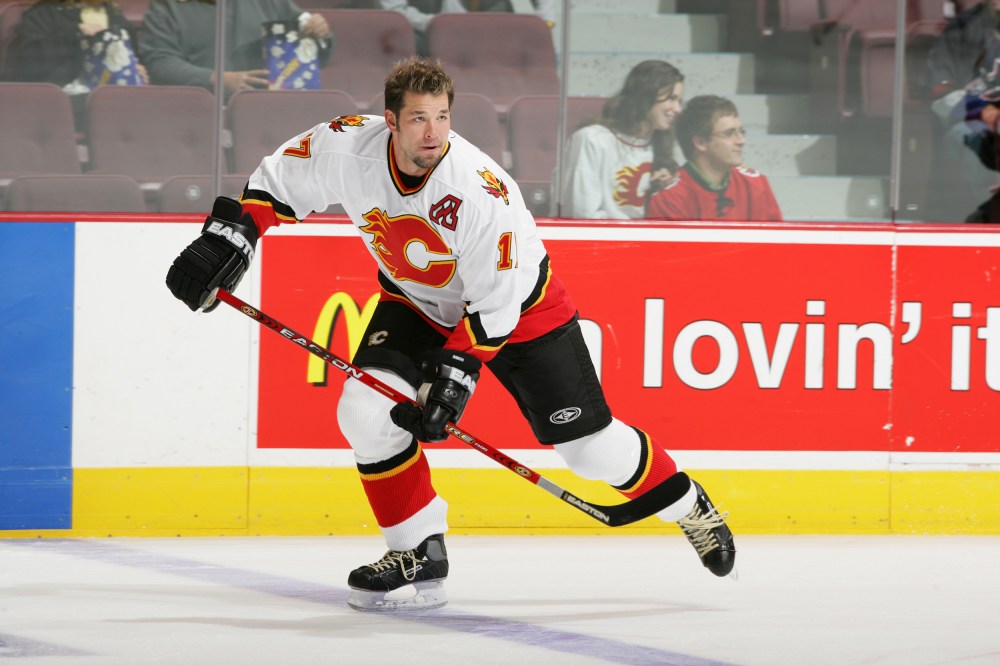
The NHL loves its players and the positives they bring to the league: good publicity, lots of money, sponsors and fans. The league directly profits from its players and what they do on the ice — including the always popular fights that involve adult men punching one another in the face and bone-crunching hits that can smash players’ heads into the glass.
What happens when not one, not two, but numerous players die young, years after entertaining the NHL’s fans night after night?
But what happens after? What happens when a player gets a concussion from hitting his head one too many times and then gets another concussion a few weeks later? What happens when not one, not two, but numerous players die young, years after entertaining the NHL’s fans night after night? A 2023 study published in JAMA found that “NHL enforcers with 50 or more career fights or 3 or more penalty minutes per game died 10 years earlier and more often of drug overdose and suicide when compared with age-matched NHL player controls.”
The NHL sits back and shrugs, as if to say, “Too bad, but not our problem.”
But it is the league’s problem, and the league needs to be held accountable for what it allows to happen to its players.
Former NHL enforcer Chris Simon’s recent death by suicide at age 52 is, his family believes, another gut-wrenching example of the impact that chronic traumatic encephalopathy, or CTE, has had on professional hockey players. The NHL continues to insist, though, that there’s no link between playing in the league and CTE.

Although Simon hasn’t been confirmed as having suffered from CTE — a condition that can be diagnosed only posthumously — his family believes he struggled immensely from the condition. Simon spent 1992 to 2008 playing for eight teams across the NHL. His physical style of play was the star of the show. In 782 games, he racked up 1,824 penalty minutes and 111 fights.
Other former NHL enforcers and even non-enforcers have been found to have had CTE. However, the NHL and its leadership have refused to acknowledge their responsibility in the matter. NHL Commissioner Gary Bettman has repeatedly denied that there’s any proof of a link between playing in the NHL and having CTE and has insisted that the league has made progress to make the game “as safe as possible.” Deputy Commissioner Bill Daly continues to question the science linking CTE to repeated blows to the head.
Bettman, in response to Simon’s death, didn’t address his family’s assertion that he had CTE.
“Chris’ passing is tragic. It’s sad,” he said. “We extend our deepest condolences to his family and friends. And, you know, on all of these matters, we wait to see what the medical experts tell us.”
The Alzheimer’s Association explains that CTE is “a progressive and fatal brain disease associated with repeated traumatic brain injuries, including concussions and repeated blows to the head. Those at greatest risk for CTE are athletes who play contact sports and military veterans, likely due to their increased chances of enduring repeated blows to the head.”
Derek Boogaard, an NHL enforcer who played for the Minnesota Wild and the New York Rangers, was diagnosed posthumously with CTE after dying from a drug and alcohol overdose at age 28. Boogaard was involved in 66 fights over six NHL seasons, plus many more in the American Hockey League and junior hockey before that.
Steve Montador suffered at least 19 concussions during his 10-year career. He’s listed as having been in 69 fights, and after he died suddenly at 35, he was found to have had CTE.
Non-enforcers found to have had CTE include Montreal Canadiens legend Henri Richard, who died in 2020 at age 84 after a long battle with Alzheimer’s disease. There’s also Stan Mikita, Bob Probert, Wade Belak, Rick Martin, Zarley Zalapski and Todd Ewen.
It’s not just the NHL, either. In 2017, a researcher at Boston University diagnosed CTE in the brains of four former junior hockey players, all of whom died by suicide before age 30. Belak and Ewen also died by suicide. Just a few studies have been done on the link between CTE and suicide, painting a complicated picture of the connection between the degenerative brain disease, repetitive neurotrauma and concussions, depression and suicide.
With what is known about CTE and its cause — repeated traumatic brain injuries — it seems only logical that many NHL players would have the disease, particularly after playing a sport that often seems to glorify the “enforcer” style of playing. The Concussion Legacy Foundation Canada found CTE in the brains of 16 out of 17 NHL players it studied. While that may be a small sample size, that, combined with everything else we know, should be enough to call for change.


It’s disconcerting to hear NHL leaders question the science, as if they know better than, say, the researchers at Boston University’s Chobanian & Avedisian School of Medicine or the Concussion Legacy Foundation
However, the NHL and its leadership have refused to acknowledge their responsibility in the matter.
It’s disconcerting to hear NHL leaders question the science, as if they know better than, say, the researchers at Boston University’s Chobanian & Avedisian School of Medicine or the Concussion Legacy Foundation and UNITE Brain Bank. To be clear, the science is relatively new — CTE was found in an NFL player’s brain for the first time only 16 years ago. But the evidence is there, and it should be enough to convince almost anyone — unless, of course, you could be considered part of the problem.
Another one gone way to soon. RIP Chris Simon. 🙏🏼🪶
— Senator Patrick Brazeau -Algonquin 🇨🇦 (@senatorbrazeau) March 20, 2024
When will the @NHL stop acting like tobacco and alcohol companies and admit the damage being done to players?#mentalhealth #suicideprevention #FirstNations https://t.co/W9r5M9HAnc
Professional athletes in general struggle with depression, anxiety and substance abuse issues and chronic pains, but NHL players seem to have a particular problem, and many are dying young. But the NHL doesn’t advocate for them. Equally as unfortunate and disheartening, the league also refuses to advocate for its current players. Although fighting and the enforcer style of play aren’t the same as they were in the 1990s and the early 2000s, they’re certainly still glorified.
Look no further than 21-year-old New York Rangers rookie Matt Rempe.
He made his NHL debut on Feb. 18 and fought New York Islanders enforcer Matt Martin in his first game. Just six days later, he fought again, this time against Philadelphia’s Nicolas Deslauriers. The following night, he dropped the gloves again. Then again two games later.
After Montador’s family sued the NHL in 2015, the league argued that it is “not to blame for any of the injuries or health problems” that Montador had.
Despite playing only 10 games, Rempe has quickly become a fan favorite, going from a relatively unknown player to one known leaguewide. He is known for his fights, for putting his body — and health — on the line. Given what we know now about how enforcers before him have fared in their retirement years, we should be worried for Rempe, and so should the NHL.
After Montador’s family sued the NHL in 2015, the league argued that it is “not to blame for any of the injuries or health problems” that Montador had. The NHL said that it has no duty to study head injuries and no duty to inform its players about such studies and that it has no duty not to promote violence. Montador’s family renewed its wrongful death lawsuit against the league in 2021, and the suit moved to state court in September 2022. The legal battle continues, with a potential trial to come this summer.
Much of the same was said in a class-action concussion lawsuit in which more than 300 retired players sued the league, accusing it of failing to protect them from head injuries or warn them of the risks involved. That suit was settled for $18.49 million, while the league racked up $70.6 million in legal fees while failing to acknowledge any liability.
I'm heartbroken by the deaths of former NHL players Chris Simon & Konstantin Koltsov by suicide.
— Chris Nowinski, Ph.D. (@ChrisNowinski1) March 20, 2024
If you're struggling w/mental health after #concussions– whether you suspect #CTE or not-please reach out to our free @ConcussionLF HelpLine. We want to help https://t.co/GUjjC2qAXL
The NHL directly profits from these players and the hits they dish out and receive; the league quite literally profits from their pain, and then, once they’re no longer profitable to it, fails to acknowledge any sort of responsibility and hangs them out to dry. Meanwhile, the current players remain at risk, and the league needs to do something about it.
Acknowledging that a person can develop CTE by playing NHL hockey is the first step, but the NHL won’t even do that. That’s an affront to the memories of players such as Montador and Boogaard. Several former players, including Chris Nilan and Daniel Carcillo, are searching for answers and fighting — this time, not on the ice — for their own health and well-being. But until the NHL and its leadership accept their liability, there can be no meaningful long-term change. Unfortunately, the league’s choosing voluntarily to change doesn’t look promising.

Melissa Burgess
Melissa Burgess is a freelance sportswriter who has covered men’s and women’s hockey and other sports for over 12 years. Her work has appeared on platforms including The Hockey News, The Buffalo News, CBC Radio, Victory Press and WBFO Radio. She is a member of the first-ever women’s hockey chapter of the Professional Hockey Writers’ Association.