




The U.S. Supreme Court will hear oral arguments on Monday in a case that will determine if the government can limit where, when and how public school employees pray. More importantly, it will define the scope of First Amendment protection given to government employees who engage in religious activities.
The Supreme Court seems juiced up to use this case to expand some freedoms while trampling on others.
The conservative court — a lasting implication of Donald Trump’s decisions while in the Oval Office — is jonesing to protect the claims of individuals who say they should be free to exercise their religious activities while subverting our freedom to be free of government-supported religion.
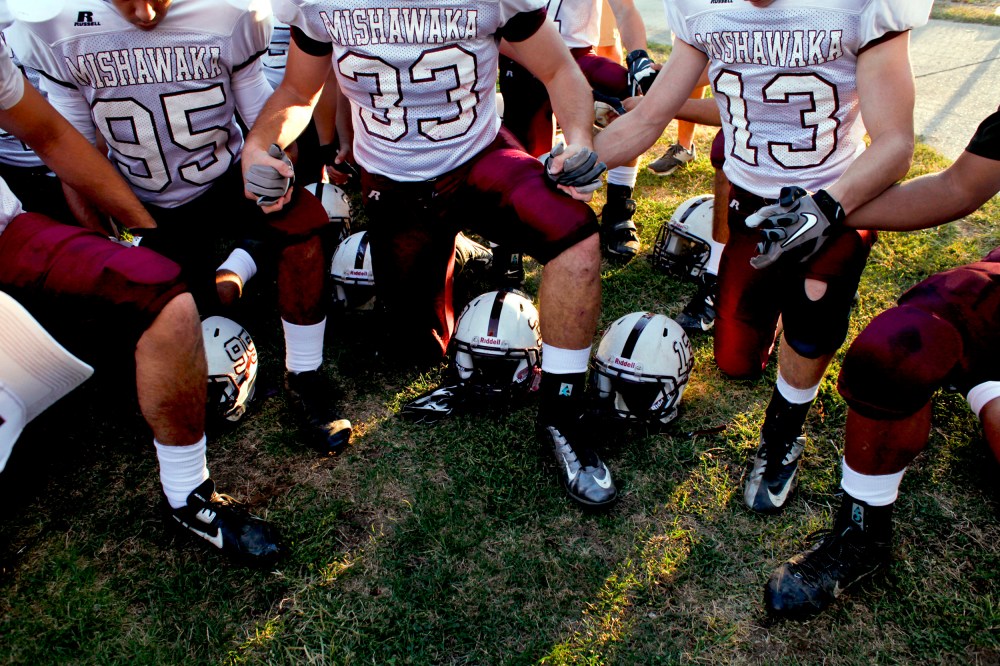
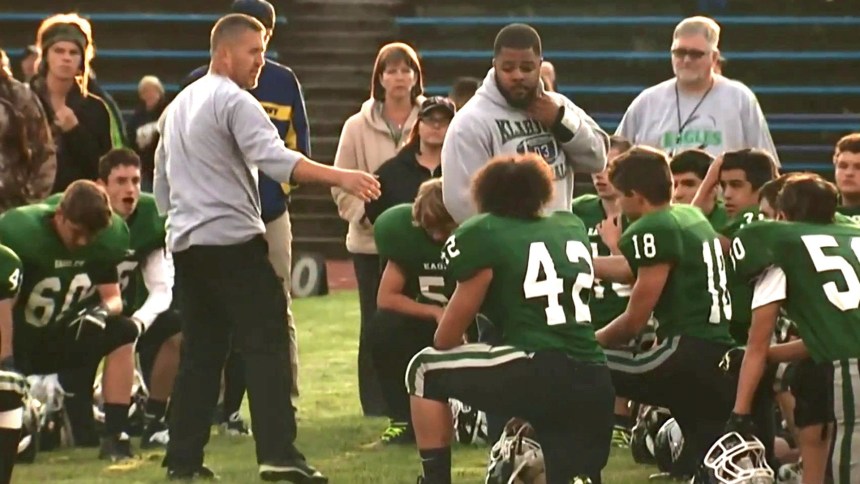
The case involves Joseph Kennedy, a high school football coach, who regularly knelt in prayer at the 50-yard line after his team finished playing, eventually joined by a number of students. School board officials told him to stop, but he refused, and his employment was not renewed.
Yes, the case represents a battle between Kennedy, a government employee, and the school board, his employer, but more broadly this is a smackdown between two provisions of the First Amendment that will have implications far beyond football fields. Kennedy claims the right, under the free exercise clause, to kneel and visibly and audibly pray on the football field after games. The school board claims an establishment clause obligation to prevent him from doing so. We can characterize this as Kennedy arguing for freedom to exercise his religious beliefs and the school district arguing that they have an obligation to protect our freedom from government-supported religion.
Very, very generally, the free speech and free exercise clauses of the First Amendment protect people in their ability to say, believe and do what they want in support of their religious beliefs, free of government intrusion. These clauses tell the government not to trample on individual expression, beliefs and actions taken in support of those beliefs. And again, very, very generally, the establishment clause of the First Amendment tells the government not to establish a government religion, prefer one religion over another, or religion over nonreligion, or vice versa. Understandably, the requirements of these two clauses are sometimes in tension.
A government employer’s ability to tell an employee to stop praying first depends on whether the employee who prays in a visible place on campus is engaged in private speech, which is entitled to First Amendment protection, or government speech, which is not. Then, even if the employee is engaged in protected private speech, the court must decide whether the establishment clause requires the government to tell the employee to stop.


This is a smackdown between two provisions of the First Amendment that will have implications far beyond football fields.
Kennedy, clothed in his coaching uniform, on the football field, and still in charge of his team, certainly seems to have been acting in his official capacity as a government employee when he knelt at the midfield line and prayed. The 9th Circuit Court of Appeals agreed. If the Supreme Court comes to the same conclusion (spoiler, it won’t) then that would be the end of the case. But the Supreme Court seems juiced up to use this case to expand some freedoms while trampling on others.
If we conclude, as the Supreme Court is likely to, that Kennedy’s prayer constitutes private speech entitled to First Amendment protection, the next question is whether the school board was nonetheless required to tell Kennedy to cut it out in order to guard against government-supported religious activities. The court is likely to find that the school board was not so required.
All of this is to say that this conservative Supreme Court is almost certainly about to hand Kennedy, and other similarly situated government employees, a win. We already know what four conservative justices — Samuel Alito, Clarence Thomas, Neil Gorsuch and Brett Kavanaugh — think about this case, or at least a version of it. Alito issued an order in 2019 joined by his three conservative colleagues that criticized the 9th Circuit’s decision to preliminarily rule in favor of the school board. Alito wrote, “What is perhaps most troubling about the Ninth Circuit’s opinion is language that can be understood to mean that a coach’s duty to serve as a good role model requires the coach to refrain from any manifestation of religious faith — even when the coach is plainly not on duty.”
Let’s remember that Kennedy can in fact exercise his religious beliefs. The school district here is merely asking him to exercise those beliefs when he is not acting in his official capacity as a public school coach. This actually protects our freedoms; students who are members of another religion, not members of a religion, or who don’t want to publicly display their religious beliefs are free from the pressure or coercion caused by these situations. Nonetheless, Kennedy is likely to succeed.
Kennedy’s case represents part of the court’s steady march toward prizing the rights of individuals claiming freedom from government intrusion on their religious beliefs and activities versus the rights of all of us to live in a society free of government endorsement of religion. Legally, this means the court will bolster the protection given under free exercise clause to the detriment of protections afforded to us from the establishment clause. None of this started with, nor will it end with, a high school football coach and his desire to pray on a football field. We are likely headed to a place where the government is not only significantly weakened in its ability to ask its employees to engage in religious activity elsewhere, but must be forced to support public displays of religious expression. That sound you hear is the cracking of the wall between church and state.

Jessica Levinson is a Loyola Law School professor and MS NOW columnist.