




As the Israel-Hamas war rages, anxiety at Cornell University has surged. Responses to the conflict have varied, polarizing our community. Over the past few weeks, Cornellians for Israel and Cornell Hillel hosted a candlelit vigil, Professor Russell Rickford called Hamas’ initial invasion into Israel “exhilarating” and “energizing” at a pro-Palestinian off-campus rally, Students for Justice in Palestine (SJP) organized a vigil and rally, and anti-Israel graffiti was sprayed across campus. The underlying tones of antisemitism and Islamophobia have called Cornell’s protection of freedom of expression into question.
Then, a new source of fear: Over the weekend, online posts threatening violence against Cornell University’s Jewish students.
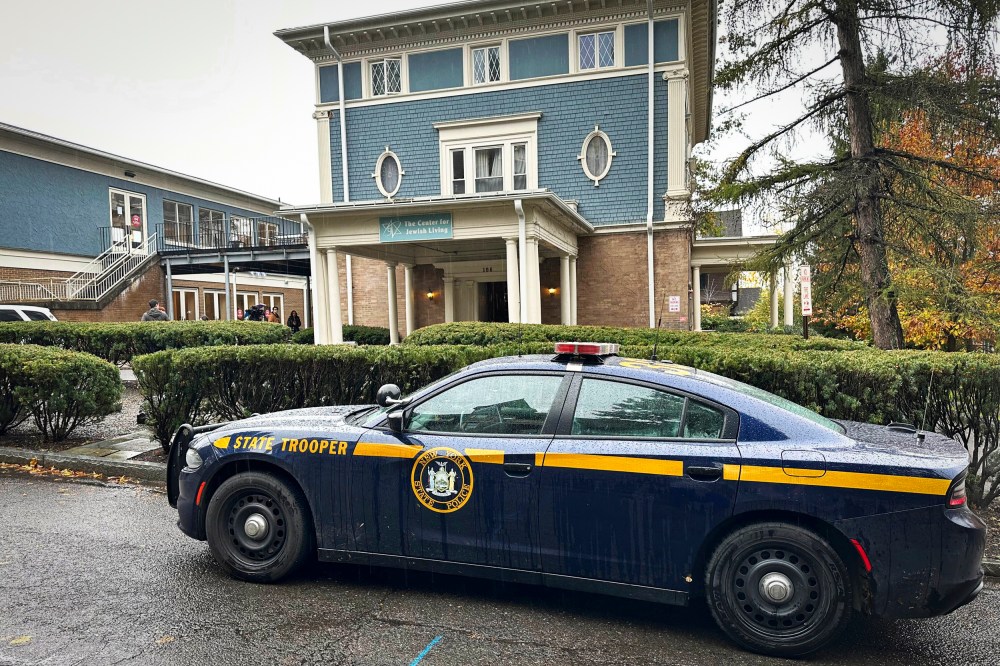
Then, a new source of fear: Over the weekend, online posts threatening violence against Cornell University’s Jewish students and a shooting at 104West!, home to Cornell’s Center for Jewish Living and the kosher dining hall, sent shock waves through the campus and made national headlines. The anonymous posts threatened rape against female Jewish students and beheadings of Jewish babies. The poster called for others to follow Jewish students home and slit their throats. Cornell police were seen outside 104West! and the FBI was notified of a potential hate crime.
On Tuesday, a suspect — a fellow student — was arrested and charged with federal crimes. While this arrest is good news, these threats turned the distanced and depersonalized stories of antisemitism into an acute reality for the Jewish community.
As individuals, we grappled with whether to hide in our dorms or risk going to class, whether to speak up against anti-Jewish rhetoric or remain silent. If religious, we wondered whether to don our kippahs and long skirts or hide that side of our identity. Suddenly, we had to decide whether our safety was worth potentially giving our nameless bully what they wanted.
The posts on Cornell’s Greekrank forums proved to be a tipping point for administrative intervention. Cornell President Martha E. Pollack responded in a statement Sunday: “We will not tolerate antisemitism at Cornell. During my time as president, I have repeatedly denounced bigotry and hatred, both on and off our campus. The virulence and destructiveness of antisemitism is real and deeply impacting our Jewish students, faculty and staff, as well as the entire Cornell community.” New York Gov. Kathy Hochul, who visited Cornell on Monday, likewise expressed support.
But while I fear for my safety, I also fear for what happens next — now the threat has hopefully been neutralized, and our campus attempts to return to some modicum of “normal.” In the face of violence, I have watched the Cornell community become increasingly torn by the conflicting fears and concerns for their respective communities. They vie for who is more oppressed, although both Jewish and Muslim students face extreme safety concerns.
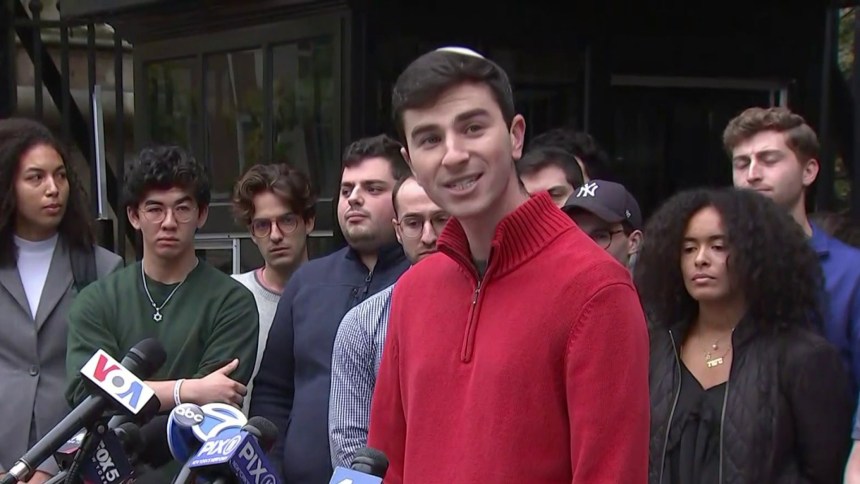
“It’s terrifying to be Jewish on our campus right now. I think that Jewish students feel alone. They feel isolated. They don’t feel supported,” Cornell Hillel Vice President Simone Shteingart said in an interview with The Cornell Daily Sun. Malak Abuhashim, president of Students for Justice in Palestine, expressed a similar dissonance: “I think as a Palestinian, as an Arab, as a Muslim, as a human, it’s been very upsetting to see how the death and destruction in Israel has been empathized with, and it’s so easy for society and Pollack to empathize with that and call it out and stand with Israel, but then when there’s a genocide in Gaza, she can barely even say anything.”
Abuhashim’s critique of Pollack has merit. The administration’s pattern of addressing only antisemitism but not Islamophobia will not help us heal. Nor does it make me feel safer. Cornell students mirror this divide instead of coming together as we all experience shock, anger, grief and alienation. Some students turn to racial profiling, staying away from groups who “look” like they would instigate hate crimes.


I am also afraid of how the latest threats will fracture a precious community that appears suddenly, surprisingly fragile.
As a Jewish student at Cornell, while I do fear for my safety on campus, hiding my curly brown hair under hats and the bump on my nose with a mask, I am also afraid of how the latest threats will fracture a precious community that appears suddenly, surprisingly fragile.
To the reader: These despicable threats posted on Greekrank do not define Cornell students, just as they do not define the Jewish or Muslim, pro-Israel or pro-Palestinian communities. We cannot let them overshadow the atrocities of war, on both sides.
And to the Cornell community: We must not give the poster the satisfaction of splitting our cherished university into pieces. Just as easily as our words can grant humanity and elicit peace, they can drive us apart.
As a community, we must learn to live past the initial jab of fear, shock and disgust. We must band together and continue to seek out shared experiences. We cannot allow breakdowns in human understanding to snowball into acts of retaliation.
And finally, as we stand up against hate, we must also learn to recognize it within ourselves. We have the power to make sure neither antisemitism nor Islamophobia is allowed to infect our collective home.

Ilana Livshits
Ilana Livshits is a freshman at Cornell University double majoring in Computational Biology and Feminist, Gender and Sexuality Studies.