





Last week, the Senate nearly gave away the literal bank to Big Tech. A crypto bill called the GENIUS Act would have allowed Big Tech behemoths like Amazon, Meta, Google and Apple to own and operate their own stablecoin, allowing them to force customers to use their currencies.
In the run-up to the vote, many senators were under the mistaken belief that the bill regulates cryptocurrencies. But enough lawmakers got spooked by reports about Trump’s memecoins accepting foreign investments, his pricey fundraiser with the crypto industry, and his exclusive dinner and White House tour for holders of his $TRUMP memecoin.
Big Tech already has unprecedented access into every part of our daily lives.
The bill’s Democratic co-sponsors, Sens. Kirsten Gillibrand and Angela Alsobrooks, voted against advancing the legislation they had supported. Senate Majority Leader Chuck Schumer and Sen. Ruben Gallego protested that Republicans weren’t working with them on language to address Democrats’ concerns. Republicans such as Sens. Josh Hawley, John Kennedy and Rand Paul expressed concern about the base bill. And the GENIUS Act collapsed into itself like the house of cards that, aptly, cryptocurrency mostly is.
Unfortunately, Senate Republicans are trying again. Undaunted, they are pushing ahead with this bill that would grant the biggest companies in the history of the world a dangerous opportunity to operate their own financial systems, immediately extending their monopolistic power to banking and competing with the U.S. dollar. For any Democrats considering backing this bill the second time around, their vote will have a devastating and lasting impact on our economy.
For nearly a hundred years, a firewall has existed between banking and commerce, established by the Glass-Steagall Act: A bakery cannot own a bank, because that puts you in the uncomfortable position of buying things from the same business that is holding onto your money. But the GENIUS Act would tear down that firewall, allowing corporations to own their own crypto payments (via stablecoins, cryptocurrencies that are supposedly more “stable” — except when they’re not).

Big Tech already has unprecedented access into every part of our daily lives, including not just where we shop and what we buy, but who we know, where we go, who our children are, what we search for and what we talk, email and text about. And the GENIUS Act would fulfill their wildest monopoly wishes. Combined with the artificial intelligence algorithms they’re integrating everywhere into their products and platforms, our online experience would almost certainly be more intrusive and expensive.


It’s not hard to see why certain members of Congress are intimidated.
Imagine: Google limiting your Gmail account or Meta denying you access to Instagram because you haven’t invested in Googlecoin or Metamoney. Or Amazon requiring small-business owners (its admitted competitors) to convert dollars to Bezosbucks to sell their products, the exchange rate of which, of course, would be controlled by Amazon alone.
Beyond these scenarios, there are also real national security concerns with cryptocurrency writ large that the GENIUS Act does nothing to address, but also, as Sen. Mark Warner rightly pointed out, cryptocurrency is the primary method for hackers, money launderers, scammers, terrorist organizations and U.S.-sanctioned individuals like leaders of Hezbollah and Hamas to gain financing. It’s also the preferred currency for criminals. According to the FBI, of the nearly $17 billion in scams that occurred over the last year, nearly $10 billion of those involved crypto.
It’s not hard to see why certain members of Congress are intimidated. The crypto lobby has deep pockets, openly threatening lawmakers they deem aren’t sufficiently pro-crypto. Last year, their super PAC spent $40 million on attack ads against Ohio Sen. Sherrod Brown, an unabashed crypto-skeptic. He was outspent by $20 million and lost his seat. The PAC’s leaders have already threatened to primary those who opposed this bill.
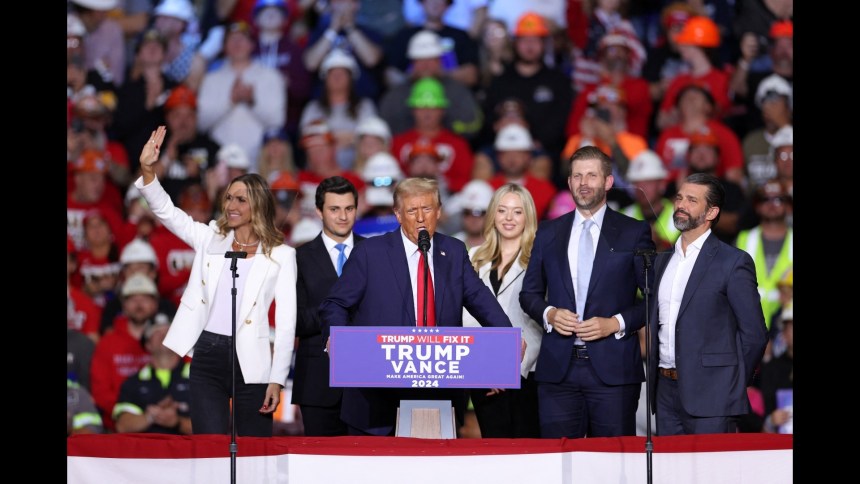
But there are chinks in the armor. The crypto lobby did not expect the GENIUS Act to fail. They did not expect senators from both sides of the aisle to speak out publicly, nor for a cavalry of watchdog organizations, national security and privacy advocates and financial experts to raise the alarm. And they did not expect the Trump family’s support for crypto to become Exhibit A for everything wrong with the industry.
The collapse of the vote last week means money isn’t the only thing that moves things in Washington. But since pro-crypto Republicans are insisting on trying again, Democrats must unequivocally say no to doing favors for Big Tech at the expense of Americans’ privacy and financial security.

Sacha Haworth
Sacha Haworth is executive director of the Tech Oversight Project.