




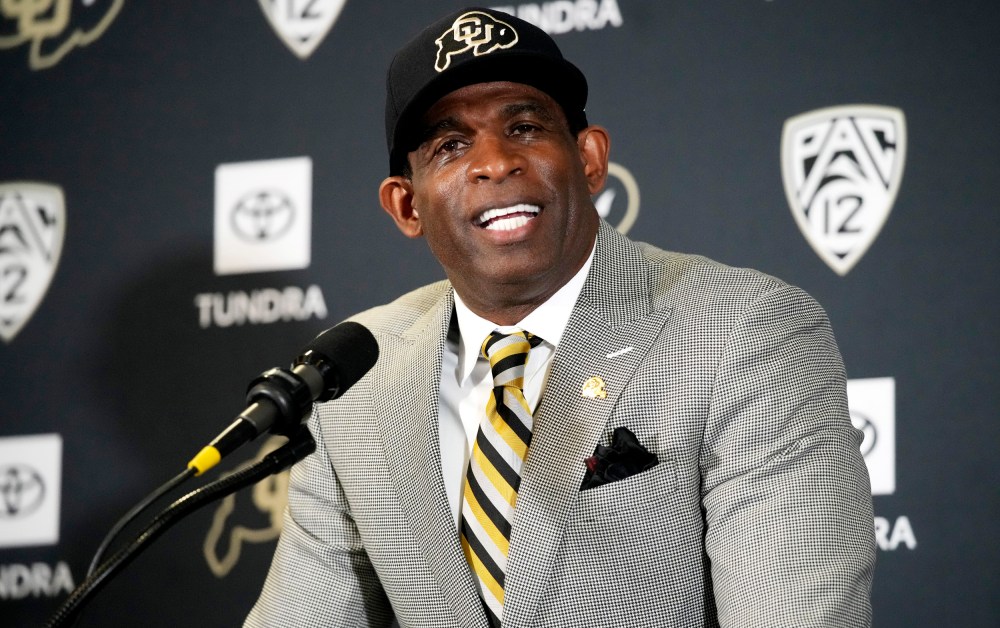
It was only a year ago that NFL Hall of Famer Deion “Prime Time” Sanders convinced Travis Hunter, the high school cornerback considered the nation’s top recruit, to forget about Florida State (the predominantly white school where Sanders had played) and sign with Jackson State University (the historically Black school in Mississippi where Sanders was coaching.) The shouts of joy at JSU, and from alumni of historically Black colleges and universities in general, were nearly drowned out by howls of outrage from those who swore that the only sensible choice for that recruit was to attend the school with the better record of sending players to the NFL.
Critics argued that choosing the Black school over the white school was foolish.
Critics of Hunter’s signing argued that his choosing the Black school over the white school was foolish.
Sanders himself tacitly endorsed that argument Sunday with his announcement that he’s accepted the head football coach position at the University of Colorado. His apologists argue that Jackson State should be grateful to have had him for the three years he stayed and argue that Sanders needn’t explain why he left for a bigger, more lucrative opportunity. In short, they argue that given what the white school had to offer, Sanders deciding to stay at the Black school would have been foolish.
Of course that undercuts the argument Sanders made to get prized recruits to join him at Jackson State. More significantly, it suggests that to the extent that there ever was a movement to restore Black college football to its past glory — when future NFL Hall of Famers including Walter Payton, Jerry Rice and Michael Strahan were stars — said movement can be quickly undermined and brought down with offers of cash. And, in this instance, that offer of cash wasn’t made to somebody who’s never had money, but to somebody who earned tens of millions of dollars during his stellar NFL career.
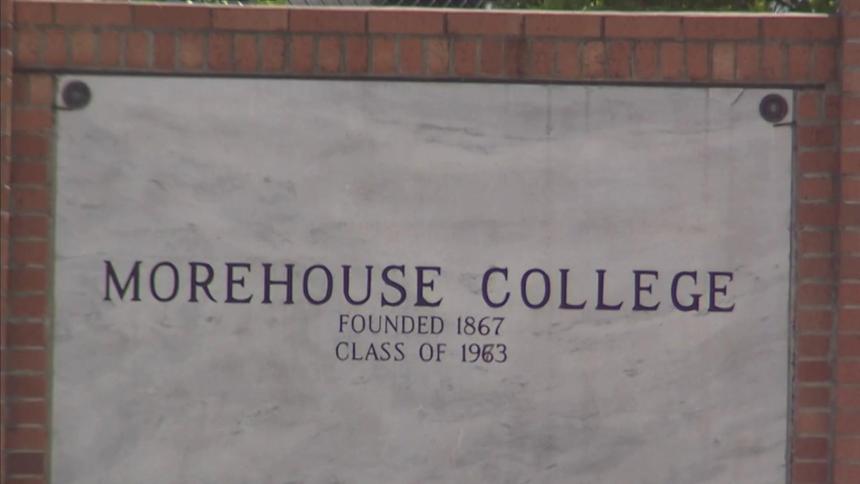
When I was around Hunter’s age, I turned down a full scholarship at a premier HBCU because teenaged me, who was obsessed with proving myself to white people, didn’t believe a degree from there would be as valuable as one from the bigger, wealthier white schools that had accepted me. While I don’t regret choosing the school I did, I almost immediately regretted my reason for rejecting the Black school. And I’ve often wondered how my life would be different had I made the other choice. As illogical as it may sound, I was hoping Hunter’s success at Jackson State would show me how well things would have gone for me if I’d made a different choice.
The passionate arguments that Black people are having on social media and on Black talk radio programs is ostensibly about football, but underneath is a more essential question: Should Black individuals be expected to sacrifice to help build up Black institutions? What do we owe? Sanders often described coaching at Jackson State as his “calling.” Is a position really a person’s calling, though, if more money entices him away?
We can’t discuss Sanders’ decision to leave Jackson State without acknowledging what little honor there is among college football head coaches, who will often ask recruits to commit to them and their program even as they’re eyeing their next gig. Therefore, on the most basic level, there’s nothing remarkable about Sanders convincing players to join his team and then abandoning them for another job, where he’ll likely start the cycle again. We can’t discuss Sanders’ decision to leave Jackson State without acknowledging what little honor there is among college football head coaches. College football coaches who swear they’re not leaving can’t be trusted to stay put. So there’s definitely no sense in counting on longevity from college football coaches who are hinting that they will, which is what Sanders did in a March interview with “Thee Pregame Show.” He said, “I’m happy where I am. It’s a calling where I am. God didn’t give me a timetable and say, ‘You got to be there for that long.’ God told me to go do that, do what I ask you to do, and do it at a high level.” He also said that while he was obviously financially comfortable, the members of his coaching staff weren’t. Referring to that staff, he said, “So let’s say for instance I took some job at a Power 5, that does not change my lifestyle. That don’t do nothing for me. I’m good. But it does for them.” To that point, at least four of Sanders’ assistants at Jackson State are expected to join Sanders in Boulder. The Clarion Ledger reports that the highest ranking recruit for Jackson State’s 2023 class decided against enrolling at Jackson State when Sanders announced he was leaving and that there are seven players on the team considered candidates to leave the team (maybe for Colorado). The newspaper’s list includes Coach Sanders’ son, Shedeur Sanders, Jackson State’s starting quarterback. It also includes Hunter, the top recruit whose commitment to Jackson State caused such joy and consternation. His departure will hurt a Tigers team that hasn’t lost a game this year. But even worse is the thought that his departure will give last year’s critics of his signing the last laugh.
Jarvis DeBerry is an opinion editor for MS NOW Daily. He was previously editor-in-chief at the Louisiana Illuminator and a columnist and deputy opinion editor at The Times-Picayune. 

