





The Democratic and Republican national conventions this year may as well have been for different countries.
Although the two parties typically have different messaging and contrasting overall vibes during their conventions, their dramatically different approaches this year laid bare the canyon-sized divide between them.
The Democratic National Convention, which concluded Thursday night, exuded vitality, optimism and competence. The Republican National Convention in July leaned on fear, anger and falsehoods.
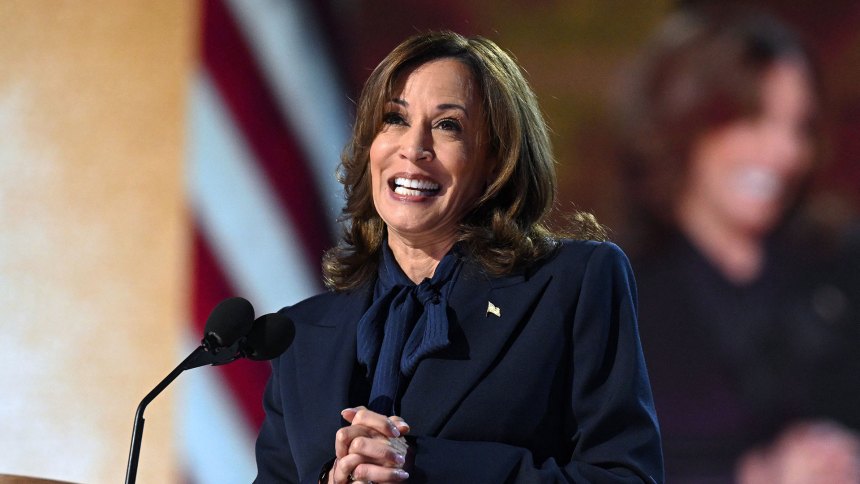
“We have so much more in common than what separates us that none of us, none of us, has to fail for all of us to succeed,” declared official Democratic presidential nominee Kamala Harris.
Her aspirational, 37-minute address was a strong contrast to Republican nominee Donald Trump’s 93-minute acceptance speech, which was full of self-pity, meandering asides and references only his die-hard fans would understand.
Another glaring gap was the energy in the room. On Tuesday, the Democrats turned the usually dull roll call into a chance to celebrate the diversity of each state and territory with handpicked songs and surprises like rapper Lil Jon representing Georgia, turning a mundane bit of housekeeping into a full-blown house party.
Compare that to the Republican National Committee’s lugubrious roll call last month. It kicked off with House Speaker Mike Johnson reminding delegates to remain orderly, before the convention’s secretary proceeded to slog through over an hour of votes that made Trump’s nomination feel mundane to the point of somber, even bleak. The parade of mostly white men casting their delegates’ votes for Trump reflected the homogeneity of the MAGA party, and was at odds with the diversity that makes America strong.
A convention needs to be tightly choreographed to project a party competent enough to lead America into the future.
Then there’s the competence, and lack thereof, on display at the two events. I know from experience as a former Republican National Committee chairman that a convention needs to be tightly choreographed to project a party competent enough to lead America into the future.
The Republican convention’s first night got off to a slow start when Johnson abruptly left the stage after a teleprompter malfunction heavily delayed the proceedings, leaving the cover band Sixwire to entertain the audience amid the technical difficulties.
Meanwhile, showrunners of the Democratic convention were able to perfectly time the roll call’s conclusion to the moment Harris took the stage at a campaign rally in Milwaukee 80 miles away, allowing her to seamlessly address both audiences at once.


But the differences ran deeper than that. Consider the vision each party presented of what a prosperous America looks like.
The crowd at the Republican convention was punctuated by a sea of signs reading “MASS DEPORTATION NOW,” while Democratic signs praised American workers and unions. Republican convention speakers painted their Democratic neighbors as “a clear and present danger to America,” while the Democratic convention platformed Republicans like Ana Navarro and even a former Trump White House press secretary, Stephanie Grisham.
But the most obvious difference is also the defining one.
These speakers highlighted how issues that affect one group affect us all. They presented an America befitting of its original national motto, e pluribus unum: “Out of many, one” — while the MAGA party continued to promote a false patriotism that paints neighbors as enemies and prosperity as a zero-sum game.
But the most obvious difference is also the defining one: the difference between the two candidates each party has embraced as its nominee.
While Harris presented the America her mother immigrated to with a dream of curing cancer, Trump expressed a longing to usher in “the largest deportation operation in the history of our country.” Harris acknowledged the importance of putting country over party, while Donald stoked more division. Harris vowed that “between democracy and tyranny, I know where I stand and I know where the United States belongs.” Trump promoted more lies about the 2020 election.
Despite the pomp and circumstance of a party convention, it’s this difference that’s the most urgent, because it’s the choice the American people will face in November. It’s the election that will decide whether our better natures win over dangerous paranoia. It’s the choice that will determine whether the rally cry of “We’re not going back” defines America’s future or is just another catchy campaign slogan.
For more thought-provoking insights from Michael Steele, Alicia Menendez and Symone Sanders-Townsend, watch “The Weekend” every Saturday and Sunday at 8 a.m. ET on MSNBC.

Michael Steele
Michael Steele is a co-host of "The Weeknight," which airs Monday through Friday at 7 p.m. ET on MS NOW. He is a former lieutenant governor of Maryland and a former chairman of the Republican National Committee.