





When Robert Mueller was appointed as special counsel in 2017, many saw it as a healthy sign of adherence to the rule of law in this country — a sign that Donald Trump was not above the law. Fast-forward seven long years, and we now await a Supreme Court decision on the question of whether Trump, as president of the United States, could order the murder of a political adversary and get away with it. That and so much more suggest that that day in 2017 is long gone. We appear increasingly untethered from our first principles as a nation, and one can rightly wonder what has happened to the rule of law.
But this week, I have hope. The first Trump criminal case is taking place. Thanks to District Attorney Alvin Bragg and his crackerjack team of experienced attorneys, we have witnessed a criminal case unfold like clockwork, building a case based on Trump-world insiders, corroborated by hundreds of tapes, emails, texts, phone records, documents, tweets and financial records.

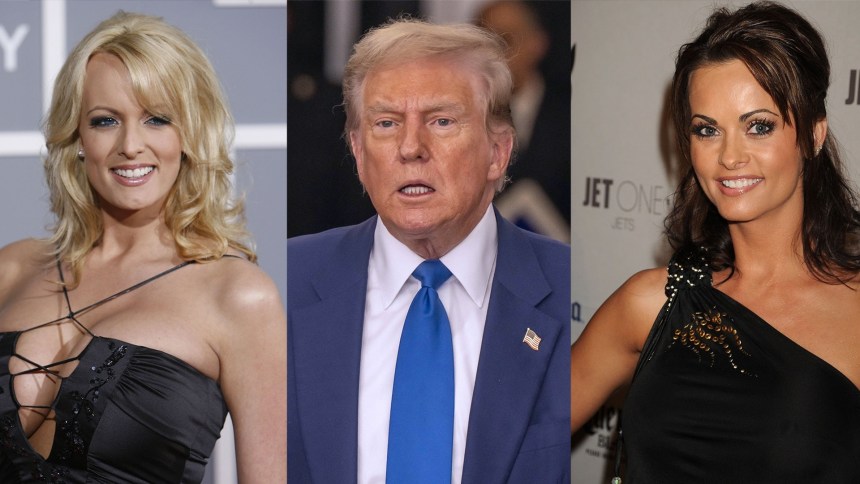
And this past week, we had Hope Hicks, a Trump loyalist who owes her career to Trump, take her obligation to the law seriously and testify to the damning admissions she said Trump made to her about the Stormy Daniels hush money payments. Hicks recounted for the jury how, after the Daniels story became public, Trump told her he was indeed aware of the payments by Michael Cohen to the porn star to keep her quiet. Trump told Hicks that Cohen had made the payments out of loyalty but without his knowledge — a story Hicks did not credit, given what she viewed as Cohen’s desire for credit and his general lack of charitableness (I had analogized him earlier in the week to a “dog with a pheasant in his mouth,” who would want to display his offering proudly to his master, with no incentive to keep his good deed to himself).
Here was Hicks, taking her oath with solemnity, filling an apparent hole in the DA’s case: that Trump knew about this payoff.
Hicks’ testimony thus confirmed that Trump did in fact know of the hush money payments. That Hicks broke down in tears after her testimony was icing on the cake for the DA — it made clear she took no joy in recounting this incriminating conversation.
Here was Hicks, taking her oath with solemnity, filling an apparent hole in the DA’s case: that Trump knew about this payoff (as David Pecker made clear, Trump knew about the payoff to Karen McDougal). That is key, because Trump thereafter reimbursed Cohen for the hush money payments, personally signing the reimbursement checks. Hicks’ testimony makes plain Trump did so knowing that they were not payments for legal fees. And for that reason, the jury need not decide whether Trump knew of the scheme at the time (as Hicks strongly intimated) or only learned of it later (as he claimed to Hicks), since in either scenario, Trump knew of the scheme prior to making the reimbursements.


Not that corroboration of Hicks’ testimony is needed, but it exists in a particularly damning form: Trump’s own admission in a civil case in California brought by Stormy Daniels. In that lawsuit, Trump admitted he reimbursed Michael Cohen for the $130,000 payment to Daniels. Trump’s admission — made with his co-defendant, Cohen — is here, and the California court recognized these statements as admissions. (Trump of course has pleaded not guilty and denied the affairs with McDougal and Daniels.)
One final but important observation of what we are witnessing in this New York courtroom: We are seeing a defendant ably represented. Whatever criticisms there have been of the caliber of Trump’s legal team in other matters, in this case — the most important Trump case to date — there is no question that the defense team is collectively experienced, smart and tenacious.
That is as it should be in our system of laws, but all too often is not for defendants without the power and financial resources of this defendant. These defense counsel are representing a defendant who is deeply unpopular with a vast percentage of the American public. Able representation in such circumstances is as important now as it was when John Adams represented British redcoats charged with murder in our country’s formative years.
How this trial will end — what the jury will find — of course remains to be determined. But what is occurring here in my hometown is something for which we should be grateful. I certainly am.

Andrew Weissmann
Andrew Weissmann is a legal analyst for MSNBC and a professor of practice with the New York University School of Law's Center on the Administration of Criminal Law. Previously, he was a lead prosecutor for Robert Mueller’s special counsel’s office and led the Justice Department’s Fraud Section. He co-hosts MSNBC’s podcast “Prosecuting Donald Trump.”