




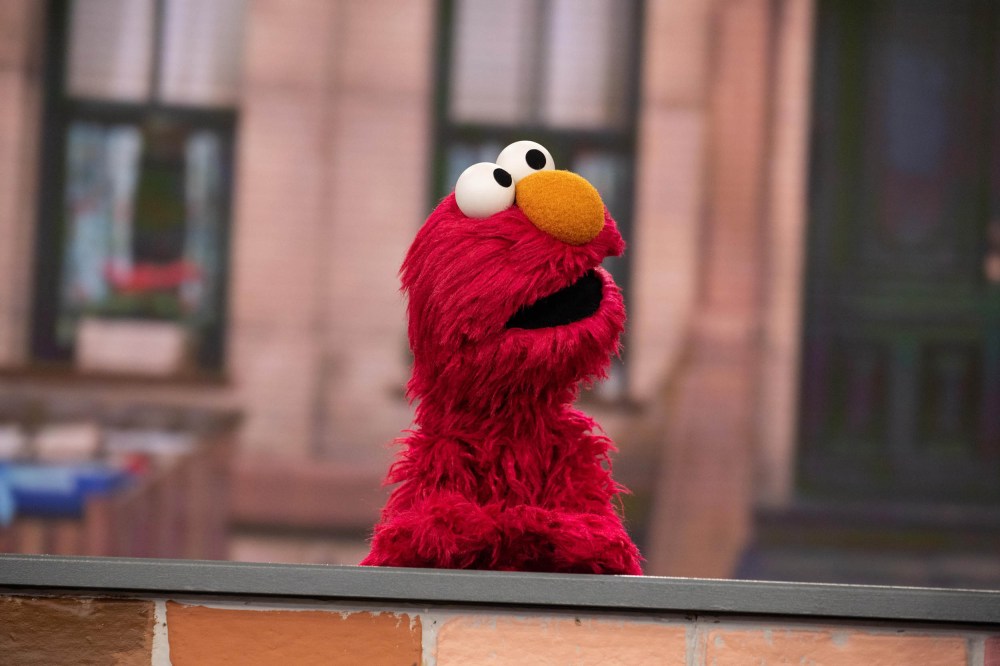
On Monday, Elmo, “Sesame Street’s” iconic, forever 3-year-old furry red monster, asked a simple question on X: “Elmo is just checking in! How is everybody doing?” The puppet was inundated with honest responses about people’s daily depression, anxiety and feelings of being overwhelmed.
“Every morning, I cannot wait to go back to sleep,” one X user posted. “Every Monday, I cannot wait for Friday to come. Every single day and every single week for life.”
“The world is burning around us, Elmo,” one X user wrote. “Elmo we are tired,” someone simply responded. “Elmo I’m suffering from existential dread over here,” another commented.
The puppet was inundated with honest responses about people’s daily depression, anxiety, and feelings of being overwhelmed.
That’s right. While there were some obvious jokes, many of the responses were honest and dire. Taken as a whole, they spoke to the mental health challenges many Americans face. Nearly 50 million Americans experience mental illness, and according to one CNN/Kaiser Family Foundation poll, 90% believe the nation itself is in a mental health crisis. By Wednesday, Elmo’s post had received almost 182 million views. At times it seemed an entire internet’s worth of grown adults were trauma-dumped on a puppet.
It’s not surprising why.
“People are really struggling currently, between the upcoming election, state of the climate, among others, with perhaps inadequate places to release the stress,” Shira Spiel, a licensed clinical psychologist who has a doctorate in psychology, said of the overwhelming response to Elmo’s post. “Perhaps it speaks to the desire to connect in our increasingly remote, virtual world.”
Elmo is just checking in! How is everybody doing?
— Elmo (@elmo) January 29, 2024
Nicole Kern, a psychologist practicing in the state of Washington, said that the Sesame Street Muppets are in a unique position to evoke the type of vulnerability required for adults to engage in honest, public discussions about mental health, one of the reasons why so many of us unloaded on a Muppet who talks solely in the third-person.
“If Sesame Street Muppets made us feel anything as children, it was safe and loved,” Kern says, adding that a puppet like Elmo can make people feel “less apprehensive when sharing their thoughts and feelings … as they feel less fear of judgment or negative reactions that they may receive from a person.”
At a time of great political division, when a reported one-third of the nation’s adults say they have very little confidence in the country’s future, many Americans are actively craving human connection, comfort and opportunities to express a childlike vulnerability that is rarely, if ever, supported or encouraged in adulthood.
The tens of thousands of replies and quote-tweets prompted Elmo’s furry friends to come to his aid — many quote-tweeting Elmo and offering up additional love, encouragement and support. The official Sesame Street account posted that “mental health is health” along with a link to resources and support, and Elmo himself sent a follow-up post, writing: “Wow! Elmo is glad he asked! Elmo learned that it is important to ask a friend how they are doing. Elmo will check in again soon, friends! Elmo loves you.”
Even President Joe Biden responded, posting on X that he knows “how hard it is some days to sweep the clouds away and get to sunnier days.”
“Our friend Elmo is right: We have to be there for each other, offer our help to a neighbor in need, and above all else, ask for help when we need it,” Biden continued. “Even though it’s hard, you’re never alone.”
More importantly, Elmo’s post and subsequent response was a palpable reminder of why those challenges are best faced together — as a community — rather than individually via the quintessential, unsustainable “pull yourself up by your own bootstraps” mentality that has plagued American culture and continues to define U.S. adulthood.
Despite undeniable strides made in normalizing mental health care, a reported 1 in 10 Americans say their family and friends “lack understanding or compassion” regarding their mental health and fear they’ll be judged as a result. Knowing that Elmo, Oscar, Cookie Monster, Grover and the whole gang wouldn’t dare judge us for our atrocious mental and emotional state gave us all permission to be earnest on main. After all, Sesame Street was built on kindness.
During the pandemic, Elmo practically raised my two young sons while I worked remotely full-time and tended to cooking, cleaning and caregiving duties.
“A Muppet specifically elicited such an overwhelming response because Sesame Street does a great job at addressing common issues that children face, such as bullying, sharing, anger at others and loneliness,” Spiel said. During the pandemic, Elmo and his lovable gang of puppets practically raised my two young sons while I worked remotely full time and tended to cooking, cleaning and caregiving duties.
Of the outpouring of feelings on X, Spiel said, “People may have drawn upon their childhood feelings of being seen and heard, allowing them to tap into what they are facing today as adults.” Elmo also evoked the power of collective storytelling, which studies have shown to be a “beneficial way to process trauma and other negative experiences for older children and adults,” Kern said. Not well. I serve in Congress https://t.co/K0M3CkXMMo “For older children and adults, we can find a lot of benefits in storytelling, especially when we have a shared trauma or similar experience,” she added. “This helps us to see that we are not alone, and that if other people are able to overcome these situations, we may also be able to overcome them.” It wasn’t just that a Muppet cared enough to check in on us — it was that so many of us responded, creating an online environment that felt warm and welcoming enough to respond honestly and cloaked in the security found behind a computer screen. Of course, it’s not the responsibility of a puppet to adequately address and potentially fix the country’s mental health crisis. A tweet from the president is cute, but our stress posting in a puppet’s virtual direction pales in comparison to universal health insurance coverage that will expand access to mental health care. It’s on us, the adults in the room who reverted back to the most childlike version of ourselves the moment Elmo showed us that he still cares, to push our elected officials to make mental health care more accessible. A tweet from the president is cute, to be sure, but our stress posting in a puppet’s virtual direction pales in comparison to our legislators passing universal health insurance coverage that will expand access to the mental health care people want and need. “Does it end with a collective validation where people feel heard or seen? Or do people come away from it hopeless that so many people are suffering with seemingly no resolve?” Spiel asked. “Venting is not always the final step of healing.” While Elmo gave us an opportunity to express our most childlike, vulnerable and honest selves, we still must be the adults in the room. We can’t wait for the next generation to address climate change, the loss of voting rights, abortion rights and LGBTQ rights. And we can’t (or shouldn’t) wait on a prompt from a Muppet to admit that our siloed way of living and dealing with mental health isn’t working. Elmo showed us what we need. It’s the thing Sesame Street has provided children for almost 55 years: a loving, caring and listening community.
Danielle Campoamor
Danielle Campoamor is a freelance journalist who has been published in Teen Vogue, Harper's Bazaar, CNN Opinion, Playboy, Newsweek, BuzzFeed and Marie Claire, among others. 

