




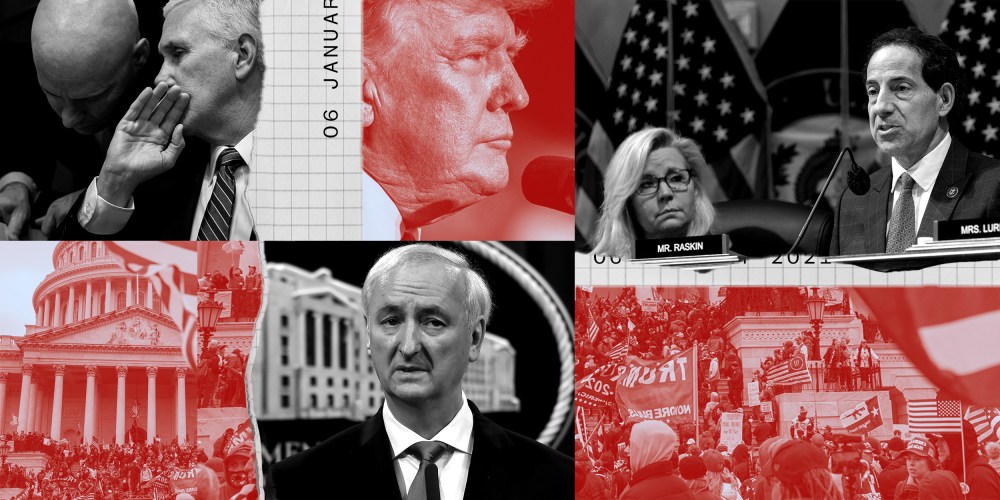
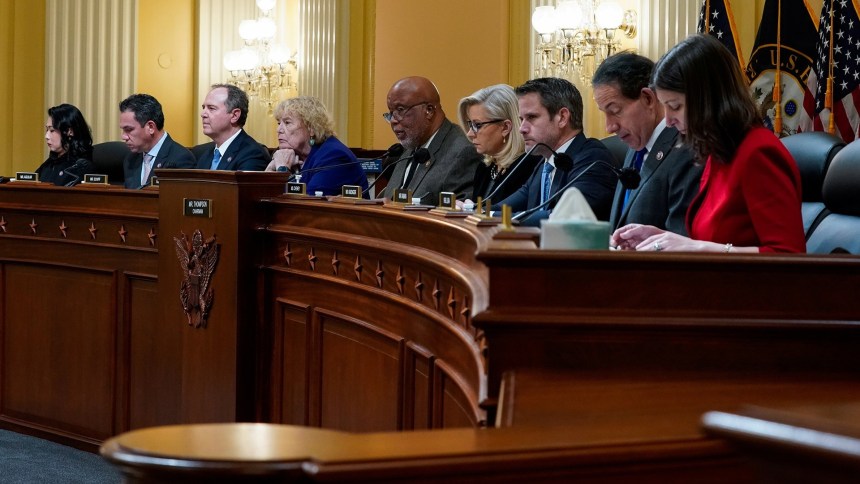
When the curtain rises on the Jan. 6 committee’s hearings on Thursday, co-chairs Rep. Bennie G. Thompson and Rep. Liz Cheney may get top billing, but the stars of the show will be the witnesses.
One of the main known unknowns is the extent to which evidence links that attack to former President Donald Trump and his relentless claims that the election was stolen.
By the end of the multiple hearings scheduled for June, we are likely to become very familiar with the people at the center of the 2021 attack on the U.S. Capitol. We already know that a mob disrupted the joint session of Congress that had been convened for the purpose of certifying the 2020 presidential election. One of the main known unknowns is the extent to which evidence links that attack to former President Donald Trump and his relentless claims that the election was stolen.
The Justice Department brought charges of seditious conspiracy against a second pro-Trump group on Monday. Will the committee connect the dots between those groups and the White House? If there is a final hearing in September, a possibility, the midterm elections will be top of mind. And the hearings could result in criminal referrals to the Department of Justice.
The House Jan. 6 committee is kicking off the first of its public hearings on Thursday, June 9 at 8 p.m. ET. Get expert analysis in real-time on our live blog at msnbc.com/jan6hearings.
One challenge for the committee is to capture the attention of an American public that has grown accustomed to watching riveting legal dramas on television, where thrilling narratives unfold and resolve in an hour. Committee members have promised new information with a gripping multimedia format. It will need be as compelling as any episode of “Law and Order.”
But while some audiences will treat the hearings like entertainment, the committee’s work is deadly serious. This is no ordinary cliffhanger — the future of our democracy hangs in the balance. Here are five things to watch for as the hearings begin.
1. All the vice president’s men
In a true blockbuster, the ultimate star witness would be former Vice President Mike Pence. Trump publicly pressured Pence to block the election results on Jan. 6 by citing baseless allegations of voter fraud. And the vice president’s refusal to participate in the scheme resulted in chants among the insurrectionists at the Capitol of “Hang Mike Pence.” Nevertheless, Pence completed the certification proceeding later that night.
Trump’s pressure on Pence is important not only in terms of understanding the facts of Jan. 6, but could also expose potential criminal misconduct. That is, if prosecutors can prove Trump persisted in his efforts to overturn the elections result even though he knew Joe Biden’s victory was legitimate.
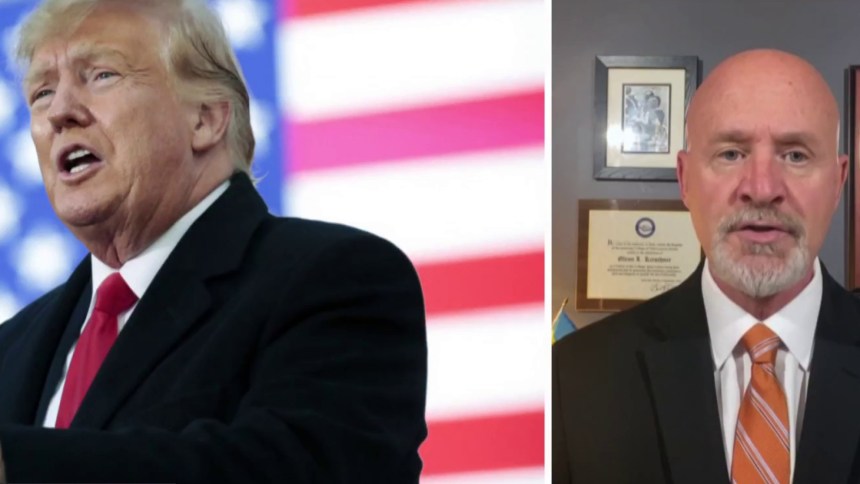
Pence himself is not expected to testify, but we will hear from his understudies. Former aides Marc Short and Greg Jacob were present for most of the key events involving Pence. Short, Pence’s former chief of staff, and Jacob, his chief counsel, were at the White House with Pence when attorney John Eastman laid out his plan to have Pence block the certification of the vote. Jacob later wrote that Eastman’s plan was “snake oil” that was “wrapped in the guise of a lawyer’s advice.” Jacob and Short were also there when the Senate parliamentarian told Pence that he could not refuse to complete the tally. On Jan. 6, after the Capitol had been cleared, Jacob received an email still pushing Pence to refuse to certify the vote.
2. A man for all seasons
Another witness who could steal the spotlight is attorney J. Michael Luttig. A former federal appellate judge, Luttig promises to be a powerful witness. When Pence was feeling pressure from Trump, he turned to Luttig for advice. Luttig advised Pence that his role was merely to count the votes, and provided language Pence used in a letter explaining his reasoning for refusing to go along with any election scheming.
In what may be a preview of Luttig’s testimony, he wrote in an opinion piece that “Trump lost fair and square” in 2020, and Eastman’s plan was an “exploitation of the Electoral College and the Electoral Count Act.” Luttig also warned that the effort to overturn the results lays the groundwork for another try in 2024 by eroding public confidence in the integrity of elections. As a prominent conservative lawyer, Luttig’s testimony is likely to resonate beyond progressive households. Both Eastman and Sen. Ted Cruz, R-Texas, clerked for Luttig after graduating from law school.
3. A few good men
The Department of Justice also provides a strong supporting cast. Former officials can describe Trump’s effort to subvert DOJ in the service of the big lie. The committee has the firsthand testimony of acting Attorney General Jeffrey Rosen and acting Deputy Attorney General Richard Donohue. In a December 2020 meeting, Trump reportedly pressured Rosen to “just say the election was corrupt [and] leave the rest to me.” Rosen told Trump he couldn’t and wouldn’t “snap his fingers” and change the outcome of the election.
We don’t know just how far Rosen and Donohue’s testimony could go toward establishing that Trump knew, and perhaps even acknowledged, that he’d lost the election. But these officials deflected Trump’s plan to replace Rosen with a little-known DOJ official named Jeffrey Bossert Clark, who was more willing to advance Trump’s false election fraud claims.
Thankfully, this would-be Sunday night massacre was derailed by DOJ’s senior leadership, who refused to accept it and threatened mass resignations if Trump replaced Rosen. Clark reportedly pleaded the Fifth Amendment more than 100 times when he finally testified in front of the committee after repeated delays. Direct testimony from Rosen and Donohue could prove highly illuminating.
4. And now for something completely different
High viewer ratings require some advance hype, but prosecutors know it’s a mistake to promise a jury better evidence than they can actually deliver at trial. The same is true for a congressional hearing. So there were concerns when committee member Rep. Jamie Raskin, D-Md., said in April that the evidence would “blow the roof off the House.” Does the committee really have some surprises in store? Will they be able to offer compelling, direct evidence of criminal conduct?
Raskin has suggested there will be “evidence” that Trump and his inner circle coordinated with some of the people involved in the Capitol attack. We know that the committee has footage from documentary filmmakers who followed the Oath Keepers and Proud Boys in the run-up to Jan. 6 — including footage of a meeting between the leaders of the two groups who are now under indictment for crimes including seditious conspiracy. Some of those filmmakers have been asked to testify in the hearings. But the committee has promised from the start that it will offer new evidence, so a few surprises are to be expected. Rep. Liz Cheney, R-Wy, the ranking Republican member of the committee, has said the committee has evidence that Trump was involved in obstructing Congress, a federal crime. Whether the committee makes a criminal referral to DOJ, compelling and direct evidence of criminal conduct, particularly involving the testimony from members of the former president’s administration, could create public momentum for future prosecutions. What did the president know and when did he know it? That famous question, asked about President Richard Nixon by Republican Tennessee Sen. Howard Baker, brought down an administration. The question was asked of John Dean, Nixon’s White House counsel, who flipped on the president and testified they had discussed the cover-up to the Watergate break-in 35 times. History doesn’t always repeat, but sometimes there is a rerun. Will there be a Dean in these hearings? Someone who can testify that Trump knew, perhaps even said out loud, that he had lost the election, and offer evidence that he was a willing participant in an attempted coup? Trump’s White House counsel Pat Cipollone is reportedly negotiating with the committee to testify. Unlike Dean, he wants to limit the scope of his testimony and it’s still not clear he will appear. But Cassidy Hutchinson is a name to watch. An aide to chief of staff Mark Meadows, she was a special adviser to Trump on legislative affairs on Jan. 6, and was with Trump at the rally on the Ellipse and in the White House that day. She also communicated with Georgia officials about Meadows’ trip to attend that state’s election audit. Dean’s testimony planted seeds of doubt, that were confirmed when Howard Baker and the rest of the Republican Party heard Richard Nixon’s voice on tapes made in the Oval Office. Will the committee have something comparable to offer here? Half of the country already believes Trump is guilty of criminal misconduct for his role in the Jan. 6 attack. One of the big questions is whether the committee has evidence that could convince Republicans — even Trump’s most stalwart defenders — that the former president committed wrongdoing. As unlikely as that seems, history reminds us that Nixon’s support among members of his own party remained in place until it suddenly evaporated in the face of the evidence. Whether the Jan. 6 committee can convince the skeptics remains to be seen. But we’re about to find out.
Barbara McQuade is a former Michigan U.S. attorney and legal analyst. 


5. The song remains the same

