




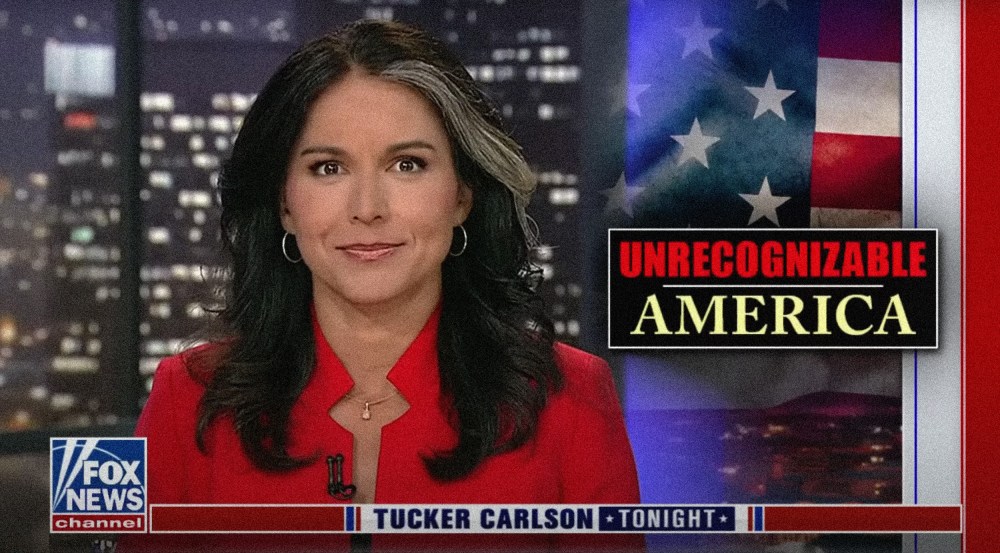
Lately figures like Andrew Yang, Elon Musk and Tulsi Gabbard have delighted the right-wing media with their anti-liberal rhetoric. All three have been (or at least claimed to be) Democrats. Yang and Gabbard ran as long-shot candidates in Democratic presidential primaries. Musk tweeted in May that he voted Democratic, but the Tesla CEO also donated to Republican Gov. Greg Abbott of Texas in 2014, not something a lot of Democrats would do. Indeed, Musk’s embrace of conservative culture war issues has made him something of a hero on the right. And his conservative fans have grown only more vocal since Musk pledged — and then tried to back out of — a deal to buy Twitter.
People who reject their own party also gain a kind of inherent credibility. By putting principles over party, they gain the ultimate moral high ground.
In hindsight, it’s not entirely clear whether Musk was ever really serious about buying the social media platform. But the trend of Republicans’ loving former or reformed Democrats is real
The appeal of partisan “defectors” is obvious: Who better to trash a party than the people who used to support it? People who reject their political peers in whole or part also gain a kind of inherent credibility. By putting principles over party, they gain the ultimate moral high ground.
Over the past few years, most flip-floppers have been of the conservative variety. Never-Trump Republicans remain highly prized in liberal spaces, and it’s not hard to see why. They symbolize how far the GOP has fallen.
Of course, the larger problem with defectors is that they often helped create the party they now think has gone too far. Rep. Liz Cheney, R-Wyo., may hate Donald Trump now, but many of her values and votes helped shape the world that made Trump possible.


But recently, we’ve also started to see more liberals allegedly jumping ship — and gaining clout. During an August vacation week, Fox News host Tucker Carlson picked an interesting guest host to sub for him. Tulsi Gabbard was, until pretty recently, a Democratic House member from Hawaii. She also has a complicated — and at times notorious — reputation on the left. At one point, she was vice chair of the Democratic National Committee. She endorsed Bernie Sanders in 2016 and Joe Biden in 2020. Tulsi certainly has the Democratic bona fides. And yet, if you closed your eyes, she sounded a lot like Tucker.
While guest hosting, Gabbard told the Fox News audience that Attorney General Merrick Garland’s tactics have “all hallmarks of a dictatorship.” She also accused Biden of wanting to bring “about a ‘new world order.’” Gabbard has, in other words, morphed into a kind of (sort of) never-Democrat.
Just like with her counterparts across the aisle, Gabbard is a potent symbol for the right. She is the liberal who came to her senses and walked away. And it’s a compelling message. But I would argue that Gabbard is perhaps not the most coherent messenger for it. She has long taken the dictators’ side in the media. In a Fox News interview in February, she was so pro-Putin that it gave even super-hawk Sean Hannity pause. In 2019, Gabbard went on MSNBC and said brutal Syrian President Bashar al-Assad “is not the enemy of the United States, because Syria does not pose a direct threat to the United States.” According to the Berlin-based Global Public Policy Institute, Assad forces launched over 300 chemical weapons attacks on Syrian civilians as part of a war that killed hundreds of thousands. He isn’t the sort of man Fox News — or the party of Presidents George Bush I and II — is used to making excuses for.
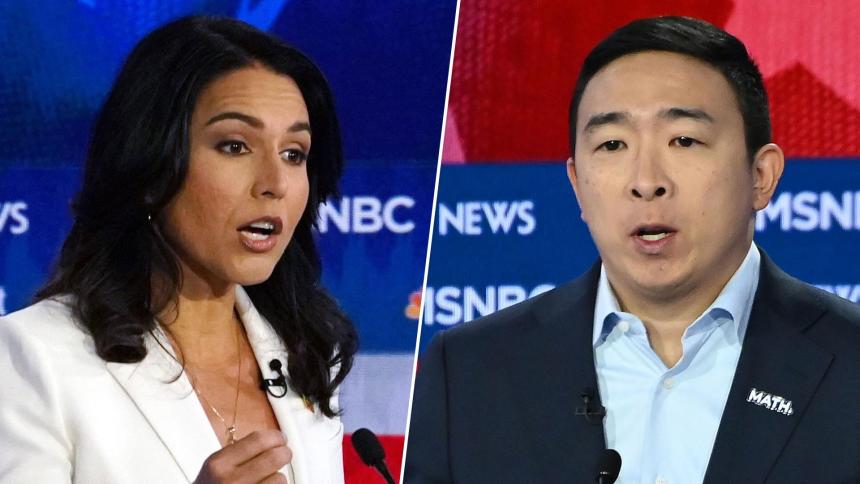
It seems like Tulsi, Musk and Yang are at the vanguard of the new partisan defectors. And the right-wing media fervently hopes to exploit their pivots for page views and eyeballs. The most fanatical conservative evangelists also probably hope to inspire other Democrats to join their (red) team. But unlike many never-Trumpers, these reformed Democrats are damaged messengers. Gabbard is undermined by her love of dictators, Yang is undermined by his complete inability to express a coherent thought, and Musk is undermined, to pick just one example, by his wildly problematic personal life (and allegations of encounters with flight attendants). Thus the irony here is that ultimately, the elevation of this trio may say more about the relative strengths of the Democratic Party — at least in comparison with the GOP — than its weaknesses.

Molly Jong-Fast
Molly Jong-Fast is a political analyst for MSNBC, special correspondent for Vanity Fair and host of the podcast "Fast Politics with Molly Jong-Fast."