




Emmanuel Macron rolled the dice and came up snake eyes.
The French president took a big gamble six months ago, when he dissolved the parliament and called snap elections hoping to stem the growing power of the extreme right. But that decision appeared to backfire this week, when parliament passed a no-confidence measure against the prime minister and thus the entire Cabinet for the first time in decades. The inciting complaints included a distasteful budget, narrow tax increases and belt-tightening. But the real issues run far deeper.
Ever since his arrival in office more than seven years ago, Macron has made it his mission to reform an ancestral French system that few of his voters seem to want to change. His two predecessors — right-wing Nicolas Sarkozy and the Socialist party’s François Hollande — expended enormous political capital simply tinkering around the edges and ended up with one-term presidencies. Macron has had more success, twice defeating far-right opponent Marine Le Pen, but largely because not enough French people are yet willing to turn their nation over to someone with ties to France’s dark, fascist past.
Macron has made it his mission to reform an ancestral French system that few of his voters seem to want to change.
The French people protested en masse when Macron sought to raise gas taxes to force an unwelcome move toward green energy — but they returned him to office. Now term-limited, he started to try to turn up the heat on reform. Back into the streets went voters after Macron sought to raise the notoriously low retirement age from 62 to 64. Such a move could have helped drag the country out of the 17th century, where it has so long been mired. But there was still the question of a ballooning budget deficit and national debt.
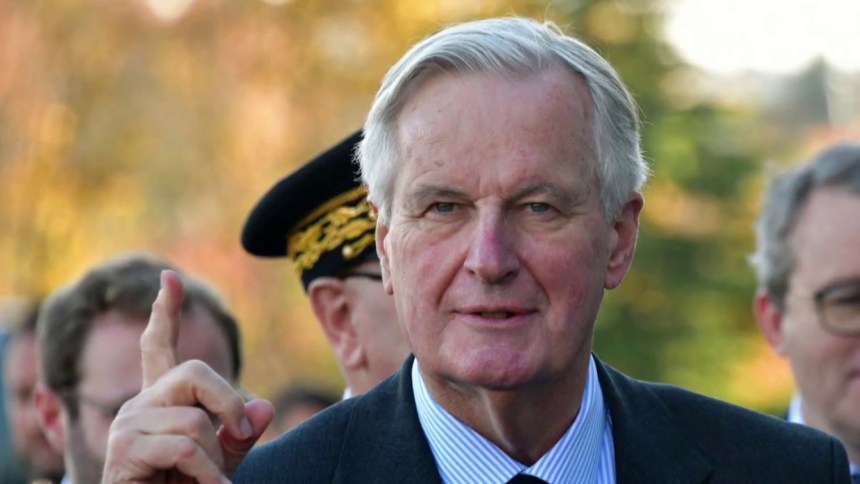
By choosing Michel Barnier to be his prime minister, Macron apparently felt he could finesse his problems with both the far right and the far left by choosing a neutral technocrat. But in France’s deeply polarized atmosphere, this compromise attempt did not work. As Macron has now experienced, the middle of the road is where folks in France simply get run over.
Macron is known for his pitch-perfect political skills. But he seems to have misjudged the broad drift to the right sweeping across Europe. Germany will have its own snap elections in February, after the neo-fascist AfD swept local elections. In Romania, on Friday, two days before the second round of presidential elections, the nation’s constitutional court suddenly annulled the entire vote. An heir of the Iron Guard fascists of World War II and self-described Vladimir Putin acolyte took first place in the first round following allegedly widespread intervention by Kremlin allies.

The French by and large recognize they are poised on the lip of a deep abyss — politically and financially — with few good routes back. The hardly united opposition has never agreed on much of anything except its distaste for Macron and his (sometimes unreasonably arrogant) methods.
In his first speech to the nation following his government’s collapse, Macron offered little beyond “the need to work together for France,” and a promise to find another prime minister. He also suggested that a new government budget might not be cobbled together before the end of the year, proposing instead a continuing resolution like in the United States.


Simply put, Macron has overreached, overplayed his hand and, though perhaps more adept than his predecessors, may well have to pay a similar price. Unable to bend the unbending French people to their will, these former presidents were each forced into a retirement bereft of influence. They left behind terms with few accomplishments.
Unable to bend the unbending French people to their will, these former presidents were each forced into a retirement bereft of influence.
And the French people will likely be the ultimate victims — of higher taxes and an increasingly threadbare existence.
In an overnight snap poll published Thursday by Toluna Harris, a very slim majority of French voters approved of the no-confidence vote. But more than 80% feared for the future of France, its economy and the ballooning public debt, which has now surpassed Greece, Italy and Spain.
But this weekend, Macron will have another chance to try to reassure his anxious citizens and reclaim a degree of the political capital he has squandered. On Sunday, he presides over the grand unveiling of France’s landmark Notre Dame Cathedral — destroyed in a 2019 fire, now reborn. Macron urged this profoundly Catholic nation to come together and pledged what many at the time considered an impossible task — to rebuild the shattered landmark in five years. And it was done.
Now, surrounded by 50 heads of state, including his longtime nemesis and soon-to-be counterpart President-elect Donald Trump, Macron will lead a ceremony every French voter will be watching with delight and awe. Will it be enough?

David A. Andelman
David A. Andelman, formerly a correspondent for The New York Times and CBS News in Europe and Asia, is executive director of The RedLines Project, a multidisciplinary study of the nature and origin of political, military, social and cultural red lines around the world. He wrote "A Red Line in the Sand: Diplomacy, Strategy, and the History of Wars That Might Still Happen" and blogs at Andelman Unleashed. He was awarded France’s Légion d’Honneur in 2021.