




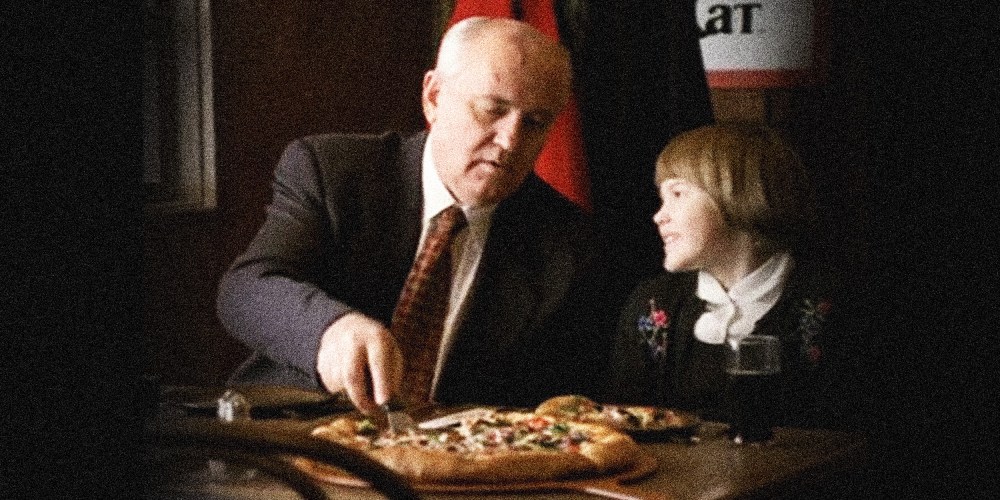
The legacy of Mikhail Gorbachev, the last leader of the Soviet Union, can be summarized in a recently resurfaced 60-second ad. It’s a television commercial from 1997 that aired six years after the fall of the Soviet Union, in which everyday Russians in a Pizza Hut spot the former leader seated in a corner.
The younger folk say the following: “Because of him, we have economic confusion! Because of him, we have opportunity! Because of him, we have political instability!”
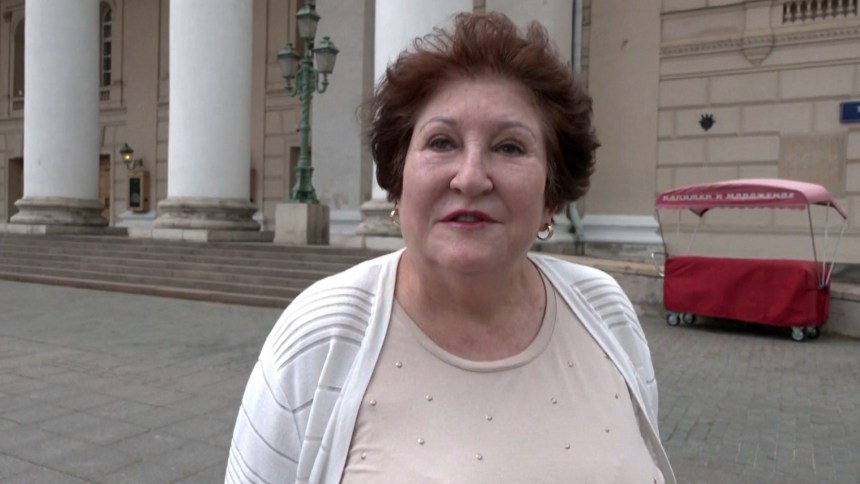
A nice older lady, the stand-in for wisdom and perspective, chimes in: “Because of him, we have many things … like Pizza Hut.”
Today, leading brands in every sector — from McDonalds to Nike to American Express — are no longer doing business in Russia.
Pizza Hut, an archetype of a product that saw its heyday in the 1990s but struggles for cultural relevance now, closed 300 stores across the United States in 2020. And today, Pizza Hut and leading brands in every sector — from McDonald’s to Nike to American Express — are no longer doing business in Russia.
Hundreds of international companies are fleeing an aggressive Russian market that is, once again, a pariah in the West. The many things promised to Russians following Gorbachev’s reforms are now disappearing. As the walls close in on the Russian people, Cold War demons come back to haunt all of us.
When Gorbachev died Tuesday at the age of 91, the funeral bells that sounded for him also tolled the dying dream of Russian democracy.
Gorbachev believed he could manage change, in moderation. He introduced the first democratic elections for the Soviet parliament in 1989. With perestroika, he opened up the Soviet Union to foreign investment in government enterprises, a start to economic restructuring. His vision of glasnost encouraged open scrutiny of public officials by people and mass media. In his memoir, he explained why: “Our society was stifled in the grip of a bureaucratic command system. Doomed to bear the heavy burden of the arms race, it was strained to the utmost.”
Leading up to the first election, 15 million Soviets lived on less than $100 a month. Millions more relied on bread lines. The poverty the Soviet government once denied was now evident in images splashed across the front pages. The newly unleashed Russian paper Pravda quoted a retired woman saying: “They talk a lot about perestroika. … In the evening, when no one is watching, I go to the garbage cans to see if someone has thrown away any old shoes.”
Gorbachev believed the basic structure of the Soviet Union could continue with only minor reforms. But he could not keep up with the exponential rate of the forces of change he unleashed. In 1990 he won the Nobel Peace Prize for “the leading role he played in the radical changes of East-West relations.” Just one year later, after a failed coup and a challenge from a former protégé, Gorbachev left his office in disgrace, and the Soviet Union dissolved.


Having the democracies of the West fear Russia is exactly the return to Soviet power Putin wanted, even if it tanks the Russian economy and forces the Russian people back into breadlines.
Leaders who compromise and argue for moderation do not become the heroes of popular imagination. Gorbachev was hailed by the West as the statesman who ended the Cold War and saved the psyche of a generation of Americans, but his own people wondered why so many Russians had to live in poverty and under the threat of violence for years if ultimately the same leader who advanced the oppression was going to dismantle the system. Others, like future Russian President Vladimir Putin, watched the retreating Soviet soldiers from the collapse of the Berlin Wall and vowed to aggressively return Russia to dominance on the world stage.
A generation later, the threat of Russia’s launching a nuclear weapon has come back. Russian soldiers are marching on a nuclear facility in Ukraine. European leaders warn the risk of nuclear war increases the longer Putin’s invasion of Ukraine continues. Children in American schools are not drilling for a nuclear attack by hiding under desks (those drills are for other reasons), but the breakdown of communication between Putin and western allies, the questions around Russia’s capabilities have NATO allies genuinely worried about miscalculating our way into a nuclear attack.

Having the democracies of the West fear Russia is exactly the return to Soviet power Putin wanted, even if it tanks the Russian economy and forces the Russian people back into bread lines.
Perhaps the most remarkable thing Gorbachev did for Russia, then, was to not cling to power, but to leave his post peacefully. Though Gorbachev controlled the army and the security forces, he did not use them to stay in office, a first in Kremlin history. Given the U.S.’s political struggles, we can no longer assume a politician has the ability to recognize and accept electoral loss. Though Gorbachev was not above making a quick buck in a commercial, much to the chagrin of his wife, he was a global leader who showed dignity in defeat. He even refused to be shown eating pizza.
These are the lessons from Gorbachev’s tenure that leaders in the U.S. should take to heart. For those who champion democracy: When your people want change, toeing the line of how things have been done in the past will see you become irrelevant. For the would-be authoritarians: You can unleash forces, but you cannot control them. Once you take the lid off long-simmering ethnic tensions, the forced unity created with oppression will explode.
When people practice self-determination, once knowledge is out in the world, people remember. Last year, Russian activists in a dozen cities used technology to stage the largest demonstrations since the Bolshevik Revolution, in defiance of Putin’s rule and in favor of a democratic election. Transparency and unprecedented coordination allowed NATO countries to see the threat of Russia’s ideology and rise in support of Ukraine’s democracy. Gorbachev’s passing prompts us to look back and see how the more things change, the more they remain the same. Now it remains for Americans to see similar authoritarian threats here at home.

Nayyera Haq is a global affairs journalist.