




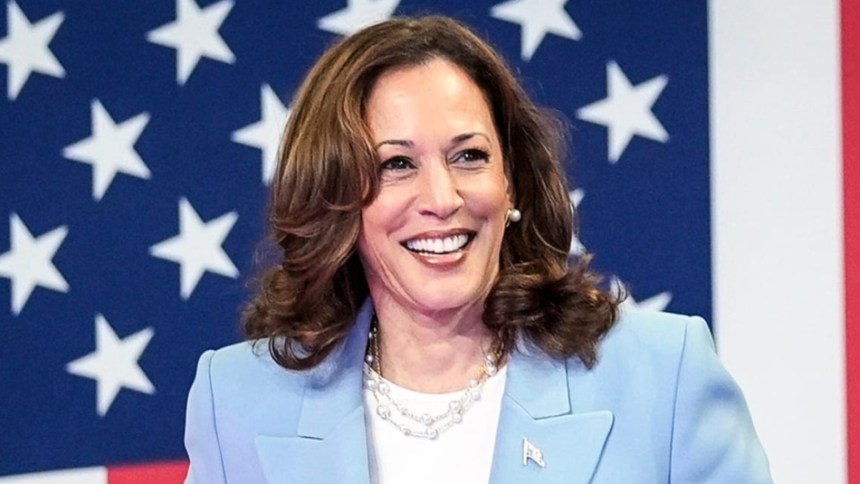
With its rallies that pack arenas, Vice President Kamala Harris’ presidential campaign has harnessed an energy that many have compared to Barack Obama’s 2008 campaign. Polls in battleground states indicate that the dynamics of the presidential race have fundamentally shifted, but skeptics question if the good vibes can last once the vice president starts to detail policy. Is this burst of excitement, they ask, just the momentary enthusiasm of voters surprised by an unexpected transition?
The good vibes and the economic vision of this campaign are, in fact, deeply connected.
When we pay attention to what Harris and Walz have already said, though, it’s clear they have tapped the energy of worker-driven movements that want to create an economy that works for all of us. The good vibes and the economic vision of this campaign are, in fact, deeply connected.
A case in point: The concluding line in Harris’ stump speech last week was echoed by cheering crowds in arenas across the nation. “When we fight, we win!” For those of us who have been supporting low-wage worker movements over the past decade, the slogan is familiar. It’s been a standard rallying cry since McDonald’s workers first organized the Fight for 15 in 2013. Since then, it has been used by service worker unions who have organized everyone from Waffle House servers to Dollar General clerks, Amazon warehouse workers, and graduate student workers on university campuses. “When we fight, we win!” as a slogan gives voice to the frustrations of the 135 million poor and low-income Americans who know that, even when they work two and three low-wage jobs, it’s impossible to get ahead. Not in an economy that has tilted to more explicitly favor billionaires over the past half-century.
But “When we fight, we win!” also expresses the agency of working people who’ve stood up to their bosses and their anti-union culture in so-called “right to work” states like North Carolina to assert their power and win better wages and working conditions.
Here in North Carolina, where Harris is expected to roll out her economic agenda today, we mobilized the same agency through “Moral Mondays,” which, like the McDonald’s workers’ fight, also began in 2013. When we hear Harris say, “We’re not going back!” we hear an echo of our movement’s cry: “Forward together, not one step back!”
Based in Durham, the Union of Southern Service Workers has worked in recent years to unite a coalition of low-wage workers who have often been pitted against one another along racial and ideological lines. Black, white and brown workers have challenged the politics of division while also refusing the typical framing of left versus right and liberal versus conservative. There’s nothing “far left” or radical, they insist, about the people deemed “essential” during the pandemic insisting that they should earn enough from a week’s work to take care of themselves and their families. Despite the Senate’s refusal to raise the minimum wage during the Biden administration, the direct action of low-wage worker unions has helped lift 13 million Americans out of low-wage jobs over just the past two years.


Service worker unions have harnessed the anger and disappointment that drive so many low-income Americans away from politics, but these workers aren’t just driven by feelings. As they have organized, they have also made proposals about practical changes that could make a difference in their lives.
Harris and Walz have already demonstrated that they are listening to organized labor. In Detroit, they met with the United Auto Workers at their union hall and thanked their president, Shawn Fain, who had been on television the weekend before lobbying Harris to choose Walz as her running mate. The UAW understood him to be the most pro-union among her finalists. In Las Vegas, Harris promised to champion a proposed tax exemption for tips alongside her fight to raise the federal minimum wage. On Tuesday, Walz spoke to the American Federation of State, County and Municipal Employees (AFSCME) and pledged that a Harris-Walz administration would expand the pro-worker policies he has enacted in Minnesota to every state.
Harris and Walz have already demonstrated that they are listening to organized labor.
Republican candidate Donald Trump, who tries to frame his divisive populism as “pro-worker,” claimed Harris stole the “no tax for tips” idea from him. But the concept, which has been developed as a policy proposal by Nevada’s two Democratic senators, originated with the Culinary Workers Union 226. Other tipped workers have advocated for One Fair Wage and won campaigns at the state level to eliminate subminimum wages for tipped workers. The details of policy matter, for sure, but this much is clear: The Harris-Walz campaign is listening to workers as it crafts its economic agenda. And it is already speaking the language of workers movements.
In our work to organize poor and low-income Americans through the Poor People’s Campaign, we’ve seen how politicians who embrace the language of fusion movements for economic justice have the power to both tap into the moral concerns that drive millions of Americans and multiply the energy of grassroots organizing. In our new book “White Poverty,” we use data from the past three decades of U.S. elections to argue that infrequent, eligible low-income voters represent the largest potential swing vote in 2024.
As we witness the groundswell of enthusiasm for the Harris-Walz ticket, we see more than good vibes. This is a campaign that has already tapped into the hopes of working people who, for decades, haven’t had a fair shot and is promising an agenda that could inspire them to show up for races down the ticket. We look forward to hearing the details, but we can already celebrate what low-income people across the nation see: A worker’s vision for the economy is already at the heart of this campaign.

The Rev. Dr. William Barber
The Rev. Dr. William J. Barber II is founding director of the Center for Public Theology and Public Policy at Yale Divinity School. With Jonathan Wilson-Hartgrove, an Assistant Director at the Center, he is the author of “White Poverty: How Exposing Myths About Race and Class Can Reconstruct American Democracy.”
Jonathan Wilson-Hartgrove
Jonathan Wilson-Hartgrove is a preacher and spiritual writer in Durham, North Carolina, and assistant director at the Yale Center for Public Theology and Public Policy. With the Rev. Dr. William J. Barber, II, he is author of the forthcoming book "White Poverty: How Exposing Myths About Race and Class Can Reconstruct American Democracy" (Liveright).