




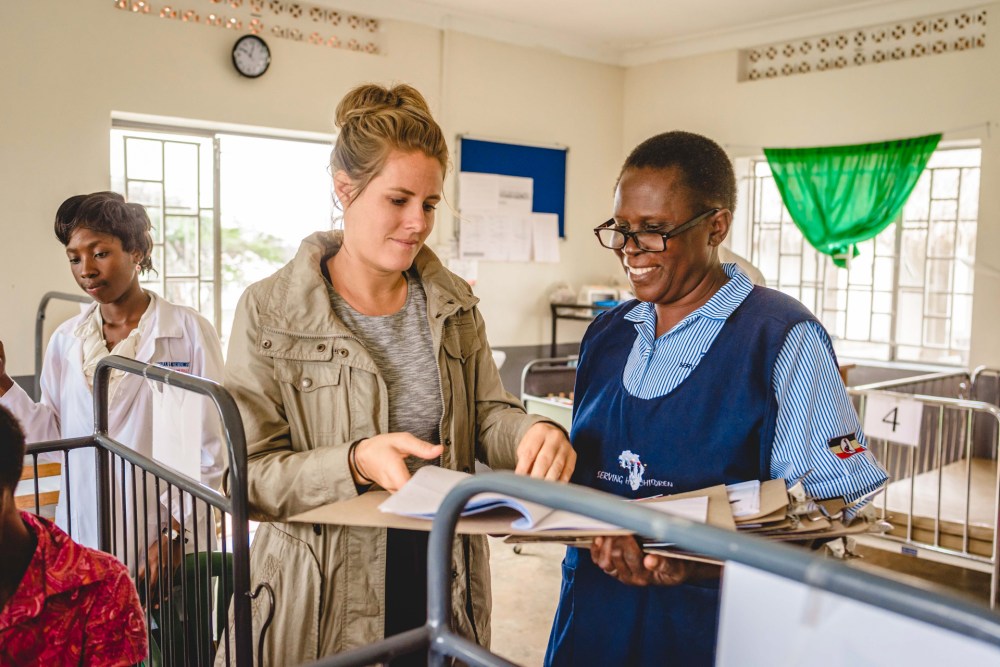
Within the first five minutes of watching “Savior Complex,” HBO’s infuriating but compelling documentary series about an untrained American treating sick children in Uganda, I was immediately turned off by the documentary’s main character, Renee Bach. Who gives a 10-year-old a butcher knife to chop vegetables and, while cooking, sits a toddler on the counter next to a hot stove?
That scene, which captures Bach’s indifference toward children’s safety and well-being, foreshadowed much of what was to come.
That scene, which captures Bach’s indifference toward children’s safety and well-being, foreshadowed much of what was to come. Bach, who had no training, no experience doing mission work and no medical training or any other kind of training, starting a feeding program that had her receiving malnourished children in the hope of bringing them back to health. What unfolds is a perfect storm of religious hubris, colonizer behavior and neglect.
Bach would later be accused of causing the deaths of children in her care at her organization, called Serving His Children. In 2020, she settled a lawsuit bought by a civil rights organization and two mothers of children who died under her care by agreeing to pay each mother $9,500. Bach, whose settlement didn’t include an admission of guilt, didn’t issue a statement after the lawsuit was settled; her lawyers said the litigation had been resolved under “mutual agreement.”
In 2019, before she settled the lawsuit that implicated her in the “death of hundreds of children,” she said in an email to NBC News that her organization had more than a 96% “success rate” in treating malnourished children.
Are good intentions good enough?#SaviorComplexHBO, a 3-part @HBO Original Documentary that examines the story of a young missionary, what it means to help, and the intersection of religion, race, and power, premieres September 26 on @StreamOnMax. pic.twitter.com/5nSeVpEVG6
— HBO Documentaries (@HBODocs) September 6, 2023
“Mistakes were made and lessons were learned, but mistakes and life lessons never resulted in the harm of any individual,” Bach, then 30, said in that email. In that communication, she said 119 children had died in her facility from 2010 to December 2018. She said she had “lay medical training” and a CPR certificate and had gotten a high school diploma after home school.
“I never intentionally put myself in a position to treat children for illnesses, or be involved medically. I was — and I’m not putting this off on anyone else — but I was often thrown into those situations. Not by choice,” she said in that email.
The central question in the documentary, as reflected in a post on X, formerly Twitter, by HBO Documentaries, is “Are good intentions good enough?” Bach says in the film that “some of the most wild accusations against me are that I killed 800 children” and that she was “medically experimenting on children.” She says she had been “compared to Adolf Hitler” and “assumed to be part of the KKK.” And, indeed, we see a woman in the film pointing a finger at her and saying, “You are evil!”
“I did not kill children,” Bach says.

Bach’s smug religiosity and ignorance make for a wholly unlikable protagonist, and the documentary left me feeling angry and sad. I have been on a short-term mission trip to Africa, too. But, unlike Bach, I didn’t try to heal kids by searching Google. Watching Bach cosplay as a doctor and poke and prod at malnourished children as she disregarded the advice of the trained Ugandan doctors and nurses she employed made me sick and angry. And it is likely to have the same effect on other viewers.
Mission trips can be compelling and life-changing for people who are naive and young and haven’t traveled the world. For the people they want to lead to Christ, though, it is often a disaster. “Savior Complex” not only reveals how a colonial mindset continues to put African children’s lives in danger, but it also makes plain the complex and disturbing power difference between Bach and the Ugandans who worked for her at Serving His Children.
After being home-schooled, Bach landed in Uganda with, as mentioned above, a high school diploma and CPR training. Yet the documentary shows people around her treating her like she’s a professional. Because she is a white Christian from the U.S., she is highly regarded — at least until doctors and nurses, and even other white mission workers, realize that she is harming the children she says she’s helping. She’s ignoring medical advice from trained doctors and giving children the wrong treatment for malnourishment.


After being home-schooled, Bach landed in Uganda with a high school diploma and CPR training.
Jackie Atim was a recruiter for Serving His Children employed to bring in children who were malnourished from the village. While she initially believed in what Bach was doing, in the documentary she says: “Bach didn’t respect us. It was like she knew more than the doctors and the nurses.” Jolley Semei, an agriculturist hired by Serving His Children, thought Bach was a medical doctor but then discovered otherwise. “It doesn’t make sense to anyone who has a brain,” he said, “to think she was qualified to treat the children.”
Semei was one of the employees would be on hand to see the government shut down Bach’s operation in 2014 after it was discovered that it wasn’t properly licensed.
As for the question of whether Bach should have been treating malnourished children in Uganda, perhaps the most telling response comes from her mother, who, when asked whether she thinks her daughter was in over her head, remains silent and simply stares blankly into the camera.
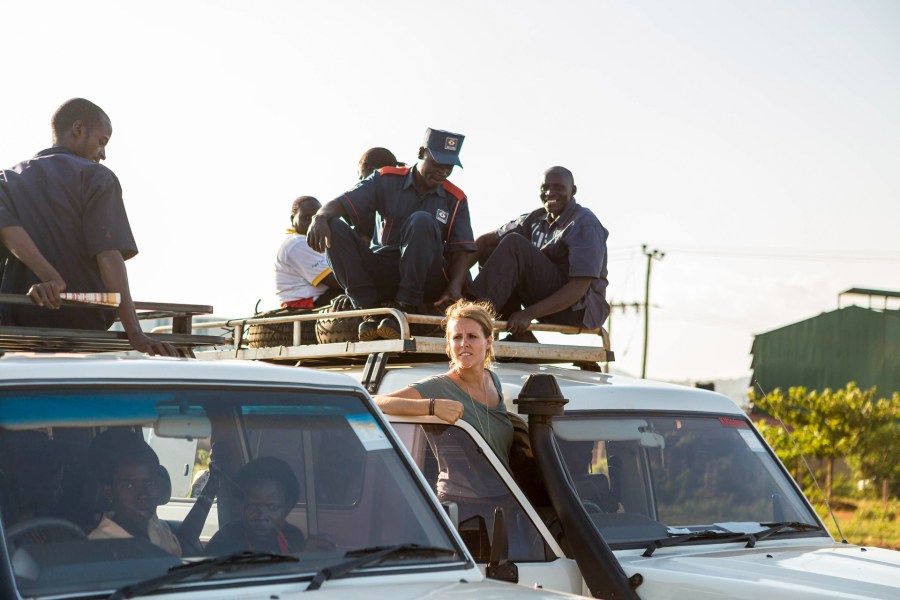
Bach evinces a type of ownership of these black, small, emaciated bodies in an ICU-type ward with Scripture covering the walls. It is ghoulish, and her attempts to film her work come off as self-serving. Every time she poked and prodded a young Black child’s body, I flinched. At times, it was almost too much to bear.
The number of children dying in Bach’s care is eventually called out by another organization, No White Saviors, led by Olivia Alaso and Kelsey Neilson. But details about Neilson’s treatment of her Ugandan co-workers (she eventually resigned from the organization she co-founded) cause the viewer to see her as a kind of white savior, too.
There is a long tradition of missionaries’ going in to “save” the “heathen.” While some meant well, others abused the very people they claimed to want to save. And the relationships between the missionaries and the locals they encounter are often complicated by colonization and Christian teachings about obedience.
There is a long tradition of missionaries’ going in to “save” the “heathen.”
“Savior Complex” is a look at how people interpret the call of God and the consequences that befall those who are willing to believe them. The Ugandans who expressed their dismay for what Bach was doing but also expressed their need for work were the people I felt we needed to hear more from in this documentary. They, too, were caught up by their desire to help and the desire to be gainfully employed. At the same time, they’re victims of a colonial mindset that allowed them to enable a young white woman to administer medical care untrained.
In the end, the documentary leaves the viewer to decide whether Bach is guilty or not. What remains clear, however, is that, with the deaths of innocent children, there are no saviors in “Savior Complex.”

Anthea Butler is a professor of religious studies and Africana studies at the University of Pennsylvania.