




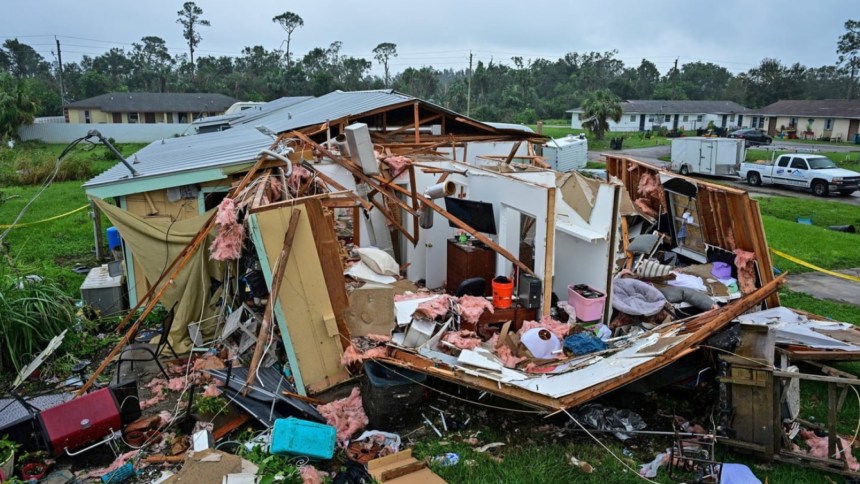
Hurricane Milton, a Category 3 storm, hit the west coast of Florida on Wednesday night, killing at least 17 people and leaving more than 3 million people without power. Florida, which was hit by an even more powerful Hurricane Helene last month, is now looking at a massive recovery effort. But storm recoveries are not just about repairing roofs and clearing downed trees. Recovery needs to include addressing the mental health struggles that come with hurricanes and even just living in areas vulnerable to such storms.
Recovery needs to include addressing the mental health struggles that come with hurricanes and even just living in areas vulnerable to such storms.
Indeed, the mental health impacts of the climate crisis are becoming a more salient issue, capturing the attention of researchers and mental health professionals. As hurricanes grow more intense and heat waves become more frequent — merely a glimpse of what the crisis will fully entail — it’s understandable, even rational, that our collective sense of well-being could take a hit. The catchall term “climate anxiety” has emerged to encompass distress and other negative, complicated feelings about how climate change is reshaping life as we know it.
In 2021, a landmark survey of 10,000 young people across 10 countries revealed that nearly 60% of respondents were “extremely worried” or “very worried” about climate change. A majority felt that “people have failed to take care of the planet” and that “the things I most value will be destroyed.”
In a viral video recorded as Hurricane Milton approached (it was then an even more fearsome Category 5 storm) veteran meteorologist John Morales of NBC 6 in Miami choked back tears as he described the storm’s rapid intensification and potential for destruction. “I apologize,” he quivered, his emotions visibly swelling as he talked about the storm. “This is just horrific.”
“The seas are just so incredibly, incredibly hot,” he went on. “Record hot, as you might imagine. You know what’s driving that. I don’t need to tell you. Global warming, climate change, leading to this.”
In my years participating at the United Nations Climate Change Conferences, I’ve heard countless folks recount what the climate crisis has stolen from them. Their homes reduced to rubble. Their lives uprooted by disaster. Their children’s futures enveloped in uncertainty.
Anguish, anger, anxiety, guilt, grief. These are the markers of climate change that we too often overlook as news reports show us visible debris and flooded streets. And this is what will make Florida’s recovery from Hurricane Milton more prolonged than many acknowledge. We should expect the mental health aspects of the storm to be huge, if not readily apparent.

Milton’s path across the Gulf of Mexico prompted one of Florida’s largest evacuations to date and stoked widespread fear about the wrath it could unleash. It strengthened into a Category 5 storm faster than any on record in the Gulf of Mexico.


Though Milton did weaken some and made landfall far enough from Tampa Bay for the state to avoid the “worst-case scenario,” President Joe Biden had warned beforehand that it was “looking like the storm of the century.” In speaking to Floridians, he said, “I know it’s really tough leaving behind your home, your belongings, everything you own.” He added, “It’s literally a matter of life and death.”
Amid the life-and-death stakes, we need to carve out space for grappling with the insidious, painful emotions that endure in the wake of these catastrophes. The mental health impacts garner less national attention and draw fewer resources during the physical recovery efforts, but they’re real, important and persist long after the floodwaters recede.
We need to carve out space for grappling with the insidious, painful emotions that endure in the wake of these catastrophes.
Take the case of Hurricane Katrina. Next year will mark the 20th anniversary of one of the most harrowing events this nation has ever suffered, which led to almost 1,400 deaths in Louisiana and Mississippi and caused an estimated inflation-adjusted $190 billion in damage. Up to 30,000 people huddled for shelter in a Louisiana Superdome that, once the power went out and people became trapped, was bereft of fresh air and sanitation.
The mental health ramifications were tremendous. One longitudinal, peer-reviewed study that used a representative sample of adults suggested that almost 30% of those subjected to the storm experienced post-traumatic stress disorder at some point. The 2022 documentary “Katrina Babies” by “Katrina baby” Edward Buckles, who directed it, chronicled the trauma of children who were forced out of their neighborhoods by the hurricane and were among those at high risk of anxiety and depression.
The road to recovery for Florida will be long, and we should not underestimate the mental health toll that is just beginning to emerge. As the state rebuilds, the climate crisis looms large. It will also be looming large in the minds of those who’ve just gone through this storm, and in the minds of all of those who fear there are more big storms yet to come.

Henna Hundal
Henna Hundal is an MD candidate at the Stanford University School of Medicine, where she researches the impacts of climate change on human health. She frequently appears on international television and radio to provide analysis on climate news. Views expressed in this article are her own.