




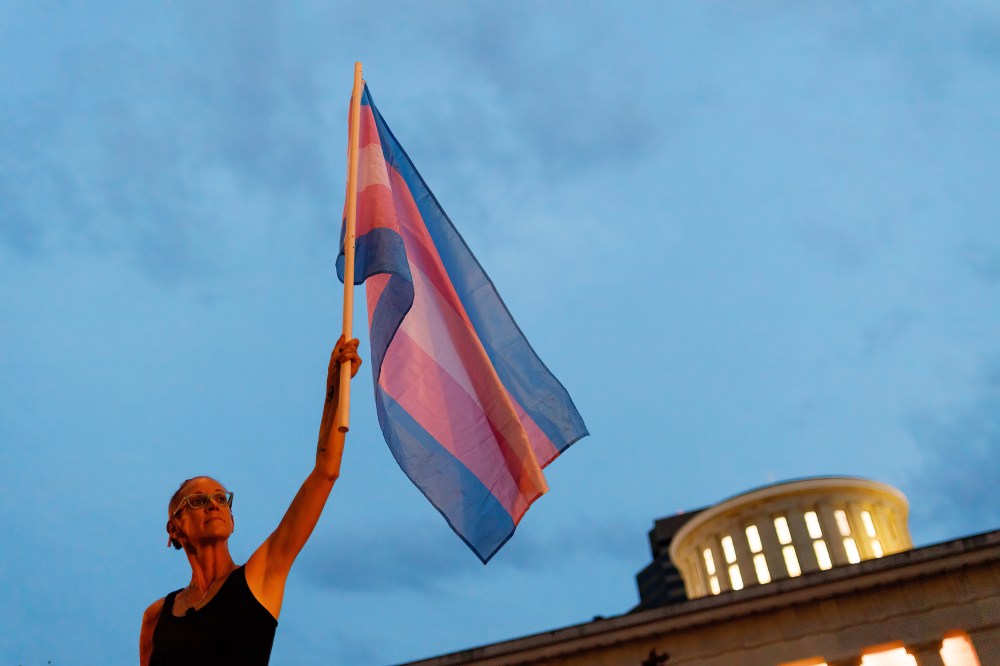
Seemingly every day now, we hear about a new and hateful anti-trans bill being introduced in a conservative state. There’s the infamous North Dakota attempt to legally tie pronouns to people’s assumed DNA, numerous bills to bar trans girls from girls’ school sports and, of course, several attempts to ban transition care for trans youths.
Fighting every new bill is a tremendous undertaking for organizers. Every time a bill is introduced, it means planning another rally or organizing a witness list for a public hearing. To help the organizing process, several prominent social media accounts dedicate much of their time to tracking each individual bill, and the American Civil Liberties Union also has a helpful tracker. But every proposed law serves only to sow panic among this country’s trans communities. Many trans Americans have fallen into a near-hopeless mental place, with some considering fleeing the country.
Do we need tens of thousands of retweets because one red-state legislator proposed something horrific?
Thankfully, most anti-LGBTQ bills don’t end up passing, as a Human Rights Campaign report published last week showed. Of the 315 anti-LGBTQ bills that were introduced last year, just 29 ended up becoming law. Most common among the passed laws were bills attacking trans youth: In the last three years, 18 states banned trans girls from girls’ sports, and four states banned transition care for trans youths.
But it’s worth wondering whether hyper-focusing on every new bill does more harm than good. Yes, it’s important to remain informed and to organize a collective response, but do we need tens of thousands of retweets because one red-state legislator proposed something horrific?
First, it’s easy to see how proposing a more extreme bill would make a less extreme version seem like a compromise. This year, we’ve seen states begin to extend proposals to ban trans youth health care to include some adults. A bill in Missouri would ban transition care for anyone under age 25, for example. If the General Assembly amends the bill to hit only under-18s, voters can think, “Well, it could have been worse,” when the state’s conservatives forcibly detransition every minor in the state.

Second, we need to realize that by boosting every single bill, we end up inadvertently hurting those we care about. If a truly transphobic legislator simply wants to cause harm to the trans community, he doesn’t even need to pass a bill. All he has to do is suggest a horrific bill that would go further than anything we’ve seen before, and dozens of trans people will panic-post about it all over the internet, spreading the hateful intent behind the bill to hundreds of thousands of trans people who merely want to stay informed.


This has a severe adverse effect on the mental health of trans people. In December, a new study in the journal PLOS One showed that every time an anti-trans bill is passed, internet search results for the words “depression” and “suicide” go up. But when an anti-trans bill is defeated, the number of searches for those terms drops. The study also found that debating bills doesn’t change the number of searches for those terms.
We need to realize that by boosting every single bill, we end up inadvertently hurting those we care about.
The data suggests that only the passage of these bills poses the real danger lies for the trans community’s mental well-being. But I’ve heard from many trans people who have told me that the constant barrage of proposed bills makes them feel hopeless. I question whether we as trans people should be helping amplify that effect. We can’t let fear get in the way of our fight back against oppressive legislation.
As a community, we need to be more clear-headed in our analysis of which bills we give oxygen to. We need to find the right balance between raising awareness about bills that are likely to become law, so we can devote resources to defeating them, and not panicking to the point where blue-state trans people think they need to flee the country.

If you are in a solidly blue state, I suggest disconnecting yourself from the constant fire hose of political news. Yes, we’re programmed to want to help and need to be aware of escalations in the fight for our rights. But you’re better off finding a red-state trans-led organization or a national trans legal organization to donate to than losing precious sleep and sanity obsessing over every news cycle. If you’re in a red state targeted by one of these bills, find groups and activists organizing the response. If you feel capable, learn how and when you can testify or attend a rally. Find out who is doing mutual aid for your local trans community and volunteer.
We’re long past the age when North Carolina’s bathroom bill was defeated by raising enough alarm for companies and organizations to manage to kill it through sheer financial pressure. Trans Americans are in a legislative dogfight for our right to exist in this country, but even the best fighter pilots need to rest between missions and use their time wisely. Fear gets us nowhere.

Katelyn Burns is a freelance journalist based in New England.