




The House Jan. 6 committee has finally run out of patience. Members of the committee on Thursday issued subpoenas to five Republican colleagues to compel them to testify about what they know about the lead-up to the attack on the U.S. Capitol on Jan. 6, 2021.
The subpoenas couldn’t have come as a surprise to the five members in question, all of whom have been politely asked to appear voluntarily before the committee. But now, with time running short before the committee’s live hearings are set to begin, its chairman, Rep. Benny Thompson, D-Miss., has finally stopped requesting and started demanding.
Thursday’s subpoenas mean we are in uncharted waters.
The committee’s letters outline a plethora of reasons why testimony from these five Republicans could be crucial to its final report. In the run-up to Jan 6, four of them — Reps. Scott Perry of Alabama; Andy Biggs of Arizona; Jim Jordan of Ohio; and Mo Brooks of Alabama — were reportedly actively working with former President Donald Trump to overturn the 2020 presidential election results.
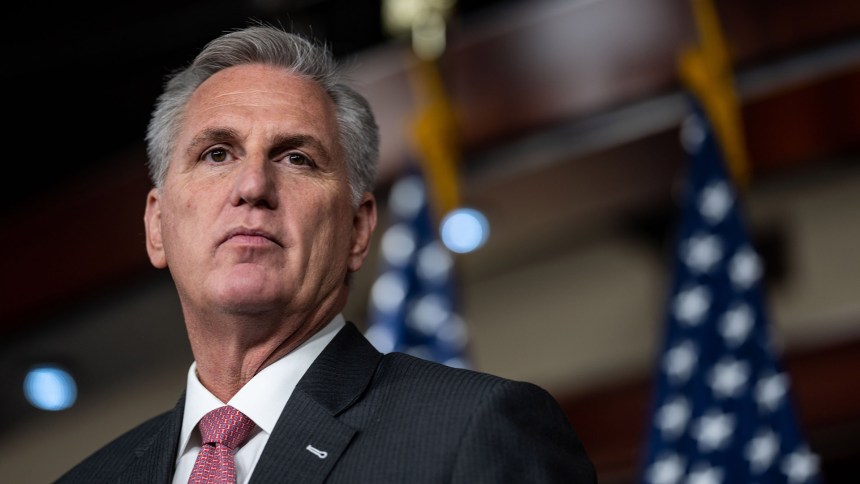
The fifth — House Minority Leader Kevin McCarthy of California — has yet to fully match his public statements to what he’s said in private about the attack. We know that in the immediate aftermath, he blamed Trump for the attack, but then he spent the next year trying to hinder any investigation. McCarthy is trying to become speaker of the House next year. Having to testify under oath about both what he knew about his caucus’s efforts to undermine the election and about his own previously expressed views on Trump’s culpability must be his worst nightmare.
Thursday’s subpoenas mean we are in uncharted waters. Outside of an Ethics Committee investigation, there’s no precedent for subpoenaing a member of the House to testify. That means that we can expect to see the members in question fight back in court — but recent precedent isn’t on their side.
Perry said in December that he wouldn’t meet with the committee because it is “illegitimate, and not duly constituted under the rules of the U.S. House of Representatives,” but since then, numerous courts have said otherwise. Just this month, a federal court judge — one appointed by Trump, no less — threw out the Republican National Committee’s lawsuit against the committee, finding that the panel and its investigation are valid.

The bigger question, though, is whether the committee will be able to enforce these subpoenas. It’s unclear whether the courts will want to wade too deeply into an internal struggle among a separate branch of government. Even if a court rules in a civil suit that the House has the right to issue them to its own members, it may dodge issuing an order compelling testimony under threat of penalty.
An alternative would be having the House refer any noncompliant members to the Justice Department for criminal charges, but that could be dicey constitutionally. It would also likely be a slow process, given the speed at which DOJ has moved on the referrals for contempt of Congress against former White House chief of staff Mark Meadows and former Trump strategist Steve Bannon. I laid out last December the possibility of Congress using its power of inherent contempt to force the members to comply under threat of arrest from the House sergeant-at-arms. I’ve also written on how the House could choose to expel any member who refuses to cooperate. Neither feels like a safe bet, though, given the precedent the threat of arrest would set, and the votes needed to make expulsion happen. It’s important, though, that the members of the committee are at least trying to get their colleagues to offer up what they know about Trump’s attempted coup. It would have been much easier for them to throw up their hands and say that a subpoena would be too aggressive, a bridge too far. Instead, they’re buckling in for a fight that is very much worth having. I’m sure that the first response from the subpoenaed members will be bleats of outrage at the lack of decorum and respect being shown to elected officials. They’ll likely call it an assault on the will of the voters that sent them to Congress. And yet, the will of the voters didn’t seem to be a concern to them when they were busy working with Trump to overturn an election. The committee is right to turn up the heat against them; it will be instructive all around to see how long these five Republicans can hold out against the subpoenas issued against them — and who they bring down with them.
Hayes Brown is a writer and editor for MS NOW. He focuses on politics and policymaking at the federal level, including Congress and the White House. 

