




Back when I was growing up, a music-obsessed kid in suburban America, Rolling Stone was my Bible. In those pre-internet days — and thus pre-YouTube — the magazine was the place to go for information about the artists my friends and I idolized. It was telling us the story of music history, both from a historical and cultural perspective, in real time.
Except, in fact, it wasn’t.
Even in the mid-1970s, owing to older siblings and a brother-in-law who was a working musician, my record collection was already bursting with singles and albums by Stevie Wonder, Joni Mitchell, Muddy Waters, the Isley Brothers, the Spinners, Isaac Hayes, Janis Ian, Carole King, the Delfonics, Curtis Mayfield, Gladys Knight and many, many others who I rarely, if ever, found in the pages of the esteemed magazine. And now we know why.

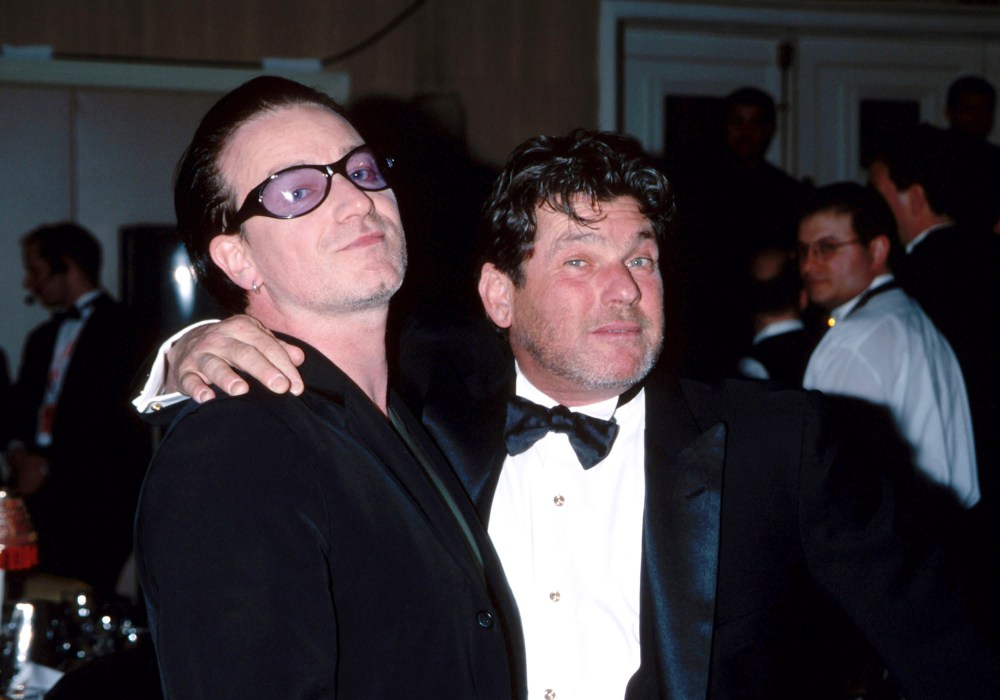
On Friday, Rolling Stone’s now-retired co-founder Jann Wenner was featured in a lengthy interview to David Marchese of The New York Times about Wenner’s upcoming rock history tome, in which it became clear why the Holy Trinity of classic rock bands — The Beatles, the Rolling Stones and The Who — plus Bob Dylan, Bruce Springsteen and (wait for it!) U2’s Bono were covered endlessly, while artists like Marvin Gaye and Kate Bush were all but erased from the magazine’s version of music history. Meanwhile, artists like Eric Clapton were allowed to denigrate and minimize the artistry and impact of artists as renowned as Jimi Hendrix in the pages of Rolling Stone without pushback.
When asked by Marchese why he focused only on white male artists in his new book, Wenner explained that Black and female artists, in his estimation, just didn’t “articulate enough” on the same “intellectual level.” (The irony of Wenner saying women and Black artists weren’t articulate enough in an interview in which he tried to justify a grab-bag of outrageous, unethical journalistic practices like letting interview subjects edit their own interviews was apparently lost on him.)
To add insult to injury, Wenner took his magazine’s name from a song by a Black man, and many of the “masters” in his book are well-known devotees of female and especially of Black artists.
So it was going badly. It only got worse.
The overconfidence of this gatekeeper was ultimately the real moral of the Times’ story.
Wenner also defended as “bulletproof” the reporting in a 2014 Rolling Stone story about rape culture on college campuses, the crux of which was later found out to be completely fabricated (“this one key fact,” as Wenner puts it). And later, when Marchese mentioned that no less than The Who’s Pete Townshend expressed some criticism of the trajectory of rock ‘n’ roll from an art form to a multibillion-dollar business, Wenner brushed him off entirely.
Finally, Wenner also claimed in the interview that no one smokes weed anymore.
To his credit, Marchese politely but firmly pushed back on the most ridiculous of Wenner’s claims, even saying, “Oh, stop it!” at one point. But honestly, no one should be surprised. This was a man who has long considered himself a peer of the artists he helped to make stars, reveling in his vacations with Mick Jagger and Springsteen. His belief in his own taste was unwavering. Indeed, Wenner had said previously it was “easy” running the Rock & Roll Hall of Fame in the early years, because the choices were “clear” and “obvious.”
And the overconfidence of this gatekeeper was ultimately the real moral of the Times’ story.
“It’s hard not to wonder what music culture and cultural journalism would look like if any of the women at the foundation of Rolling Stone (Annie Leibovitz being the notable exception) had been given proper recognition (Renata Adler helped edit the landmark “Family” issue, uncredited),” journalist Jessica Harper wrote in her review of Joe Hagan’s “Sticky Fingers,” a book about Rolling Stone’s problematic heyday. ”Another necessary lament: What would be different today if female artists had been regularly celebrated on Rolling Stone’s cover, rather than misunderstood and even smeared by powerful men in its review pages?”
I'm not blaming it on the readers. White guys who live in the actual world & have real jobs are around all kinds of people. If Wenner had featured more black artists, had featured more women—his empire wouldn't have crumbled. It wouldn't have even taken guts. He just didn't care.
— HarryHew (@harryhew) September 15, 2023
In fact, after Wenner left Rolling Stone in 2019, the magazine updated its list of the Top 500 Albums of All Time, bringing many more female and Black artists into its top 50.
On social media over the weekend, Wenner — and boomers, generally — took a pounding. Younger writers, musicians and fans had questions: How did these guys fool us for so long? And why do they all seem to write late-life memoirs and tell-alls that finally (if inadvertently) reveal their profound moral faults?


Even Rolling Stone was prompted to distance itself from its creator:
Our statement on Jann Wenner's recent comments. pic.twitter.com/dL7lMSTP3k
— Rolling Stone (@RollingStone) September 18, 2023
The Rock Hall’s board voting to remove Wenner was the final straw. The (alleged) only holdout? Springsteen’s manager, Jon Landau.
“Jann Wenner collaborated with these big artists, to burnish their reputations while also selling magazines,” Hagan told me. “And it was a symbiotic relationship. Some of the people in the book are social friends of his; or are people he’s collaborated with; or has business partnerships with; or has vacationed with. And so, on that level, there’s almost nothing about the book that is coming from a place of critical authority. But most of all, he’s under the delusion that he has superior critical faculties about music history. And it’s because he institutionalized these people. But just because you’re successful, that doesn’t make you right. I think that he’s learning that right now.”
As for Wenner’s time at the helm the Rock Hall — an idea Hagan reported he’d pilfered — the author was just as blunt.
“The whole idea was to create a pantheon and be the historical arbiters, because that’s the next level of power beyond a weekly magazine,” Hagan explained. “That’s what he intended to do, and that’s what he did. But he got so ensconced in his walled garden, he wasn’t paying attention to what was going on outside. The world changed from under him. He’s supposed to be a newsman who has some kind of standards. Those were not apparent in this interview. But how about curiosity? There’s not a lick of curiosity to this man, which is the saddest thing to me.”
It seems clear that Wenner, a one-time poster child for the counterculture, stopped caring about actual artistry long ago.
“Unimpressed by metal, grunge, punk, R&B and hip hop Wenner put Bono of U2 on the cover 16 times before he himself conducted a fawning 16,613-word interview in 2005,” Adrian McKinty points out in his review of “Sticky Fingers.”
“He was a fan in 1967, on a pure level,” Hagan explained. “But there’s two options: You can try to stay young and keep on rolling and you go on to the new thing — you gather no moss. Or you grow up. And he didn’t do either. He’s in this weird purgatory of not embracing anything new and not growing up. He’s trapped in amber in some very weird ways.”
And so, like Clapton and so many others of the boomer generation, Wenner’s arrogant, irrelevant final act seems doomed to be discussed and dissected.
Prophetically, Wenner’s final words in the Times interview were “God forgive me.”

Jeff Slate
Jeff Slate is a New York City-based songwriter and journalist. His writing can be found at The New Yorker, Esquire, The Wall Street Journal and Rolling Stone, among others. He tweets at @jeffslate.