




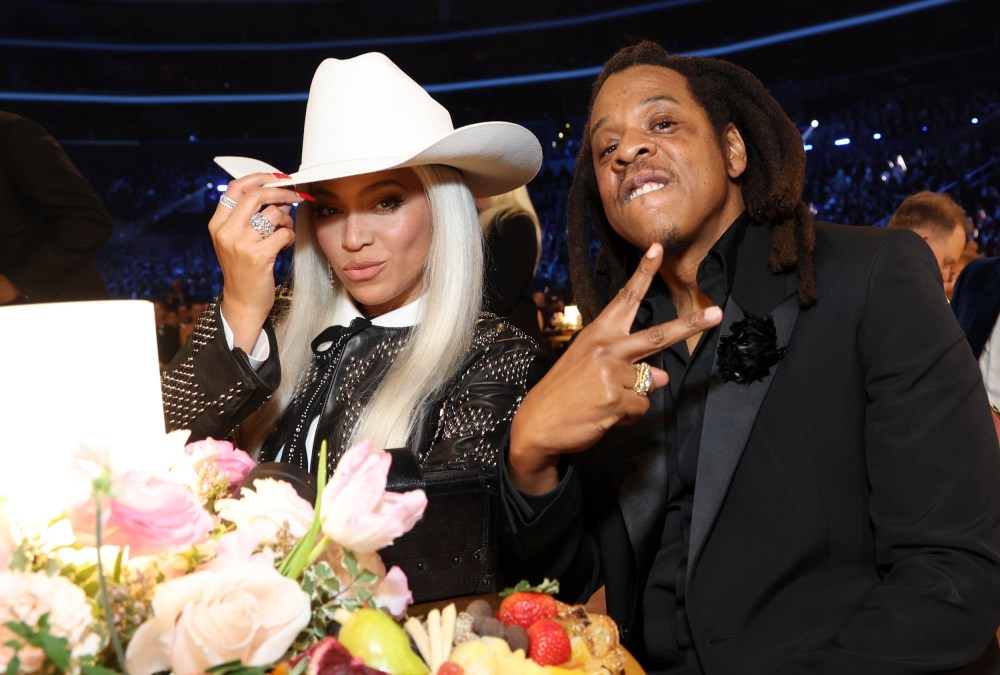
Jay-Z criticizing the Grammys for never giving his wife, Beyoncé, the coveted album of the year award, was what most people will remember about his time on stage Sunday night. (Jay-Z was accepting his award for winning the Dr. Dre Global Impact Award.) “She has more Grammys than everyone and never won album of the year,” he said. “So even by your own metrics, that doesn’t work. Think about that. The most Grammys, never won album of the year. That doesn’t work.”
To focus exclusively on Jay-Z’s belief that his wife has been snubbed is to miss a far more important point his speech made about why that might be.
But to focus exclusively on Jay-Z’s belief that his wife has been snubbed is to miss a far more important point about the Grammys, other awards shows and the music and entertainment industry as a whole.
“Some of you are going to go home tonight and feel like you’ve been robbed,” he said. “Some of you may get robbed. Some of you don’t belong in the category.”
I don’t know if Jay-Z planned to say that. “When I get nervous, I tell the truth,” he said. Whatever his intentions were, though, he indirectly called attention to a big reason awards show such as the Grammys will always leave many artists — particularly Black ones — embittered: The awards are based on the fallacy that music should be categorized. And it’s hard, if not impossible, to categorize music in a way that doesn’t make tired assumptions about the people recording it or the people presumed to be listening to it.
The absurdity of categorizing music was impressed upon me by the late composer and producer Harold Battiste, who, among other things, played with Ellis Marsalis and behind Ike and Tina Turner, arranged Sam Cooke’s “You Send Me” and Sonny and Cher’s “I Got You Babe” and helped launch Dr. John into stardom.
The only reason to divide music into categories, he said in a conversation, is to know where to look for it in the record store. Record stores hardly exist anymore. But awards shows still follow their model and decide, for example, that a certain artist is R&B, another is pop, yet another is country or rock or hip hop.
This matters for superstars such as Beyoncé because the pop and rock categories are more reliable launching pads for an album of the year win. And Black artists won’t necessarily be included in those categories, even if that better describes the music they’re making.

In 2020, Tyler the Creator, after winning the Grammy for best rap album, said, “It sucks that whenever we, and I mean guys that look like me, do anything that’s genre-bending, they always put it in a ‘rap’ or ‘urban’ category.” Billie Eilish agreed, later telling British GQ: “It was such a cool thing Tyler said. I agree with him about that term. Don’t judge an artist off the way someone looks or the way someone dresses. Wasn’t Lizzo in the Best R&B category that night? I mean, she’s more pop than I am.”


“Look, if I wasn’t white I would probably be in ‘rap,’” she said. “Just because I am a white teenage female I am pop. Where am I pop? What part of my music sounds like pop?”
Two years before that, Chris Thomas King, a second-generation blues musician from Baton Rouge, Louisiana, complained bitterly that a Grammy screening committee had moved his album “Hotel Voodoo” out of its contemporary blues category into Americana.
In “The Greatest Night in Pop,” the new Netflix documentary about the 1985 recording of “We Are the World,” we learn that so many stars were on hand to record the song because they’d all attended that evening’s American Music Awards. There’s something jarring about footage from that awards show. The award Prince gets for “When Doves Cry” is for “Black single.” The award he gets for “Purple Rain” is for “Black album.” Lionel Richie wins the award for “Black male.”
AMA categories such as Black album and Black female seem to have been used only that year. In 1986, the categories were changed back to what they’d been in 1984: soul/R&B. But let’s be honest; nobody listens to “Purple Rain” and thinks, “Wow, this is some great soul/R&B!” The names applied to the categories aren’t as big a problem as the existence of categories. If the categorization concept is flawed, then the concept of basing awards built on such categorization is flawed, too.

There’s something bracingly honest about the AMAs’ 1985 categories. And it would be foolish to think that because race isn’t explicitly in the names of the categories it doesn’t remain foremost in the minds of the people who assign artists to various musical categories. Beyoncé is huge. One might even say boundless. But she seems to have been assigned to the “Black female,” “Black single” and “Black album” categories.
“Some of you don’t belong in the category,” her husband said from the stage Sunday night. And while that is true, it’s even more true to say that it’s the categories themselves that don’t belong.

Jarvis DeBerry is an opinion editor for MS NOW Daily. He was previously editor-in-chief at the Louisiana Illuminator and a columnist and deputy opinion editor at The Times-Picayune.