




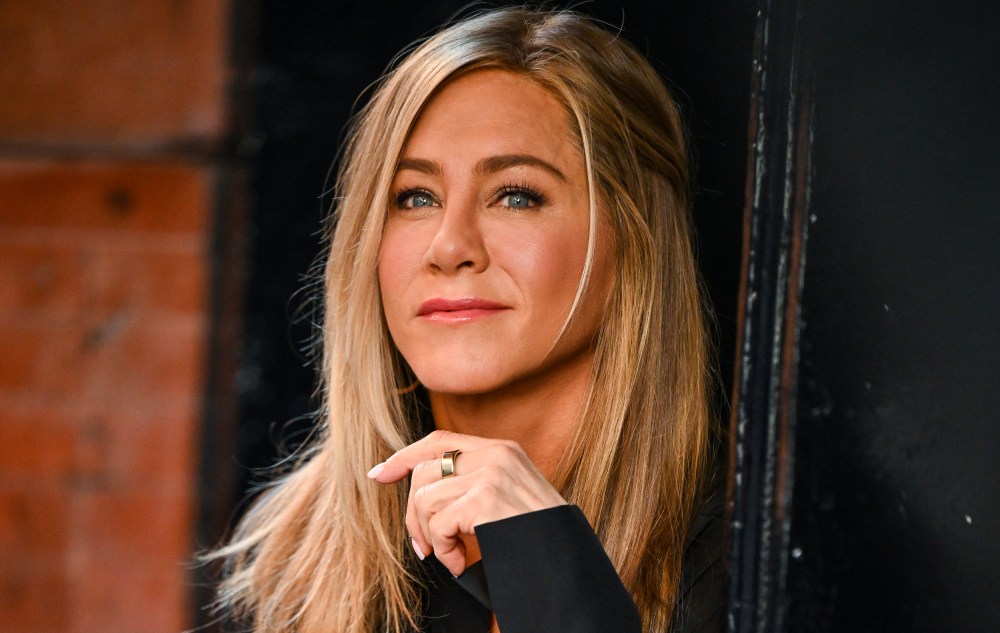
When I was coming of age in the late ’90s and the early 2000s, there was no bigger show on television than NBC’s “Friends.” The show was the centerpiece of the network’s vaunted “Must See TV” Thursday night lineup, which featured a number of other successful shows, like “Seinfeld” and “ER.” Arguably, “Friends’” biggest star was Jennifer Aniston, the quintessential ’90s “it girl,” who was dating movie star Brad Pitt and who spawned “the Rachel,” one of the classic women’s haircuts of the time.
Aniston has had an impressively long acting career, but more recently, she most often hits the headlines by decrying so-called cancel culture.
Aniston has had an impressively long acting career, having starred in the recent Netflix movie “Murder Mystery 2,” but more recently, she has most often hit the headlines by decrying so-called cancel culture. In a recent interview with The Wall Street Journal, Aniston, in an extended rant about the state of modern comedy, said she was “so over cancel culture.”
Aniston is just one of a growing number of aging stars who have found public traction by complaining about “cancel culture.”
In her WSJ interview, Aniston elaborates on her thoughts about how modern celebrities are treated when they offend people. “I probably just got canceled by saying that,” she said, meaning her remark that she’s over cancel culture. “I just don’t understand what it means. … Is there no redemption? I don’t know. I don’t put everybody in the Harvey Weinstein basket.”
The comments come just weeks after she released a statement blasting actor and comedian Jamie Foxx after she “liked” an Instagram post from Foxx that some said had an antisemitic theme. “This really makes me sick. I did not ‘like’ this post on purpose or by accident,” she said, prompting questions over how else one can “like” a post.
In light of the Foxx incident, her latest comments about cancel culture ring especially hollow given that she tried to engage in a cancellation herself.
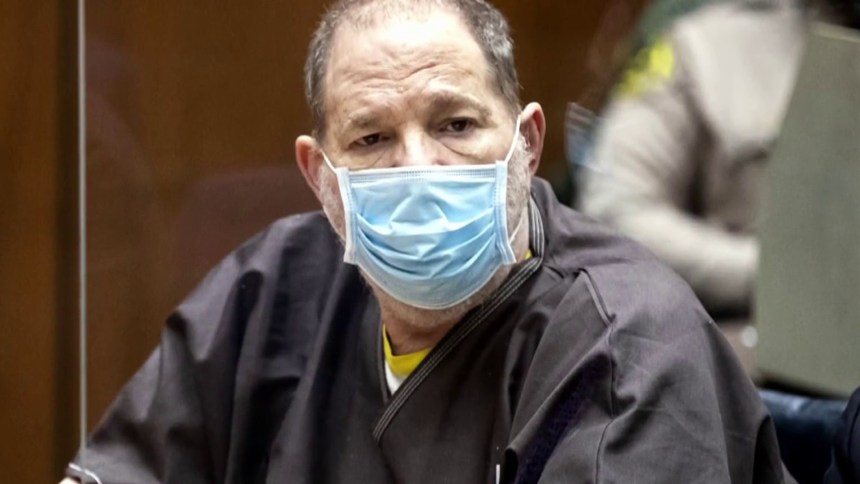
It’s difficult to understand where Aniston is coming from. No one is canceling her for being “over cancel culture.” And Weinstein, a hugely influential film producer, was a criminal who terrorized his industry by repeatedly raping and sexually assaulting his victims. He will most likely spend the rest of his life in prison.
There seems to be a feeling among many of the “Friends” cast that modern audiences have canceled the show because of its lack of racially diverse casting and its treatment of LGBTQ people and topics. Aniston’s co-star Lisa Kudrow, who played Phoebe on the long-running sitcom, said that if “Friends” were remade today, it wouldn’t feature an all-white cast.
“This show thought it was very progressive,” she said in an interview with The Sunday Times of London, saying “Friends” should be viewed as a time capsule of the late ’90s. “There was a guy whose wife discovered she was gay and pregnant, and they raised the child together? We had surrogacy too.”
But the show didn’t have any actors of color in main roles, and it had only a small handful in rarely recurring roles. That has become even more noticeable to modern audiences.
The show’s treatment of LGBTQ people has also become even more noticeable in hindsight.
The show’s treatment of LGBTQ people has also become even more noticeable in hindsight. While Kudrow is right that the show was somewhat progressive for its time by featuring the story of Ross’ gay ex-wife, it was typically regressive in the way it constantly focused on the insecurities of Matthew Perry’s character, Chandler Bing, about being perceived as gay.
The show also fumbled its only trans storyline, the infamous “Chandler’s dad” episodes, in which we learn that Chandler’s paternal parent is now a drag performer named “Helena Handbasket” who also seemingly lives full-time as a woman. There was a chance with that storyline for Chandler to analyze his latent homophobia, but instead, the episodes’ writers reached for several well-worn transphobic tropes and played them for cheap laughs.
As the deeply closeted trans woman I was then, I remember watching those “Must See TV” episodes live and reacting with shame and horror as the audience laughed with a roar at Chandler’s mom’s quip about Helena’s having “too much d— for her dress.” "There’s a whole generation of people, kids, who are now going back to episodes of 'Friends' and find them offensive,” Aniston said. https://t.co/YVu1YHbP7T Aniston has acknowledged that some of the jokes fail to land with modern audiences, but she has also been defensive. “There were things that were never intentional and others … well, we should have thought it through — but I don’t think there was a sensitivity like there is now,” she said in a Variety interview. “Everybody needs funny! The world needs humor! We can’t take ourselves too seriously.” Needless to say, the trans jokes haven’t aged well in this era, when trans people like me have more opportunities to explain ourselves and our lived experiences. YouTuber Lily Simpson has a more thorough breakdown of the trans storyline in “Friends” in her video here as part of a series breaking down trans representation in a host of movies, sitcoms and other TV shows from the past. After watching Simpson’s videos, it’s clear that “Friends” is far from the most transphobic sitcom of the last 20 years (thanks, “How I Met Your Mother”). Even so, Aniston seems to be making a virtual second career out of complaining about how you “can’t do comedy these days.” Comedy tastes always change as culture evolves, and that has always been the case. Comedy tastes change as culture evolves, and that has always been the case. What people found funny in the 1970s wouldn’t necessarily have landed on a 1990s show like “Friends,” and many jokes from the 1950s wouldn’t have worked in the 1970s. So, of course, jokes from the late ’90s don’t necessarily work now; that’s the natural progression of culture and comedy. Enough of aging stars like Aniston constantly complaining about cancel culture in their quests to grab headlines and stay relevant. No one is giving non-rapists the Harvey Weinstein treatment. Nobody’s suggesting prison for homophobic and transphobic jokes from 30 years ago. Aniston certainly isn’t being canceled. She’s still starring in shows and movies. The world is always changing. That means people will look at Aniston’s greatest work and see it differently from how audiences did 30 years ago. She needs to grow up and accept that what one generation categorized as “must see,” another may find too backward to watch.
Katelyn Burns is a freelance journalist based in New England. 

