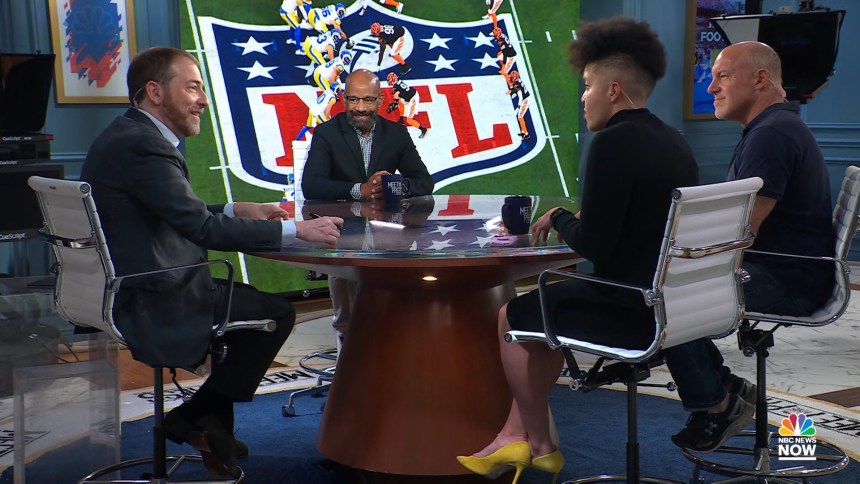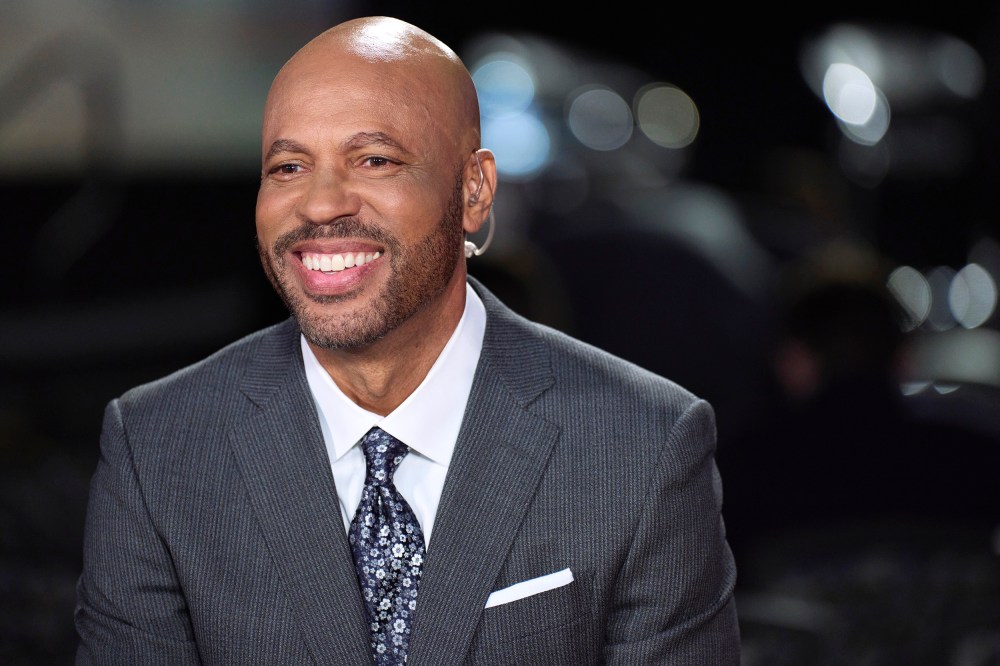
Former NFL.com senior reporter Jim Trotter made the potentially career-altering decision this week to sue his former employer, the NFL, for racial discrimination and retaliation. He alleges in his lawsuit that the NFL didn’t renew his contract after he publicly asked Commissioner Roger Goodell why the league hadn’t lived up to its commitment to hire more Black coaches. His 53-page complaint also includes allegations of racist invective from Buffalo Bills owner Terry Pegula and Dallas Cowboys owner Jerry Jones.
Trotter is seeking damages to be determined at trial, and in addition he wants “the imposition of a court-ordered monitor to review the NFL’s policies and/or practices and implement necessary changes with respect to the hiring, retention and advancement of Black people throughout all levels of the NFL organization and hierarchy, including at NFL Media, the NFL league office and within NFL teams.”
Trotter now writes for The Athletic, and when I asked him Wednesday morning whether he worried about the effect his lawsuit could have on his future as a sports journalist, he said: “Not at all. You don’t go into something like this lightly. … I’ve spent roughly three decades covering the NFL, and I’ve established my credibility and hopefully a reputation of integrity. And so if this costs me my career, I’m comfortable with that. I can’t keep complaining about things if I’m not willing to stand and fight for what’s right. So I know that at the end of the day, regardless of what happens, when I lay my head down at night, I’ll be all right.”
In an interview Wednesday morning with host Stephen A. Smith on the ESPN show “First Take,” Goodell addressed Trotter’s allegations that his contract wasn’t renewed by saying multiple media outlets have had to make difficult decisions about layoffs and contract renewals. “Those decisions were made by our businesspeople at the NFL Media,” he said. “I’m confident that they made those decisions in the best interests of the NFL. We dispute, obviously, his claims.”

When Smith asked Goodell about Trotter’s specific allegation that his contract wasn’t renewed because he asked Goodell about the lack of league diversity at a news conference, Goodell said: “He did it the last two years. I had no problem with that. People ask questions, and we do not editorialize with our NFL Network personnel. They’re allowed to ask questions like anybody else. So I respect that, and that’s absolutely fine. My understanding is that his contract was up.”
By bringing a lawsuit against the NFL, Trotter joins a list that includes former Miami Dolphins head coach Brian Flores, who, in an active lawsuit that the NFL says is “without merit,” claims the league routinely discriminates against Black coaches. That list includes Black former NFL players who challenged the NFL’s belatedly abandoned practice of “race norming” to determine concussion settlements and, of course, quarterback Colin Kaepernick, who says he was kept from playing again in the league after he began protesting racial injustice in the U.S. by kneeling during pregame performances of the national anthem.
In his lawsuit, Trotter says that in a Sept. 3, 2020, virtual meeting of “approximately 40 newsroom employees,” another NFL Media reporter spoke openly about a conversation he’d had with Bills owner Pegula about social activism among NFL players, particularly their support for Black Lives Matter. Trotter says the reporter quoted Pegula as saying, “If the Black players don’t like it here, they should go back to Africa and see how bad it is.” In that lawsuit, Trotter says, “This remark was so offensive and racist that the people in the meeting appeared to be frozen, unsure how to even react.”
In his lawsuit, Trotter says that “in front of everyone in attendance,” he asked his manager and his manager’s boss what was going to be done about what Pegula had reportedly said. He said he asked the same question on a “near weekly basis” until nearly a year later, when, he says, his manager, referring to NFL headquarters, told him, “New York says it’s an HR matter, and that’s the end of it.”
Pegula called Trotter’s allegation “absolutely false” in a statement Tuesday.
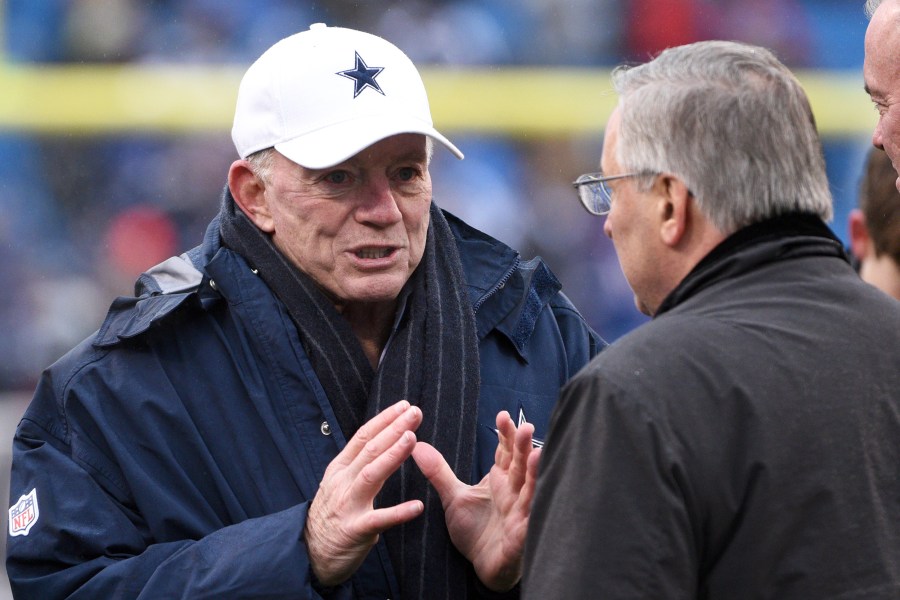
In his lawsuit, Trotter also says that on Aug. 6, 2020, while he was on the field before the Pro Football Hall of Fame Game between the Pittsburgh Steelers and the Dallas Cowboys, he asked Cowboys owner Jones “about the lack of Black people in personnel decision-making positions.” He says Jones, who he says first said, “I’m starting to feel a little defensive,” finally responded, “If Blacks feel some kind of way, they should buy their own team and hire who they want to hire.”
Trotter, as someone working for the media arm of the NFL, says higher-ups in NFL Media told him not to do a report about what he heard Jones say.
In a statement, Jones said: “Diversity and inclusion are extremely important to me personally and to the NFL. The representation made by Jim Trotter of a conversation that occurred over three years ago with myself and our VP of Player Personnel Will McClay is simply not accurate.” The NFL replied to these claims with the following statement: “We take his concerns seriously but strongly dispute his specific allegations, particularly those made against his dedicated colleagues at NFL Media. Mr. Trotter’s departure from NFL Media was one of many difficult decisions — similar to decisions recently made by many other media organizations — to address a challenging economy and a changing media environment.”
Pegula, Jones and the NFL may deny the allegations, but Trotter’s a trusted source on NFL matters. That matters here.
Pegula, Jones and the NFL may deny the allegations, but Trotter’s a trusted source on NFL matters. That matters here. As he says above, he’s covered the league for about 30 years for a variety of top publications, including ESPN and Sports Illustrated. This year he was awarded the Bill Nunn Jr. Award by the Pro Football Hall of Fame. That award, which is voted on by members of the Pro Football Writers of America, is given to one journalist every year for “long and distinguished contribution to pro football through coverage.” Of the multiple places he’s worked covering football, Trotter told me, working for NFL Media was different.
“What I found is that players were fair game, coaches were fair game, general managers were fair game, but the league office and the league owners were not fair game,” Trotter told me Wednesday. He said one of his supervisors had told him: “‘We will always report the news, no matter what.’ What I naively didn’t realize was that when he said ‘we will report the news,’ he meant ‘we will report news if others know about it as it relates to owners or the league office.’ If they don’t know about it and it is sensitive to the owners or the league office, we’re not going to report it.”
When Trotter asked Goodell at this year’s Super Bowl state of the league news conference why it was proving so difficult for the league to hire Black coaches, he put the commissioner in an uncomfortable spot, because in a league that is almost 70% Black, every NFL franchise majority owner is white. Goodell stammered a response in which he said, in part: “Can I answer your question? As you point out, it’s the same question you asked last year. And we did go back, and we have reviewed everything we’ve been doing across the league. … We’ll check in again with our people. But I am comfortable that we made significant progress.” Goodell’s response seemed to have a definite edge. Because the NFL is a league whose billions are built on a foundation that includes harmed Black brains and bodies, Trotter’s questions hit the NFL where it is politically and publicly most vulnerable. As a veteran journalist, Trotter understands that most reports about his lawsuit will focus on the quotes he attributes to Jones and Pegula, but he paused before he shared with me a more personal motivation for his suit: a conversation he says he had with a retired longtime assistant coach, a Black man who never got his shot. Because the NFL is a league whose billions are built on a foundation that includes harmed Black brains and bodies, Trotter’s questions hit the NFL where it is politically and publicly most vulnerable. Trotter said, “I’ll never forget him telling me he had to leave the NFL to protect his mental health, because he sat there watching guys with lesser résumés and lesser experience get head coaching opportunities and he couldn’t even get an interview. “I will never forget the word that he used to describe that: ‘emasculating.’ Imagine being a Black man and you work all your life to get to a certain point and you have earned an opportunity and you can’t get that opportunity simply because of the color of your skin. And you have to live with that. ‘Emasculating.’ I’ve never forgotten it.” Those folks who couldn’t get a fair shake from the NFL are his inspiration, he said, and he sees himself as speaking on their behalf. “The NFL asked us employees to hold them accountable as it relates to diversity, equity and inclusion,” and yet, he said, the newsroom itself wasn’t diverse, equitable or inclusive. NFL.com, he said, was “covering a player population that is near 70% Black, and no one who shares their cultural or life experiences is at the decision-making table when you are deciding how to cover them. That’s a problem.” “Others want to talk about the Jerry Jones quote or the Terry Pegula quote. And to that, I say that you are missing the point of what this lawsuit is all about. It was about retaliation for trying to hold the NFL accountable for its actions. I get it. … But I don’t worry about Jerry Jones or Terry Pegula. What I worry about are the people in that newsroom, the players who are covered and the men who have earned opportunities that they are not receiving.” Trotter will simply not be silenced, because, he says, this isn’t merely about being compensated for unjustly being let go. He’s out for change, and this suit could help change the NFL. What Trotter knows after nearly 30 years is that this league has shown time and again that unless someone stands up and risks his or her livelihood, it won’t ever confront its own racism, and that in and of itself is an indictment of the people who run this league.
Dave Zirin
Dave Zirin is sports editor of The Nation. He is the author of 11 books on the politics of sports, including "The Kaepernick Effect." He is also the host of the "Edge of Sports" podcast.