




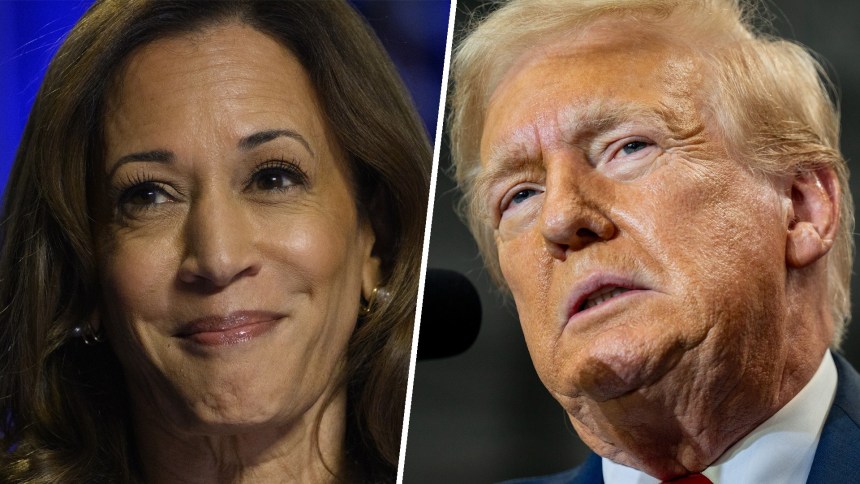
Vice President Kamala Harris has begun rolling out the economic policies her administration would enact should she take office next year. In her big speech on Wednesday at the Economic Club of Pittsburgh, she promised to be “pragmatic” in her economic approach. Harris added, “I believe we shouldn’t be constrained by ideology and should instead seek practical solutions to problems.”
It’s a seemingly noble sentiment as these things go. Harris’ pitch is one that tries to toe the line between populist and moderate in hopes of triumphing over former President Donald Trump. What better way to do so than by promising to give serious consideration to ideas that come from the other side of the aisle? But looking at the proposals her campaign has put forward so far, it’s hard to see just what solutions she intends to lift from conservative ideology — or if there are even any GOP ideas left that are worth appropriating as her own.
It’s hard to see just what solutions she intends to lift from conservative ideology — or if there are even any GOP ideas left that are worth appropriating as her own.
In one of the most frustrating misconceptions that refuses to die, and despite ample evidence to the contrary, many polls still show voters think Trump would have an edge over Harris on handling the economy. We can chalk that up at least in part to short-term memory loss of the Trump administration’s chaos, along with frustration with the inflation that skyrocketed post-pandemic and has only now tapered off. Accordingly, Harris has tried to keep her distance from President Joe Biden, even as large parts of the policy document her team dropped on Thursday are carryovers from his “Bidenomics” proposals.
In promising to be pragmatic and listen to ideas from all comers, Harris is trying to tamp down on the perennial false claims from Republicans that she’s a secret socialist. The easiest way that past Democrats have found to do this has been to find the most palatable conservative policies that could appeal to a broad swath of the country and claim them for their own. (It’s a process that you never see go the other direction, absent a few of Trump’s wilder swings that have zero backup from the rest of his party.)

But that was an easier task for previous Democratic presidents, who had more options for centrist compromises given where the Republicans were starting from. When crafting the Affordable Care Act, President Barack Obama eschewed more progressive policies like a single-payer system in favor of ripping off GOP Gov. Mitt Romney of Massachusetts. The “Romneycare” hybrid market model for health care was itself first put forward by the Heritage Foundation of all places, long before Republicans turned on it in 2008.


The prior Democratic president, Bill Clinton, was especially keen to undercut GOP talking points by swiping their most popular ideas in the process of “triangulation.” Of course, “popular” doesn’t always mean “good.” Yes, Clinton’s welfare reforms were a compromise, one that moved the country to the right economically without fully dismantling government assistance like many conservatives would have preferred. But it came at the cost of adding needless hurdles for millions of Americans to jump over to access vital assistance.
In contrast, it’s not clear what big ideas Harris thinks she’ll be able to import from the right in her term
In contrast, it’s not clear what big ideas Harris thinks she’ll be able to import from the right in her term. There’s surely not anything in the pages of Heritage’s Project 2025 that will become the same kind of major policy focus for her. The closest to that may be the pitch for a new kind of universal savings account that my colleague Ryan Teague Beckwith identified as one of the few suggestions in the giant document worth giving serious consideration.
There are a few smaller things that could be on the agenda. Democratic Gov. Josh Shapiro of Pennsylvania issued an executive order removing requirements for a four-year college degree from most state jobs, which has been held up as a potential example for Harris to crib from. In her speech on Wednesday, Harris touched on changing up permitting and “cutting red tape” for new small businesses. Both have a certain conservative flavor, but aren’t necessarily coded as wholesale right-wing propositions.
If anything, the closest example of taking on a conservative economic idea as her own would be the proposal to end taxes on tips that Trump floated this summer. Her team has worked to try to refine the concept from a naked ploy to win over service workers in Nevada into an actual policy. It’s still not exactly a sure winner, though, politically or economically speaking.
It could be then that Harris’ promise to be open to ideas from all ideologies is less about her administration’s policy than election-year politics. As a bit of rhetoric, it likely sounds great to those few remaining undecided swing voters that she will have an open mind and not be beholden to left-wing economic models. But if she gets into office and finds that the GOP’s ideas would all either raise prices for consumers, require giving the wealthy even more money, or turn out to be just plain impractical? Well, you won’t be able say she didn’t try to find some wheat among the chaff at least.

Hayes Brown is a writer and editor for MS NOW. He focuses on politics and policymaking at the federal level, including Congress and the White House.