




Our homes are supposed to offer us shelter from the troubles of the world, but over the past two decades, they’ve increasingly become a place where greater economic forces batter millions of Americans. First, the Great Recession’s foreclosure crisis saw 10 million homeowners lose their homes between 2007 and 2014. Now we are experiencing a housing affordability crisis. Rents are up 30% since early 2020, while home prices have jumped 47%.
But, finally, it appears there might be some relief at hand. Recent announcements from the Federal Reserve, the Justice Department and Vice President Kamala Harris all, in their own way, tackle the problem that’s left millions of Americans struggling to find a place to call their own.
The percentage of household income spent on rent by Americans without a college degree increased from 30% in 2000 to 42% in 2017.
Help can’t come soon enough. A record number of Americans are rent-burdened — that is, spending 30% or more of their income on housing costs. At the same time, the cost of buying a home is soaring. That’s good news for the 65 million Americans who own their own residences — to this day, housing remains the greatest source of wealth for a majority of Americans — but bad news for those seeking to gain a foothold in property ownership.
The traditional — and overly simplified — explanation for rising housing costs is that the U.S. is short millions of houses, townhouses and apartments. Those lucky enough to own their residence, according to this line of thought, selfishly fight any development near their homes, restricting supply and sending prices soaring. As wannabe owners have an increasingly hard time affording a home, they remain stuck in the rental market, increasing demand.
While there is something to these beliefs, the reality is a bit more complex. One complication is apparent in the lawsuit the Justice Department and eight states filed Friday against software company RealPage. The private equity-owned company provides revenue management software for landlords and controls an estimated 80% of that market. Landlords would report on their rental units to RealPage, which would, in turn, possessing nonpublic data detailing what competitors were charging, spit out a recommended rental price.

The government alleges this service amounts to a form of illegal collusion, updated for the web 3.0 era. The lawsuit uses RealPage’s own words to make the point, noting the company claimed, “Our tool insures that [landlords] are driving every possible opportunity to increase price in even the most downward trending or unexpected conditions.” Lower rents, on the other hand, would be of enormous help to millions of Americans. According to the lawsuit, the percentage of household income spent on rent by Americans without a college degree increased from 30% in 2000 to 42% in 2017.
Unsurprisingly, RealPage denies the charges. But, privately, both its own executives and its satisfied customers beg to differ. “I always liked this product because your algorithm uses proprietary data from other subscribers to suggest rents and term. That’s classic price-fixing,” one landlord wrote in an email cited in the lawsuit. One of the company’s vice presidents touted the company’s software as discouraging clients “trying to compete against one other.”


Housing inventory for sale remains near historic lows, helping fuel record high prices.
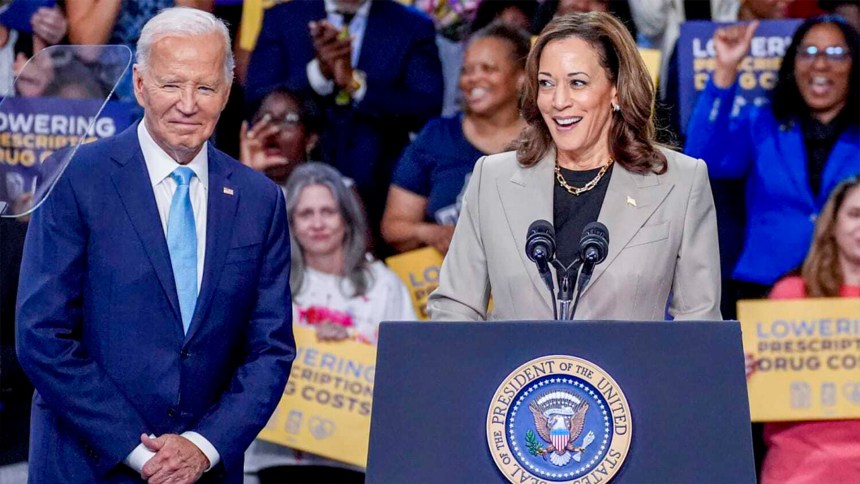
The Justice Department’s lawsuit came on the heels of Vice President Kamala Harris unveiling her plan to boost homeownership and real estate construction. In that plan, the Democratic nominee backs Senate Democrats’ bill deeming RealPage’s business model illegal, but there’s much more. The Harris administration — if, that is, there is a Harris administration — is aiming for 3 million new residences by the end of her first term. She would provide financial assistance and tax breaks to real-estate investors who target first-time home buyers, and encourage states and localities to reduce bureaucratic barriers to building. And she’d also seek to expand a tax credit available to low-income renters, while ending tax policies that incentivize Wall Street-backed corporations snapping up single-family homes.
That’s all well and good, but people still need to afford the financing of these homes — which brings us to Federal Reserve Chair Jerome Powell’s declaration Friday that “the time has come” for the central bank to cut interest rates. That means the rise in mortgage interest rates, which began when the Fed hiked interest rates during 2022 and 2023, may finally be ending.
It’s not just that high interest rates put a crimp in housing starts for both single family and multi-unit residences, which dropped to a four-year low in July. Because many homeowners locked in mortgages with interest rates in the low single digits before 2022, the sharp increase since has kept them effectively locked in place, unable to upgrade or downsize without taking a significant financial hit.

As a result, housing inventory for sale remains near historic lows, helping fuel record high prices. Hopefully, the interest rate drop will prompt some of those homeowners into selling — and get some of those unhappy renters into a home of their own.
Housing is a basic human right, but all too often housing policy gets left on the back burner. All these actions combined should begin to shift the balance of power away from those lucky enough to already own a bit of real estate, and back toward those seeking to get a foothold, whether as homeowners or renters. It can’t happen soon enough.

Helaine Olen
Helaine R. Olen is the author of "Pound Foolish: Exposing the Dark Side of the Personal Finance Industry" and a co-author of "The Index Card: Why Personal Finance Doesn't Have to Be Complicated." She has been a columnist for The Washington Post and Slate, and her work has appeared in numerous other publications, including The New York Times and The Atlantic. She is managing editor of the American Economic Liberties Project.