




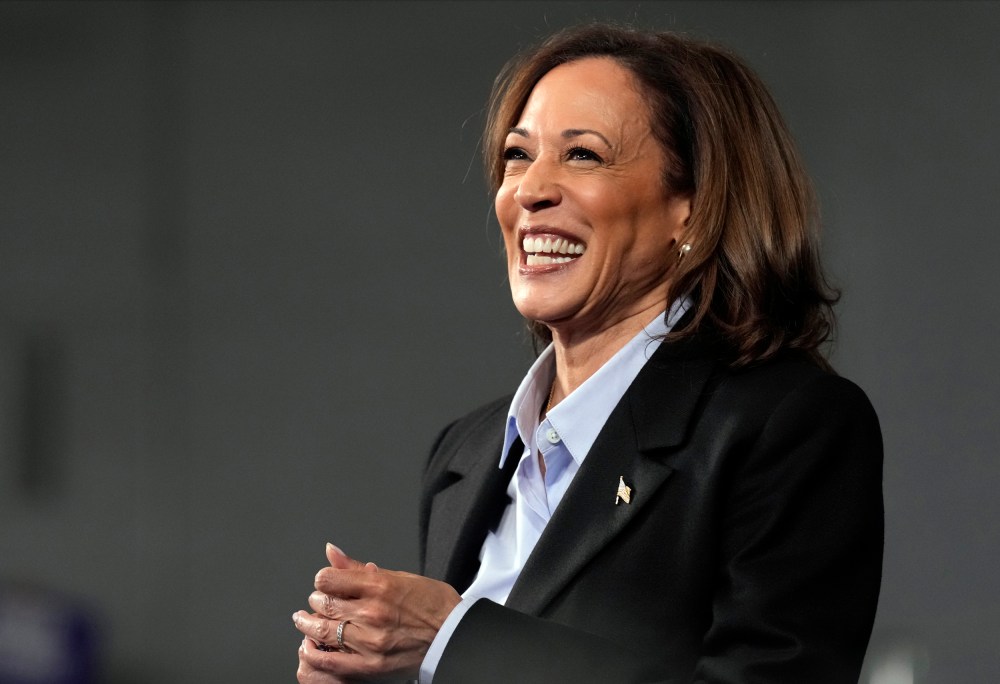
As we approach the debate between Vice President Kamala Harris and former President Donald Trump, one cannot overestimate the importance of how this might be the most determinative factor remaining in the race — especially among the voters who are likely to be the ultimate key decision-makers: a small group of no more than 10% of the electorate who are largely moderates who are undecided or are soft Democrats or soft Republicans.
And this group has an unfavorable view of both major political parties.
Harris has much more to gain in this debate among these voters than Trump does.
Years ago, when I was chief strategist for the re-election campaign of President George W. Bush in 2004, I did a back-of-the-envelope calculus of how much a debate could affect the race. In presidential races in the final weeks, the goal is to win as many campaign days as possible, and hopefully by Election Day the campaign has won far more than the opposition. By my calculus, the forthcoming debate is worth around 20 campaign days.
Why is it worth nearly a third of the days remaining in this campaign? For a couple of reasons:
- Voters give far more credibility to what they see and hear in a debate than they do of campaign commercials and scripted events. Debates are seen as more genuine and authentic insight into the candidates.
- The reach of a debate to the above key voter group of moderates is far, far larger than any audience you can get from an individual interview or event.
So, with the stakes so high and this debate worth so many campaign days, what is it that moderates who are either undecided or loosely supporting Harris or Trump will be looking for?
My strategic perspective is that Harris has much more to gain in this debate among these voters than Trump does.


The perception of Trump is pretty set in stone among not only his base, but also this key debate voter group. This moderate voter group does not like Trump, and it is looking for a reason to solidly support Harris. The vice president needs to give it that comfort to lock in with her, and it is largely going to be not a “head” level decision by the voters but a “gut” level connection they get from Harris at the debate.
These voters are looking not really for issue specifics or long, drawn-out policy proposals but rather for some “value” connection they establish with Harris. And for this election, and in this moment in time, that value connection is wrapped up in how strong they perceive her to be and her command of the stage with Trump standing next to her.
This strength and her command will most likely need to come across threefold to these crucial moderate voters:
- Her ability to talk intelligently and passionately about issues such as the economy, democracy, freedoms, health care and guns. It is not so much the details on the issues as it is her command in explaining them and sharing empathy with this voter group.
- Her strength in holding Trump accountable for his words and actions not only at the debate but in the years prior. Most of these moderate voters have many misgivings about Trump, but they have never truly seen him held accountable. Harris’ ability to do that in the context of the debate will give her a strong connection with the voters.
- If Harris is perceived as comfortable in her own skin — not taking herself too seriously or being defensive, and laughing a bit when she is confronted by Trump or even the moderators — these voters will give her strength credit and understand her command as a potential president.

As stated above, Trump has little to gain from this debate because of the locked-in nature of the perceptions of him, but what he could do is try to disrupt Harris from building a strength connection with these voters. Either forcing Harris on the defensive or making her appear weak seem to be the only paths available to him at this debate. If he does not do that well, he could actually help Harris in her task of being in command and the adult on stage.
In a race that is likely going to be decided by no more than 4% of the vote (keep in mind the average margin of victory in all the presidential races since 2000 has been 3.3 percentage points), and with Trump and Harris each likely locked in at around 46% or 47% of the vote, this race is going to come down to a few thousand moderate voters spread across seven states. And with Harris holding a 3- to 4-point lead today, if she does what is laid out here at the debate, Trump will have very little opportunity left to close the gap. And while the gap is small, it is significant in the polarized environment of today.

Matthew Dowd
Matthew Dowd is an American commentator, bestselling author and MSNBC political analyst. He was the chief strategist for the Bush–Cheney 2004 presidential campaign and the chief political analyst for ABC News for more than a decade.