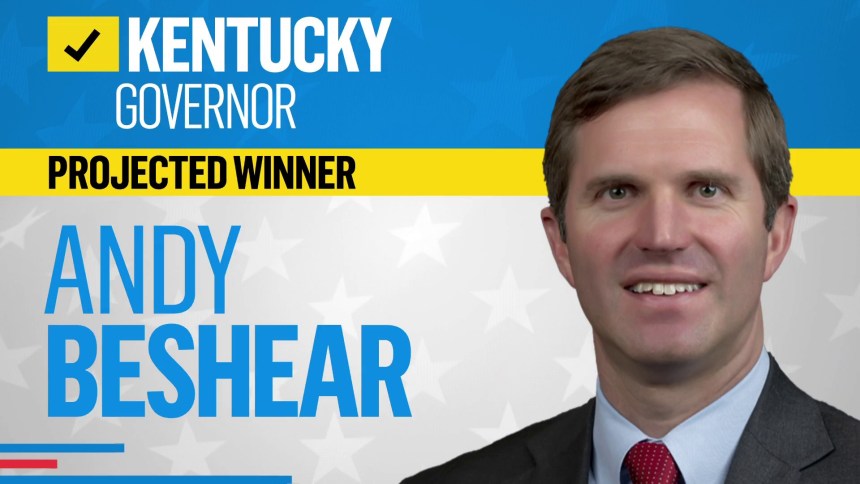
Kentucky voters gave Democratic Gov. Andy Beshear four more years Tuesday, as he defeated the state’s Republican Attorney General, Daniel Cameron.
And the surprise is how unsurprising it is.
Kentucky is a deep-red state. Republicans have a supermajority in both houses of the state Legislature. In addition to Senate minority leader Mitch McConnell, we send hard-line firebrands like Sen. Rand Paul, Rep. Thomas Massie and Rep. James Comer to represent us in Washington, D.C.
On the 30 miles of country roads I drive daily, I could count the spattering of “Daniel Cameron for Governor” signs on one hand.
But Beshear is one of the most popular governors in the country. And as someone who lives in the heart of rural Trump country, the signs of Cameron’s defeat — or lack thereof — have been here all along.
I live in rural Anderson County, population 24,000. We voted decisively for Trump in both 2016 and 2020. Trump flags and yard signs still abound here. But on the 30 miles of country roads I drive daily, I could count the spattering of “Daniel Cameron for Governor” signs on one hand.
Beshear took office in December 2019, right before Covid changed our lives. He held daily TV briefings to provide the public with the latest information and, Democrat or Republican, we all tuned in.
Covid, at least in the beginning, was nonpartisan. Team Kentucky, we called ourselves. We were all scared for our families and our neighbors; we were desperate for the latest news; we were looking for a Mr. Rogers-type figure to tell us what to do to stay safe and that, in the end, it was all going to be OK.

And there was our governor — no longer called Governor but simply “Andy” — on our televisions every evening, without fail, looking us in the eye. A trusted leader. One of us.
Post-pandemic, catastrophic tornadoes hit west Kentucky in December 2021, practically leveling the town of Mayfield, and historic flooding ravaged 14 east Kentucky counties seven months later. Beshear and his team were visible on the ground, and with the compassion and trust he’d banked during the Covid crisis, he rallied all Kentuckians to support our neighbors.
My rural town’s mayor, a Republican, proudly appeared in a pro-Beshear TV ad, an act that might have been unheard of even a year ago.
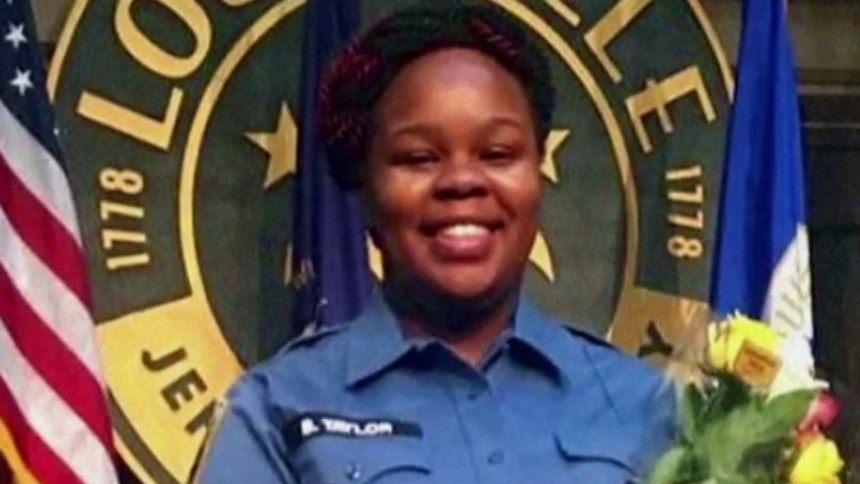
While Beshear rose to the challenge facing him in early 2020, Cameron struggled faced with his own crisis. In March 2020, based on a questionable search warrant for her ex-boyfriend, Breonna Taylor was shot to death in her home by Louisville police officers. Protesters marched in the streets for months. Yet Cameron concluded the shooting was “justified” under Kentucky law, and no charges were brought against the officers. Members of the grand jury empaneled in the case would later complain that Cameron’s office misled them. Cameron provided not only a stark contrast in policy but a constant, burning reminder that the state’s top law enforcement officer overseeing the Breonna Taylor case often appeared cold, ill-equipped and unforthcoming.
The attorney general similarly stumbled on abortion rights. Last year, Kentucky voters rejected a constitutional amendment that would have eliminated any abortion rights in the state. Yet Republicans have stood by the state’s strict anti-abortion laws, which have no exceptions for rape or incest, and Cameron has defended them in court.
Feeling confident swing voters would still feel the same way a year later, the Beshear campaign ran an ad commonly referred to as “Hadley’s story.” This striking ad features a young woman looking into the camera while recounting being raped by her stepfather at age 12. The ad addresses abortion rights head-on, a topic Democrats in the state have historically avoided. “This is to you, Daniel Cameron,” she says. “To tell a 12-year-old girl she must have the baby of her stepfather who raped her is unthinkable.” Hadley’s story exposed an enormous crack in standard Republican messaging. In post-Roe v. Wade America, candidates must clearly define what they mean by “pro-life.” Cameron was continually asked whether there should be exceptions for rape and incest, or for the life of the mother. He stumbled, never articulating a clear position. “Andy Beshear won this race because he represents the values that people are hungry for in these highly polarized times…the values of integrity, honesty and empathy,” former Lt. Gov. Crit Luallen told me. “He built trust with the voters by bringing strong and stable leadership to Kentucky through the pandemic, floods and storms while he kept a focus on the future with record breaking job creation.” One advantage of being the incumbent is you get to use the bulwark of your office to promote your successes. Whether announcing a new investment in Kentucky or delivering checks to small counties like mine for infrastructure, Beshear showed up in person, shook every hand and garnered much goodwill. My rural town’s mayor, a Republican, proudly appeared in a pro-Beshear TV ad, an act that might have been unheard of even a year ago. “I spent 32 years in law enforcement,” Troy Young tells the viewer. “Beshear followed Trump’s lead for early release of nonviolent offenders during Covid. I’m a Republican, and Andy Beshear is doing everything he can to keep our communities safe.” While the signs of “Cameron for Governor” were absent, the signs of Beshear winning a second term were there all along. And they provide a road map for Democrats entering 2024.
Teri Carter
Teri Carter is a political columnist in central Kentucky.